Quick Answer
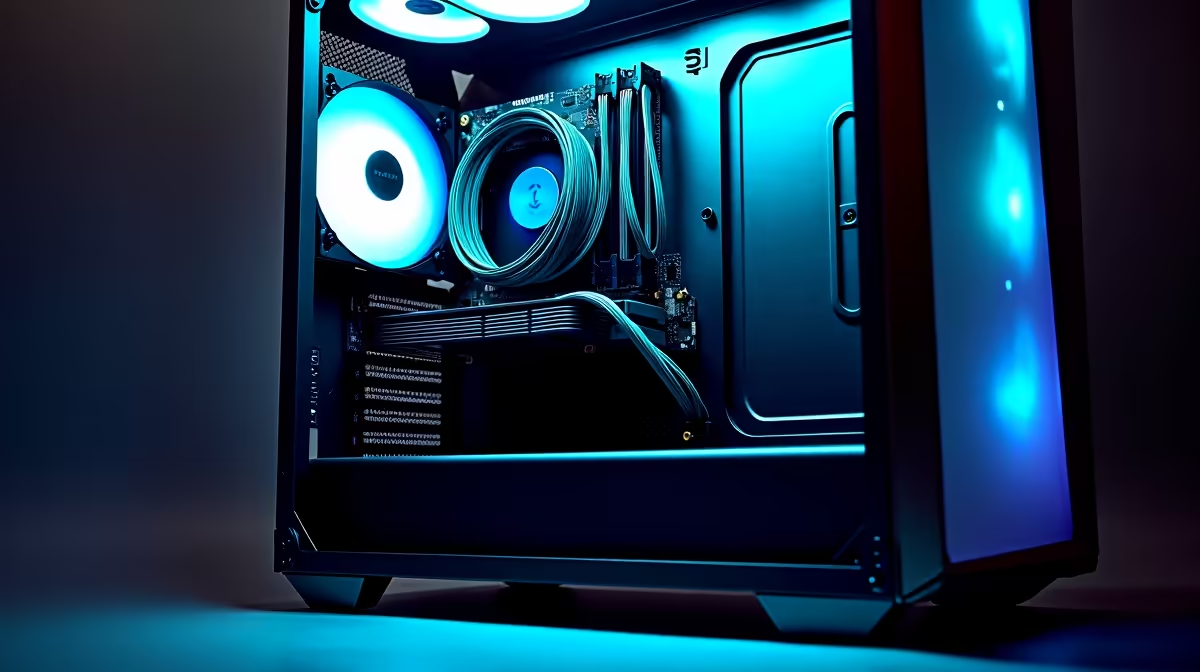
E-ATX builds generate more cable clutter than standard ATX systems because the larger motherboard adds extra power connectors, more SATA and fan headers, and longer cable runs. A full-tower or oversized mid-tower case resolves most of this through deeper PSU shrouds, more grommeted routing holes, and wider cable channels behind the tray.
Why E-ATX Boards Produce So Much Cable Chaos 🔧
An E-ATX motherboard (305mm x 330mm) ships with dual 8-pin EPS CPU connectors, multiple PCIe power zones, four or more fan headers, and up to eight DRAM slots. The ATX 24-pin, two CPU EPS cables, a cluster of SATA data cables, and a USB 3.2 Gen 2x2 front-panel connector all terminate at different board corners. In a compact case those cables have nowhere to hide, looping across the interior and obstructing airflow between the GPU and front intake fans. PSU-to-board cable runs are physically longer with an E-ATX layout, leaving excess slack that bunches near the GPU shroud.
How a Larger Case Solves the Problem 🖥️
A proper full-tower or E-ATX-rated mid-tower addresses clutter through geometry and infrastructure. Look for a PSU shroud at least 60mm tall so modular cable tails stay hidden below the motherboard zone. Grommeted routing holes at each tray corner let cables exit precisely where they terminate, cutting slack to near zero. A behind-tray depth of 25mm or more is the real differentiator: standard cases offer 18 to 20mm, barely fitting two overlapping bundles. Premium E-ATX cases push that depth to 28 to 35mm, letting you fold and velcro-strap every bundle flat.
Practical Cable Management Tips for SA Builders 💡
Work methodically from the PSU upward. Route the 24-pin ATX first as it is the thickest cable. Thread it through the lower right grommet before the board goes in. Both EPS cables should exit from the top-left grommet and run along the tray spine. For SATA cables, use right-angle connectors and keep total length under 450mm. A sleeved cable kit costs around R300 to R600 in SA and reduces visual clutter dramatically. Velcro tie bundles every 80 to 100mm and avoid zip ties, which make future upgrades painful.
Pre-Route Before Board Install ⚡
Before seating the E-ATX motherboard, thread all power cables through their grommets from the back of the tray. Once the board is in, each cable only needs to be plugged in rather than wrestled into position, cutting build time and protecting connectors from lateral stress.
FAQ
Does a larger case actually improve airflow alongside cable management?
Yes. A full-tower pairs better routing with more fan mounting positions, removing cable blockages between front intake fans and the GPU heat sink. GPU temperatures typically drop 3 to 6 degrees Celsius when cable paths are cleared from the direct airflow lane.
How wide should the behind-tray channel be for an E-ATX build?
Aim for at least 25mm. Premium E-ATX full-tower cases typically offer 28 to 35mm, enough to fit two layered bundles flat without stressing the side panel clips.
Is it worth buying a modular PSU for E-ATX cable management?
Absolutely. A fully modular PSU lets you attach only the cables the build needs, eliminating three to five unused tails that would otherwise fill the PSU shroud cavity on a dense E-ATX build.
Building a large E-ATX rig and tired of cable chaos?
Evetech stocks a wide range of full-tower and E-ATX-rated mid-tower cases with deep tray channels and full PSU shrouds. Browse the case range and find the right fit.