Quick Answer
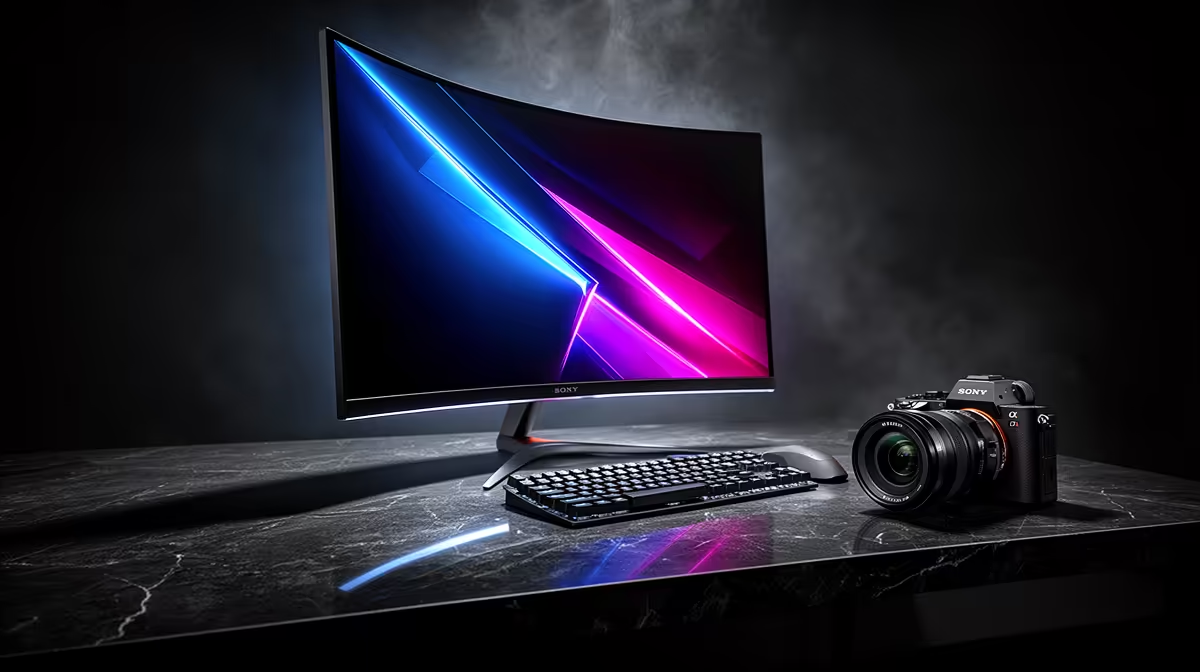
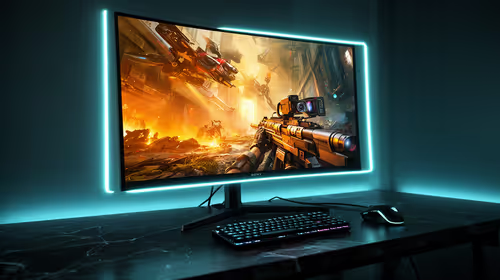
You need a desk at least 130 cm wide and 80 cm deep for a 49-inch curved gaming monitor. The monitor spans roughly 120 cm wide, leaving 5 cm of clearance per side on a 130 cm desk. Depth matters more than width for image quality: less than 80 cm puts you too close to the 1800R curve, reducing immersion and causing eye strain on long sessions.
Width Requirements and Stand Footprint 📐
The monitor panel itself measures approximately 120 cm wide on a standard 49-inch display. The stand base typically extends 35 cm to 45 cm wide and 30 cm to 35 cm deep. A 120 cm wide desk technically fits the panel, but offers no room for speakers, desk accessories or elbow clearance. A 140 cm to 160 cm desk is far more practical. In South Africa, most gaming desk ranges available from local furniture retailers and Evetech's accessories range include 140 cm and 160 cm wide options. L-shaped desks are another strong option, allowing the 49-inch ultrawide to occupy the main wing while a secondary surface handles peripherals and paperwork.
Depth and Viewing Distance for Comfort 🪑
An 1800R curve is engineered for optimal viewing at 1.8 metres from the screen, but in practice 90 cm to 110 cm works well and fits normal desk configurations. If you sit 60 cm from the screen because your desk is shallow, the curvature wraps past your peripheral field and the edges appear to bow inward uncomfortably. Desk depth of 80 cm to 100 cm puts your eyes at the right position. IKEA-style 120 cm by 60 cm desks common in South African student rooms are borderline at 60 cm depth and work only if you push the monitor to the absolute back edge. A monitor arm adds roughly 15 cm of reach-back, effectively increasing usable viewing distance for shallow desks.
Monitor Arms as a Desk-Space Solution 🔧
A dual-arm or single heavy-duty monitor arm (rated for 10 kg to 14 kg for a 49-inch display) clamps to the back edge of the desk and positions the monitor exactly where needed, removing the stand's 30 cm depth footprint entirely. This reclaims desk surface for a keyboard, mousepad and accessories. Quality single-arm mounts for heavy ultrawide panels cost R1,200 to R2,500 locally and are a worthwhile addition to any 49-inch monitor purchase. Check the arm's weight capacity carefully: many consumer arms are rated for 8 kg and will sag or drift with a 12 kg ultrawide.
Corner Desk Positioning Tip ⚡
Placing a 49-inch ultrawide in the corner of an L-shaped desk and sitting at a slight angle creates a natural cockpit-style gaming position. Rotate the monitor arm so the centre of the screen aligns with your forward-facing eye line rather than the corner itself, which prevents asymmetric neck strain during long sessions.
FAQ
Can a 49-inch ultrawide fit on a standard 120 cm wide desk?
The panel itself fits at 120 cm width, but there is zero side clearance and the stand usually overhangs the desk edge. It works as a temporary solution but is not comfortable or safe long-term. A 140 cm to 160 cm wide desk is the correct minimum for everyday use.
Does a 49-inch monitor need wall reinforcement if wall-mounted?
No, provided the wall mount is rated for the monitor's weight and installed into wall studs or solid masonry. A plasterboard-only fixing is not sufficient for a 12 kg to 14 kg monitor. In South African homes with brick exterior walls and drywalled interiors, mount into a stud or use a heavy-duty wall anchor rated for the load.
What if my desk is only 70 cm deep?
Use a monitor arm to push the monitor back 10 to 15 cm beyond the desk edge, add a keyboard tray that slides under the desk to reclaim surface space, or accept a slightly closer-than-optimal seating distance. A wall mount is another option if your desk is against a wall.
Buying a 49-inch ultrawide and need the right desk setup?
Evetech stocks 49-inch curved monitors alongside gaming desks and monitor arms rated for the weight, so you can build the complete setup in one order.