Quick Answer
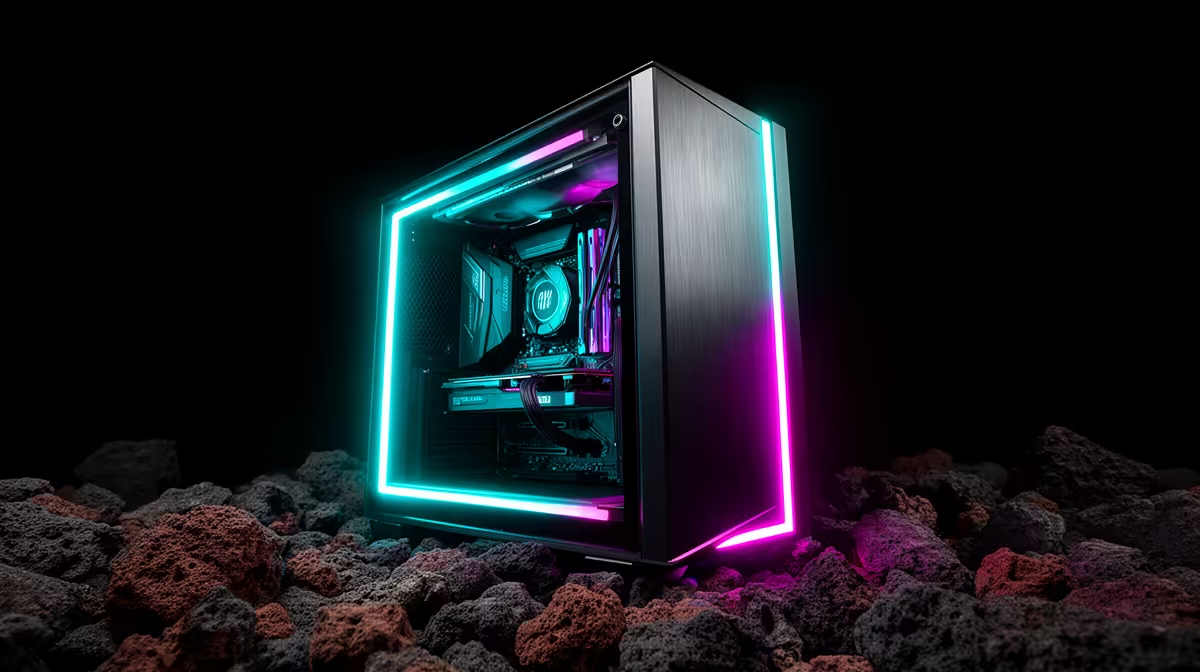
A flagship E-ATX gaming case must offer 420mm or larger radiator support, tempered glass on at least the front and side panels, a minimum of 430mm GPU clearance, USB 3.2 Gen 2 or Gen 2x2 front I/O including USB-C, and full-cover cable management channels. Anything less at the flagship price point is compromised.
Build Quality and Material Standards 🔧
Flagship cases justify their price through material quality before features. Look for a steel chassis with a minimum gauge of 0.8mm SECC or SPCC steel, which resists flexing when carried and dampens vibration from high-speed fans. Premium cases use 4mm tempered glass rather than the 3mm panels on budget designs, and the difference in panel rigidity is immediately obvious when you touch the glass. Hinged tempered glass doors with a magnetic closure rather than thumb screws indicate proper engineering investment. South African ambient humidity ranges from dry Highveld winters to coastal KwaZulu-Natal humidity, and quality steel construction with a proper powder coat resists surface oxidation better than cheaper finishes over multi-year use.
Cooling Capacity That Matches Top-End Hardware 🌬️
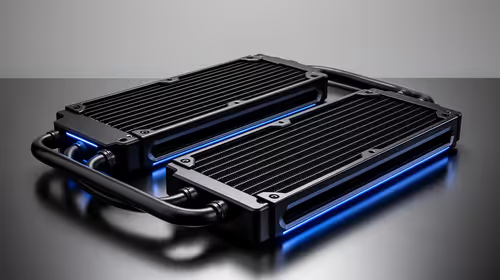
A flagship E-ATX case must support simultaneous front and top radiator mounting without GPU bracket conflicts. The RTX 5090 and Ryzen Threadripper platforms that belong in an E-ATX build generate enough heat to need both a large AIO for CPU cooling and strong case airflow for GPU thermals. Look for a top mount rated for 420mm or at least 360mm alongside a front 420mm or 480mm mount. Fan support of 10-plus positions for those building maximum airflow configurations is a marker of genuine flagship design rather than a marketing badge. The case should also include at least one or two pre-installed fans rather than none, given the price bracket (R4,000 to R7,000-plus locally).
Front I/O, Interior Access, and Long-Term Usability 🖥️
Front I/O on a flagship E-ATX case should include at minimum one USB 3.2 Gen 2 Type-A, one USB 3.2 Gen 2x2 Type-C (20Gbps), an audio jack, and a microphone jack. Some flagship designs now include two USB-C ports on the front panel. Interior access matters for a long-term investment: a case you will use for five or more years needs easy panel removal, clear tray labelling, and enough room behind the motherboard tray for thick cable bundles (at least 25mm depth). A case that is difficult to work in becomes an annual frustration every time you upgrade a component.
Verify Local Warranty Before Premium Spend ⚡
Flagship PC cases in South Africa often carry a one to three-year manufacturer warranty. Before purchasing a case in the R5,000 to R7,000 range, confirm whether warranty claims are handled locally or require shipping the case internationally. Local warranty service through Evetech means faster resolution than sourcing a parallel import without local support.
FAQ
How much should a genuine flagship E-ATX case cost in South Africa?
Expect to spend R3,500 to R7,000 for a genuine flagship E-ATX case from established brands. Cases below R3,000 claiming flagship status typically compromise on steel gauge, glass quality, or fan mount count. Budget accordingly when planning a high-end build.
Do flagship E-ATX cases include fans?
Some do, some do not. Check the product listing carefully. A case that ships with three to five quality PWM fans included represents better value than one that includes none, since buying fans separately adds R800 to R2,000 depending on selection.
Is a full-tower always the right choice for E-ATX?
Not necessarily. Several large mid-tower designs accommodate E-ATX boards and 420mm radiators while occupying less desk or floor space than a full-tower. If your specific board is E-ATX but standard in every other dimension, a large mid-tower with E-ATX support may be the better size choice.
Ready to invest in a flagship enclosure for your high-end build?
Explore Evetech's selection of premium E-ATX gaming cases and find the one that fits both your board and your ambition.