Quick Answer
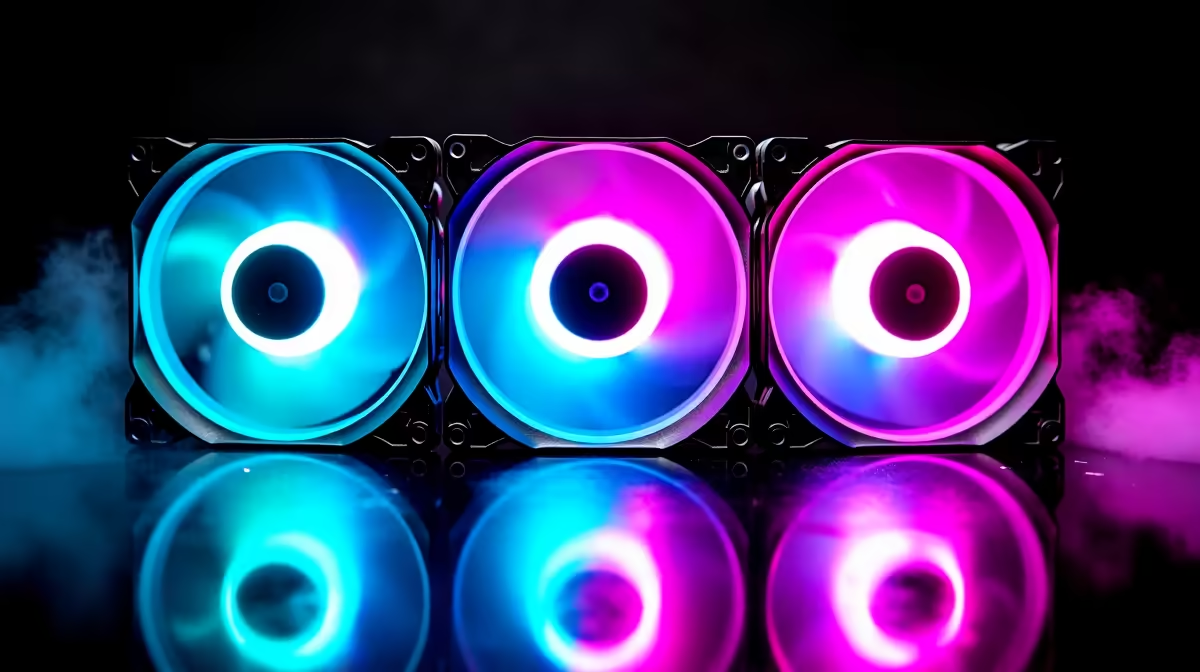
The most important factors in a quality ARGB triple fan pack are bearing type (fluid dynamic or dual-ball), static pressure rating (2.0mmH2O or higher for radiator use), LED density and software compatibility, noise rating (below 28 dBA at max RPM), and whether the pack includes a hub for ARGB daisy-chaining. These determine whether the pack genuinely performs or just looks good in marketing shots.
Bearing Type and Longevity 🔧
The bearing determines how long the fan operates quietly and reliably. Sleeve bearings are cheapest but degrade within two to three years, especially when mounted horizontally. Dual-ball bearings last longer (50,000 hours rated) and tolerate any mounting orientation but add low-level bearing noise. Fluid dynamic bearings (FDB) are the best all-round choice: they match sleeve bearing silence at low RPM while lasting as long as ball bearings. Look for FDB or equivalent terminology (Rifle Bearing, SSO2 Bearing, Nanobearing) in the spec sheet.
Airflow and Static Pressure Specifications 💨
A triple pack description will list CFM (cubic feet per minute) and mmH2O (static pressure). For general case airflow in a mid-tower with a mesh front, prioritise CFM above 55 per fan. For radiator-mounted configurations, prioritise static pressure at 2.0mmH2O or higher. Many ARGB triple packs in the R800 to R1,800 price range in SA offer a reasonable balance of both.
LED Count, Density, and Ecosystem Compatibility 🌈
LED count per fan ranges from 8 to 30+ LEDs. More LEDs produce smoother gradient animations and richer colour transitions. More importantly, check whether the fan's ARGB ecosystem integrates with your motherboard. ASUS Aura Sync, MSI Mystic Light, Gigabyte RGB Fusion, and ASRock Polychrome Sync each have branded fan ranges that integrate without extra steps. Fans outside these ecosystems still work via a hub connected to the 5V ARGB header but may require third-party software like SignalRGB for synchronisation.
Noise Rating and Real-World Sound Experience 🔇
Noise ratings on fan packaging are measured at max RPM in anechoic chambers. Aim for a max-RPM noise rating below 28 dBA for a pack that will be quiet at the 60 to 70% PWM speeds used during normal gaming. A fan's starting noise at minimum RPM matters for desktop tasks: check whether reviews mention audible bearing chatter at low speeds. Packs with fluid dynamic bearings almost universally avoid this issue and deliver consistent quiet operation throughout the fan's service life.
Check Hub Inclusion Before Buying ⚡
Some ARGB triple packs include an ARGB hub that connects to one motherboard header and manages all three fan lighting signals. Others require three separate header connections. Confirm the bundle includes a hub if your motherboard has limited ARGB headers, which is common on mid-range B650 and B760 boards.
FAQ
What ARGB triple pack price range offers genuine performance in South Africa?
Expect to spend R900 to R2,000 for a triple pack with quality bearings, reasonable static pressure specs, and proper ARGB hub inclusion. Below R600, compromises in bearing quality or LED compatibility become common.
Do all ARGB triple packs include a hub for connecting to the motherboard?
No. Some packs provide three individual ARGB cables that each need their own header, while others provide a hub. Hubs are strongly preferred: they save headers, simplify cable management, and allow group control from one software source.
Is PWM speed control standard in ARGB triple packs?
Most packs in 2024 and 2025 include 4-pin PWM cables, but check before buying. Some budget packs include only 3-pin DC fans that have less precise low-speed control, which can cause audible noise variation during quiet desktop tasks.
Shopping for an ARGB triple pack for your build?
Evetech stocks a range of ARGB triple fan packs with hub controllers, fluid dynamic bearings, and software ecosystem compatibility for gaming and workstation mid-towers.