Quick Answer
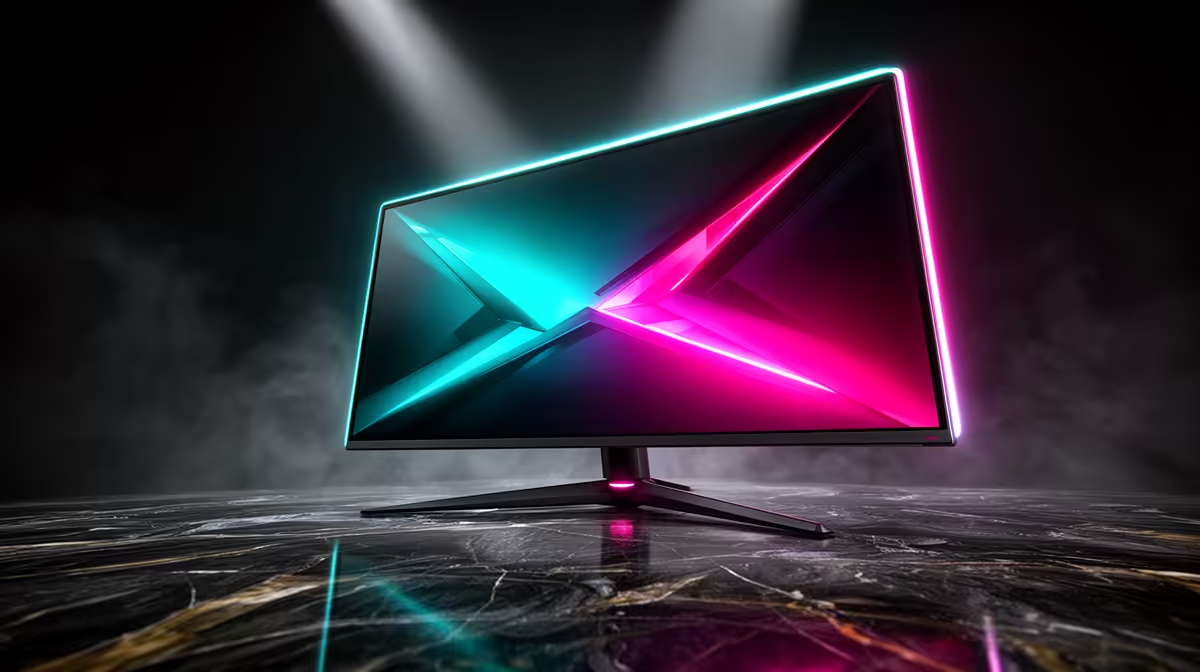
In a premium 27-inch 4K OLED gaming monitor, prioritise: native 240Hz refresh rate, DisplayPort 2.1a input for uncompressed bandwidth, DisplayHDR True Black 400 certification, confirmed South African distributor warranty with burn-in coverage, and a pixel density at 27 inches 4K that eliminates text fringing concerns. Expect to spend R16,000 to R24,000 locally.
Panel Technology: QD-OLED vs W-OLED at 27 Inches 🖥️
Two OLED technologies appear in 27-inch 4K gaming monitors. QD-OLED, used by Samsung and ASUS ROG panels, converts blue OLED light through quantum dots to produce red and green, achieving 99% to 100% DCI-P3 colour coverage with vivid saturation. W-OLED, used in LG monitors like the LG 27GS95QE, uses a white OLED emitter with a colour filter array, which delivers outstanding black levels and contrast but slightly lower colour saturation than QD-OLED. Both technologies deliver infinite contrast and sub-0.1ms GtG response times.
Connectivity and Feature Checklist 🔧
At this price tier (R16,000 to R24,000), a 27-inch 4K OLED monitor should include: DisplayPort 2.1a (minimum one port, ideally UHBR20), HDMI 2.1 for console connectivity, USB-C with DisplayPort Alt Mode and at least 65W power delivery (useful for SA creators connecting a laptop), a USB hub with at least two downstream ports, and a height-adjustable and pivoting stand. Factory calibration documentation (Delta E report) is a differentiator at this tier. Check that the model you are considering ships with an SA-applicable warranty and that burn-in is covered, at least partially, in the first year.
Performance Specifications That Matter in This Bracket 🎮
At 4K 27 inches, pixel density is approximately 163 PPI, which eliminates any subpixel fringing concern even on QD-OLED panels. The 240Hz minimum refresh rate should be paired with G-Sync Compatible and FreeSync Premium Pro dual certification. Verify that the monitor's overdrive is set to Normal rather than Extreme by default, as OLED overdrive that is too aggressive can introduce inverse ghosting. Native OLED response time is around 0.03ms GtG, so overdrive is largely unnecessary, but some OEMs enable aggressive overdrive as a factory default.
Factory Calibration Window Size ⚡
OLED peak brightness specs are always quoted at a small window size, typically 3% to 10% of screen area. At full-screen bright content, OLED drops significantly. When you see a spec like 1,000 nits peak, confirm the window size in the spec sheet. A monitor rated at 1,000 nits at 3% APL is impressive for highlights but will not sustain that across a fully white browser page.
FAQ
Is 4K at 27 inches too sharp for gaming, causing text to appear too small?
At 163 PPI, text at Windows 100% scaling on 4K 27-inch is small. Set Windows display scaling to 150% or 175% for comfortable desktop use, which makes UI elements equivalent in physical size to 1440p at 100% scaling. Most modern games handle scaling automatically, so in-game menus and HUDs are not affected.
How long should a premium 27-inch OLED gaming monitor last?
Current-generation OLED gaming monitors from 2024 and 2025 are rated for 30,000 hours to 50,000 hours of use before the display reaches 50% of initial brightness (LT50). For most gamers using 4 to 6 hours per day, this represents 15 to 25 years of practical life, well beyond typical upgrade cycles.
Should I wait for next-generation OLED panels at this size?
OLED panel technology at 4K 27 inches is mature and unlikely to see major specification jumps in the next 12 months. If you need the monitor now and the budget is available, buying current-generation is sensible. The next meaningful jump will likely come from higher sustained brightness improvements, which panel manufacturers are actively working on.
Ready to invest in a 27-inch 4K OLED monitor?
Evetech stocks premium OLED and QD-OLED gaming monitors with local warranty backing. Browse the OLED monitor range at Evetech to find the right 4K panel for your setup.