Quick Answer
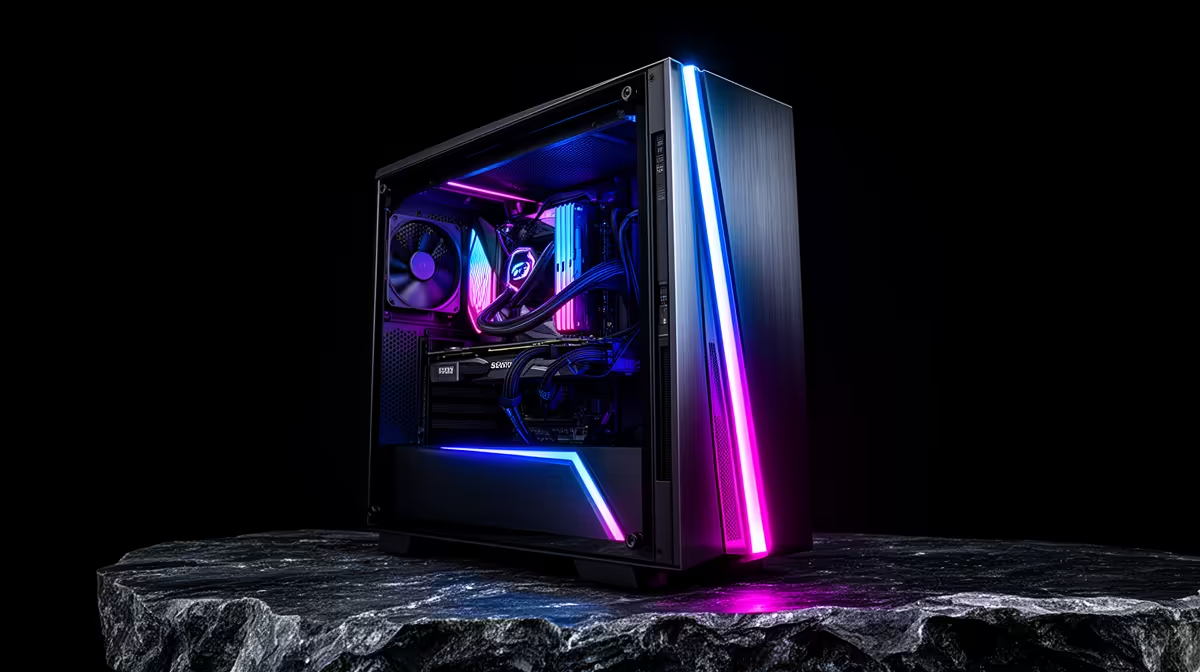
An EATX mid-tower gaming case must explicitly support motherboards up to 305mm x 330mm, offer at least 360mm front radiator support, provide 400mm or more GPU clearance, and include a PSU shroud with cable routing channels. These four criteria eliminate most cases that claim EATX support without actually delivering it cleanly.
Verifying Genuine EATX Support 🔧
The most important verification step is confirming the maximum motherboard size in the case's official specification, not marketing copy on a retail listing. EATX boards measuring 305mm x 330mm are the standard size, but some boards extend slightly beyond this, so buying 5mm to 10mm of extra clearance margin is wise. The second verification is checking whether the EATX mount holes are stamped into the motherboard tray at the correct positions: E-ATX boards require additional standoff positions that some mid-tower trays include but leave uncovered by the default standoff set. Contact the manufacturer or check build logs from other builders who have used the same board and case combination if you are uncertain.
Cooling and Clearance Specifications to Confirm 💧
For a gaming-focused EATX mid-tower, front radiator support of 360mm is the minimum and 420mm is preferred. GPU clearance of 400mm handles every current-gen triple-fan card including the RTX 5090 and upcoming next-generation cards. CPU cooler height clearance of at least 165mm accommodates most dual-tower air coolers if you prefer air cooling over an AIO. Check that the top of the front radiator mount does not contact the VRM heatsink on your specific EATX board, as some EATX boards place the VRM zone close to the top edge of the PCB, which can conflict with the radiator fan bracket's lower fan position.
Build Quality and Cable Management Features 🔩
An EATX mid-tower gaming case at the R3,500 to R6,000 price point should include a PSU shroud, cable tie-down points on the rear of the motherboard tray, a minimum of 25mm of cable routing depth behind the tray, and grommeted cable pass-through holes. Cases with a secondary tempered glass panel on the rear chamber are visually appealing but increase the pressure on cable management perfection. Look for removable drive cages that free up space for larger radiators or additional fans when your drive count does not require them. A front panel with pre-installed dust filters that detach magnetically for cleaning saves significant maintenance effort over the lifetime of the build.
Download the Case Manual Before Purchasing ⚡
Most premium case brands publish the full manual as a PDF on their product page. Reading it before buying reveals the motherboard standoff positions, exact radiator clearance measurements, and whether specific EATX boards have known fitment notes. This 10-minute step is more reliable than any retail listing description.
FAQ
Is an EATX mid-tower large enough for a dual-radiator custom loop?
Some EATX mid-towers support a 360mm front radiator and a 240mm top radiator simultaneously, which is sufficient for a combined CPU and GPU custom loop at moderate flow rates. Full-tower cases handle dual 360mm or 420mm radiators more comfortably, but a mid-tower custom loop is achievable with careful planning.
Can a standard ATX motherboard fit in an EATX mid-tower?
Yes. EATX cases support ATX boards because ATX is a smaller subset of the mounting hole pattern. An ATX board in an EATX case sits correctly, with additional unused mounting positions remaining on the tray. There is no performance or stability issue with this combination.
What brands offer reliable EATX mid-tower cases locally in South Africa?
Brands with verified local distribution and EATX mid-tower models include Phanteks, Fractal Design, Corsair, and be quiet!. Evetech stocks models from these brands with confirmed local warranty support, so you can buy with confidence regarding after-sales service.
Speccing out an EATX mid-tower build?
Evetech stocks EATX-compatible cases with verified specifications, alongside the motherboards and cooling gear to match your exact configuration.