Quick Answer
South African FPS gamers should prioritise refresh rate and response time above all other specs. A minimum of 144Hz with 1ms GtG on a Fast-IPS or Fast-VA panel, paired with FreeSync Premium for AMD GPU users, delivers the meaningful competitive advantage. Curve radius is secondary but matters for comfort at larger panel sizes.
Refresh Rate and Response Time Come First 🎮
In titles like Apex Legends, Valorant, or CS2, the gap between 60Hz and 144Hz is immediately visible to any player. At 144Hz each frame is displayed for 6.9ms; at 250Hz that drops to 4ms, reducing the lag between mouse movement and on-screen result. South African tournament organisers at Johannesburg and Cape Town LAN events have standardised on 144Hz minimum. Target 1ms GtG (grey-to-grey), listed on Fast-IPS and Fast-VA panels. MPRT is a different measurement and less reliable for direct comparison.
Adaptive Sync and GPU Compatibility 🖥️
FreeSync Premium is the relevant certification for AMD Radeon GPU users, representing a strong share of the SA gaming market. It guarantees a minimum 120Hz Low Framerate Compensation range. NVIDIA GPU owners can use G-Sync Compatible monitors (most FreeSync Premium panels qualify) via the NVIDIA Control Panel. Prioritise panels carrying both certifications if you may switch GPU brands, a common SA strategy when rand pricing shifts.
Curve Radius and FPS Gameplay 🔧
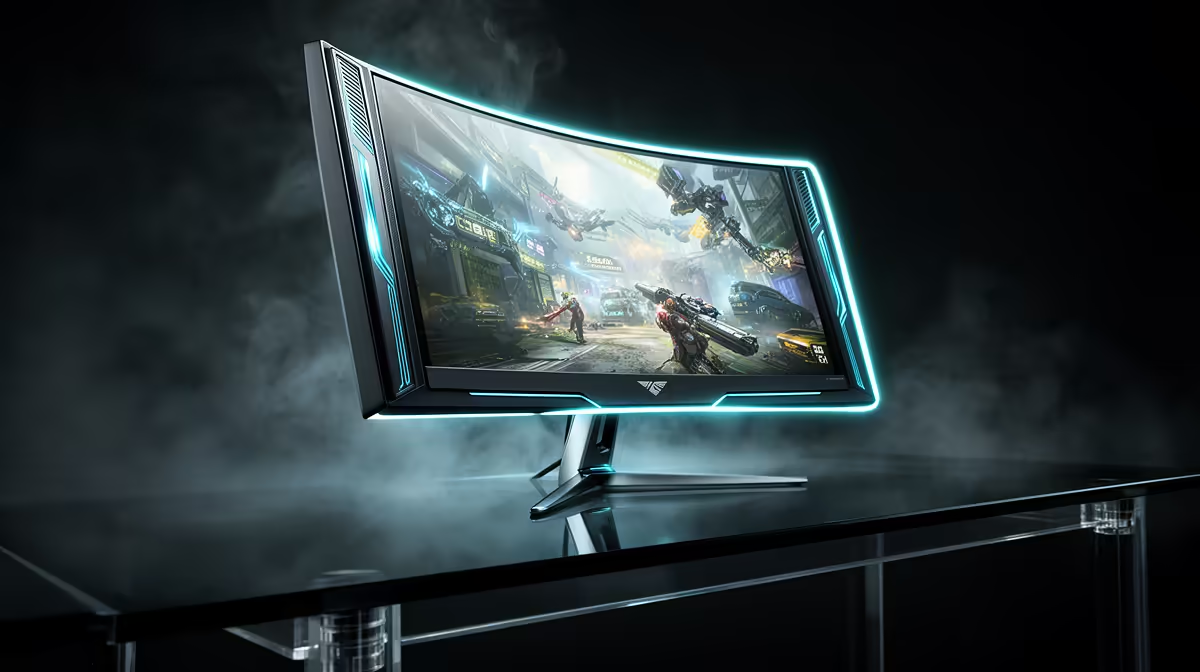
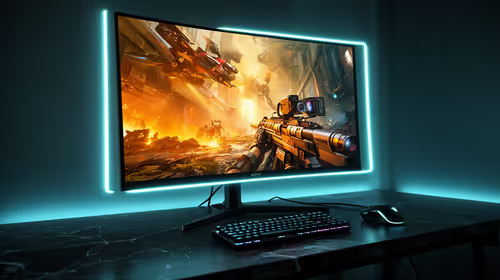
A 1800R curve is standard for FPS gaming. It keeps screen edges equidistant from your eyes at a normal 60 to 70cm desk distance, reducing the micro-rotation needed to track peripheral targets. A 1500R curve is more aggressive and works well for immersive titles but can introduce mild distortion during precise aim. For screens 27 inches or smaller the difference between 1800R and flat is minor; it becomes meaningful at 31.5 inches and above. Avoid ultrawide curved panels for serious competitive FPS, as most esports titles run in 16:9 at tournament settings.
Test Your GPU Before Buying the Monitor ⚡
Check your average fps in your main game at FHD before choosing a refresh rate tier. If you average 110fps on an older card, 144Hz is the right step. Buying a 250Hz panel you cannot feed consistently means paying for headroom that sits idle until your GPU is upgraded.
FAQ
Does panel curvature affect aiming accuracy in FPS games?
Research from professional esports setups shows minimal measurable impact on aiming accuracy from curvature at standard competitive panel sizes (24 to 27 inches). The main benefit at competitive sizes is ergonomic, reducing eye strain during long sessions.
Is FreeSync Premium necessary if I already have a high-refresh monitor?
FreeSync Premium adds Low Framerate Compensation, which activates when fps drops below the monitor's minimum sync threshold. Without it, adaptive sync may disengage during GPU-heavy scenes, introducing tearing. For SA gamers with mid-range GPUs alongside high-refresh monitors, this feature is worth having.
What size curved FPS monitor do most SA competitive gamers use?
The majority use 24-inch to 27-inch panels, with 27-inch currently the most common. The smaller size keeps game elements within a tight field of view, reducing eye movement per interaction.
Looking for a curved FPS monitor that suits your GPU and budget?
Evetech stocks a wide selection of curved gaming monitors with FreeSync Premium and high refresh rates, all backed by local warranty.