Quick Answer
South African PC builders face above-average dust accumulation in inland regions and higher ambient temperatures in summer compared to most international markets. The practical response is positive-pressure airflow with quality magnetic dust filters, large slow-spinning intake fans, and a cleaning schedule of every two to three weeks rather than the monthly standard for temperate climates.
Why SA Dust Conditions Are a Real Concern 🌍
The Highveld plateau in Gauteng, the semi-arid Northern Cape, and the Karoo all have fine particulate dust that circulates through homes year-round, with peaks during dry winter months. This is notably finer and more penetrating than the dust in most Northern Hemisphere test environments where case reviews are written. A case reviewed internationally as needing a filter clean every four to six weeks may need attention every two to three weeks in a Johannesburg home. Fine particulate dust coats fan bearings and heat spreader fins, reducing airflow in a way that is invisible until you disassemble the system. A 200mm front fan covered in fine Highveld dust can lose 15 to 20 percent of its CFM output at the same RPM compared to a clean fan.
Positive Pressure: The SA Builder's Best Tool 🔧
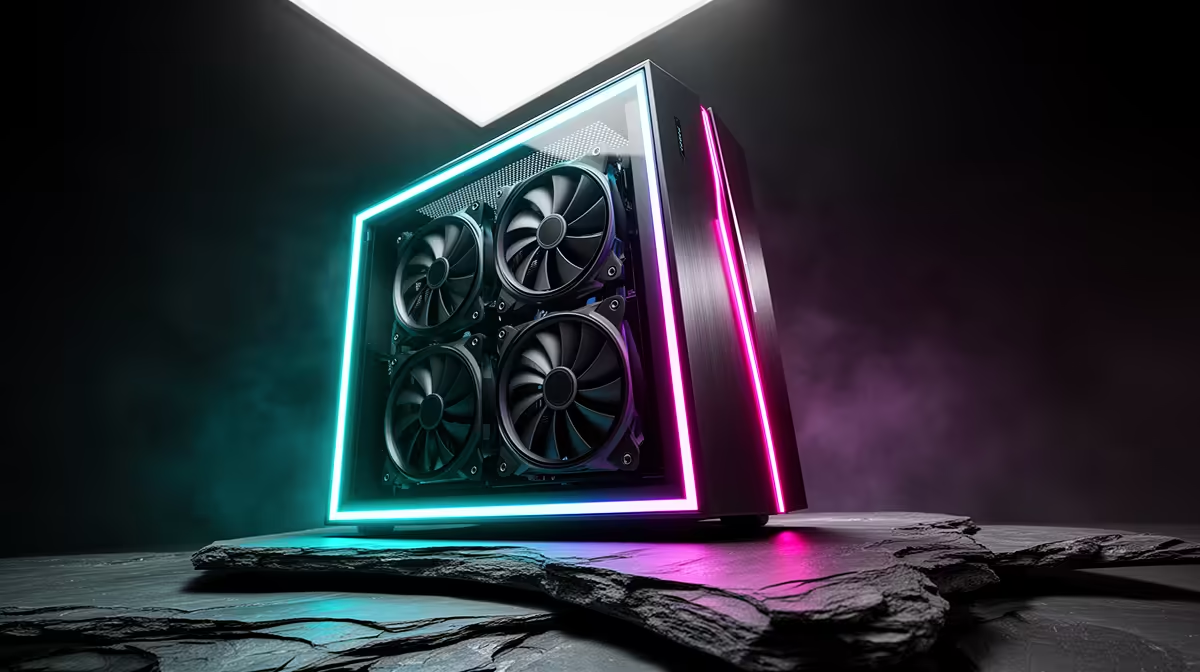
Positive pressure is the most important airflow strategy for SA builds. By running more intake CFM than exhaust CFM, the case interior sits at a pressure slightly above ambient. Dust can only enter through openings where air flows outward, so it gets pushed out through unsealed panel gaps rather than drawn in. All dust ingress then routes through the front and base filters where it can be intercepted and cleaned. A case with two 200mm front intakes at 650 RPM and one 120mm rear exhaust at 900 RPM maintains positive pressure. Negative pressure, when exhaust fans overpower intakes, creates dust ingress through case seams that deposits directly on internal components.
Choosing Large Fans for the SA Environment 🎯
Large fans, specifically 200mm models, offer the best performance-per-noise compromise for SA conditions. At 650 RPM, a 200mm fan moves enough air to cool a mid-high build while spinning slowly enough that dust has more time to settle on the filter. Magnetic dust filters on large intakes are preferable to foam filters because they are easier to remove and clean under running water. Budget R200 to R350 per quality 200mm fan for SA builds where long-term dust management is a priority.
Two-Week Filter Check Habit ⚡
Set a biweekly reminder to pull the front and base filters from your case and clean them. In SA inland environments this is not overcautious, it is necessary. A two-minute filter tap-out and rinse every two weeks prevents the gradual temperature creep that occurs over months as filters become progressively clogged.
FAQ
Does coastal SA dust require the same filter maintenance as inland SA?
Coastal dust in Cape Town and Durban differs from inland Highveld dust. Coastal environments bring more moisture and organic particulate, while inland dust is finer mineral particulate. Both require regular filter maintenance, but the character differs. In coastal areas, a damp cloth on the front filter is effective; in inland areas, tap the filter dry before rinsing.
Are 200mm fans compatible with standard fan controllers?
Yes. 200mm fans use standard 4-pin PWM or 3-pin connectors compatible with any modern motherboard fan header or dedicated fan controller. Confirm your motherboard headers support the fan's start-up voltage if using a 4-pin PWM 200mm fan.
Can I retrofit large fans into a case that only supports 120mm fans?
No, without significant modification. 200mm fan mounts require specific support structures in the case front panel. If your current case only supports 120mm or 140mm fans, maximise those positions with high-airflow fans and maintain a clean filter schedule.
Building in South Africa and want airflow that handles real local conditions?
Evetech stocks case fans, dust filters, and PC cases designed for the conditions SA builders actually face. Browse the full range and build a cooler, cleaner system.