Quick Answer
For a high-end SA gaming PC, prioritise wattage headroom first (1000W to 1200W for RTX 5080 or RTX 5090 builds), then 80 Plus Platinum or Gold certification, then full modularity and native 12V-2x6 cabling. Warranty length and local distributor coverage matter more in South Africa than in markets with easy returns.
Wattage: More Headroom Than You Think You Need 🔌
High-end GPUs have become power-hungry fast. The RTX 5090 carries a 575W TDP and the RTX 5080 sits at 360W. Add a Ryzen 9 9950X or Core Ultra 9 285K at 125 to 250W under sustained all-core loads, plus drives, fans, and RGB controllers, and a flagship gaming PC can peak above 750W. A 1000W PSU puts that system near 75 to 80 percent load, which is fine. A 1200W unit gives more thermal breathing room, which reduces fan spin-up frequency and improves unit lifespan. Do not cut corners to R2,500 units that claim 1000W on the box without certification, as ripple noise on an uncertified supply can directly affect GPU boost stability.
Efficiency Rating: What Platinum Costs and What It Saves 💰
In South Africa, electricity pricing from Eskom makes efficiency a real running cost consideration, particularly for gamers who run long sessions. An 80 Plus Gold PSU at 91 percent efficiency wastes roughly 67W at a 750W system load. An 80 Plus Platinum unit at 93 percent wastes around 52W, saving 15W continuously. Over 2,000 gaming hours per year at Eskom's current residential rate, that 15W saving amounts to roughly R45 to R60 per year in electricity: modest, but the units are also more thermally stable and typically better built. The real value of Platinum certification is build quality correlation, not just the electricity saving alone.
Modularity, Cables, and the 12V-2x6 Connector 🔧
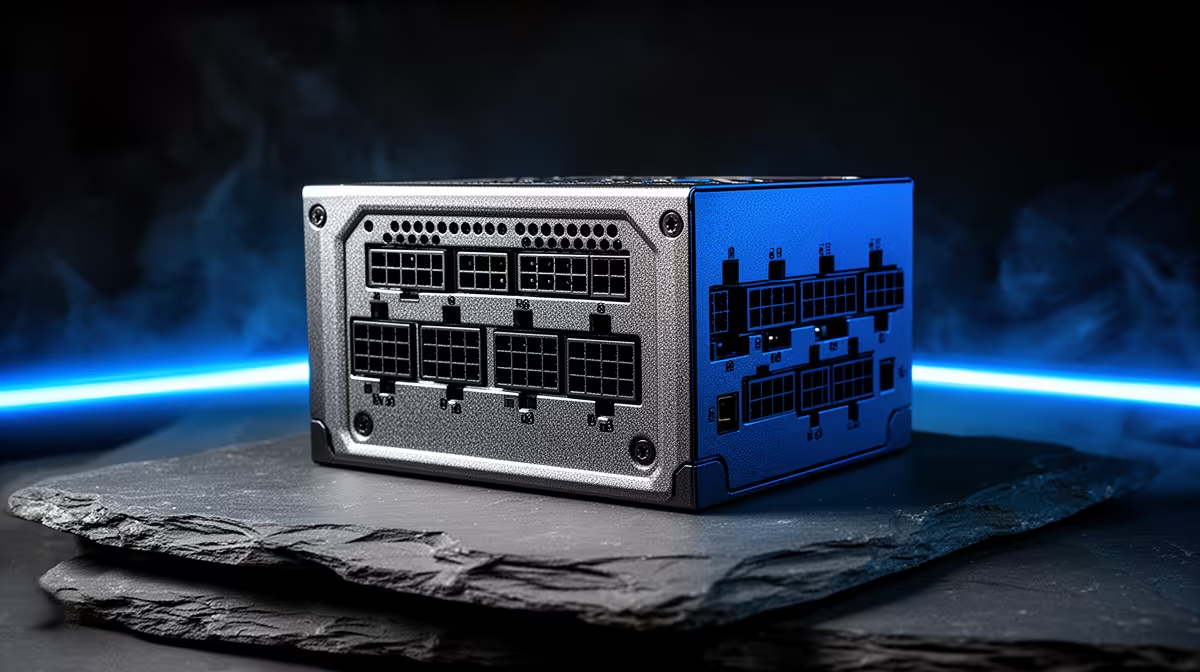
For high-end builds, full modularity is not optional: it means cleaner airflow behind the GPU, easier maintenance, and the ability to replace individual cables without touching the unit. Native 12V-2x6 cables matter for RTX 50-series cards because adapter chains from legacy 8-pin connectors are rated only to around 300W total, requiring two adapters for a 600W card, which adds connector resistance and thermal mass. Any PSU you pair with an RTX 5080 or 5090 should ship with a native 16-pin or 12V-2x6 cable confirmed in the box contents list. Finally, a ten-year warranty from a brand with a local SA distributor means you are covered for most of the GPU's useful life without international shipping costs.
Use the 80 Plus Calculator Before You Buy ⚡
Add your GPU TDP, CPU TDP, and an extra 100W for drives, fans, and RGB, then multiply the total by 1.25 to get your ideal PSU wattage. For an RTX 5080 and Ryzen 7 9700X build, that math lands around 720W, making a 1000W unit a well-sized choice rather than overkill.
FAQ
Should I buy a modular or non-modular PSU for a high-end build?
Always fully modular for a high-end build. Non-modular units include all cables permanently attached, creating cable-management headaches and restricting airflow. The R200 to R400 premium for modularity at the 1000W tier is trivial compared to total build cost.
Does local warranty matter more in SA than overseas?
Significantly so. International RMA processes can take three to eight weeks and may require the buyer to cover shipping costs both ways. Local distributor warranty coverage means in-country swap or repair, often within five to ten business days.
Is 80 Plus Bronze adequate for a high-end SA build?
No. Bronze units are rated to 85 percent efficiency and typically carry lighter internal component specifications. For a build spending R20,000 or more on a GPU, the incremental cost of Gold or Platinum is warranted both for build quality and long-term thermal stability.
Spec out the right PSU for your next high-end SA gaming build?
Evetech carries a full selection of 80 Plus Gold and Platinum power supplies from 650W to 1600W, all with local warranty support.