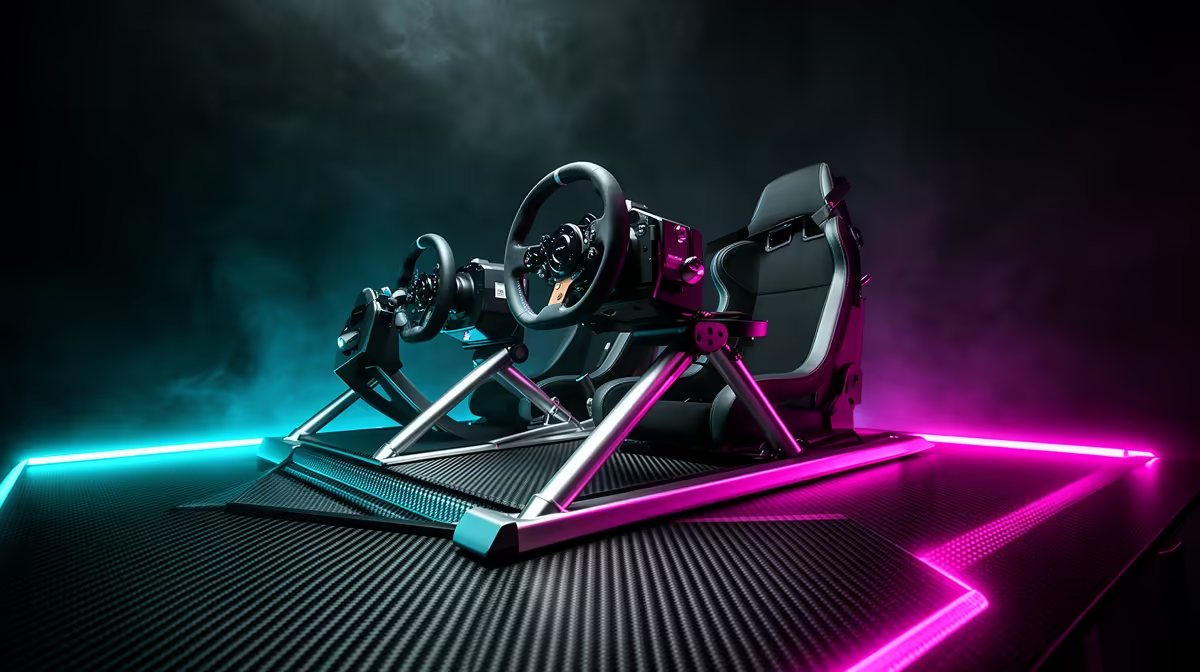
A desk clamp costs the least space and setup time. A wheel stand keeps the controls aligned and can fold away. A cockpit gives the wheel, pedals and seat one rigid structure. The best rung is the one your room can hold and your brake force cannot move. Product prices still need exact named July 2026 evidence.
Quick Answer
Use a desk clamp for entry force feedback, casual sessions and a desk built to take the load. Choose a wheel stand when pedals slide, the chair shifts or the setup must deploy and pack away. Choose a cockpit for load-cell braking, stronger direct drive and a permanent racing position. Measure the room in driving and storage positions before buying.
Compare the mounting choices in Evetech's sim-racing selection. For a rig that swaps to aviation controls, use the flight-simulator range to check side mounts and shared frame needs.
Desk Clamp: The Fast Start
A clamp uses the desk you already own and takes minutes to install. It suits a gear-drive or modest belt wheel when the desktop is solid.
Check thickness, edge profile, underside bracing and clamp depth. Drawers, a bevelled edge or a metal frame can block the clamp.
The pedals still need a stop and the chair needs to stay put. The cheapest wheel mount solves only half the driving position.
Know What the Desk Can Take
No universal torque number makes every desk safe. Solid timber, steel frames, flat-pack fibreboard and glass tops behave differently.
Inspect joints and wobble. Tighten the desk according to its instructions. Never clamp a strong wheel to glass unless the desk and wheel makers document that use.
Start at low force and watch movement. Creaking, spreading joints or a clamp that walks are reasons to stop.
Wheel Stand: The Middle Rung
A stand links the wheel plate and pedal tray. You can keep controls attached and move the unit into place for a session.
Check folded dimensions with the wheel installed. Some stands fold neatly in catalogue photos and remain heavy, tall objects in a small flat.
Look for pedal adjustment, shifter mount, wheel-plate compatibility and enough stiffness for the planned brake.
Stop the Chair Too
A stand without a seat leaves office-chair castors free to roll. Use a wheel tray, castor cups or a suitable chair link.
Set the pedal distance so your knee retains a slight bend at full travel. Place the wheel where shoulders remain relaxed.
Mark the floor position after a comfortable session. Repeatable setup is part of the stand's value.
Cockpit: The Permanent Rung
A cockpit carries the seat, wheel and pedals on one frame. It can hold a stable geometry through hard braking and strong feedback.
Measure length, width, access path and monitor clearance. Include the seat when the frame does not.
Aluminium-profile rigs offer broad adjustment and mounting. Tubular or fixed frames can be simpler. Construction matters more than the label.
Does a Cockpit Make You Faster?
It cannot teach the track or braking point. It can remove movement, discomfort and setup variation that spoil consistent input.
The gain is most visible when a load-cell brake pushes a desk chair backwards or a direct-drive base twists the mount.
Use valid-lap spread and comfort over a stint to judge it, not one personal best.
Match the Mount to the Wheel
Check the wheel's bolt pattern, clamp option, torque and emergency-stop placement. A plate drilled for one ecosystem may need an official adapter for another.
Direct drive deserves extra stiffness. Higher force creates more load on joints and the display.
Do not drill new holes until you have confirmed clearance and avoided cables or structural members.
Match the Mount to the Pedals
A light travel-based pedal can sit on the floor with a stop. A stiff load-cell brake needs a rigid tray and seat relationship.
Check pedal bolt spacing, heel-plate support, angle and adjustment. Flex changes how pressure becomes brake input.
A strong pedal upgrade can move you from desk clamp directly to cockpit if a stand and chair cannot contain it.
Shared and Rented Spaces
A clamp leaves the smallest footprint, but repeated setup can discourage short practice. A folding stand is a good compromise when storage exists.
A cockpit can dominate a room and may be difficult to move through doors. Check landlord and floor-protection needs before adding anchors or heavy castors.
Use rubber feet or a mat to protect flooring and reduce vibration transfer to neighbours.
Display Mounting Changes the Total
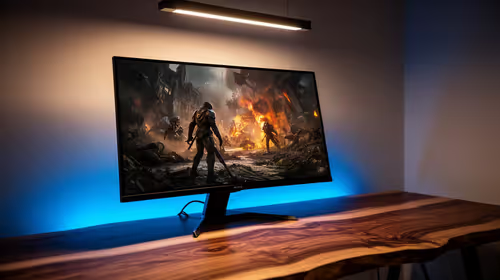
A desk clamp shares the desktop with the monitor. Strong feedback can shake a screen on a light stand.
A wheel stand may need a separate monitor stand. A cockpit can use an attached or freestanding display frame.
Freestanding monitors isolate vibration and allow adjustment, while attached mounts move with the rig. Price the choice as part of the rung.
Plan Cables and Floor Protection
Keep power and USB leads away from pedal travel, seat rails and folding joints. Leave enough slack for adjustment without creating a loop around your feet.
A mat can protect the floor and reduce vibration transfer, but it cannot stabilise a weak frame. Check rubber feet and castors for the surface you own.
If the stand moves between rooms, measure the doorway and cable route. Reconnecting five loose leads can make a supposedly quick setup annoying enough to stay stored.
Compare Named Products, Not Rung Minimums
List the clamp included with a wheel, the exact stand or frame, seat, shifter mount, monitor support and delivery.
Every rand figure must use a named product from the approved price pack and say "as of July 2026". Do not quote the cheapest sim accessory as a desk-clamp tier.
The full cockpit total can include more than the frame. Keep the comparison honest.
FAQ
Is a desk clamp strong enough for direct drive?
Some maker-rated clamps and solid desks can support lower-force direct drive. Check both products and stop if the desk or clamp moves.
Can a wheel stand fold away?
Many can, though the attached wheel and pedals affect folded size and weight. Measure the storage route.
Which option suits a shared room?
A desk clamp or folding stand usually fits better. Choose the one you can deploy without moving furniture every session.
Measure the desk, driving space and storage route, then choose the first mount that holds your wheel, pedals and chair without movement.