Quick Answer
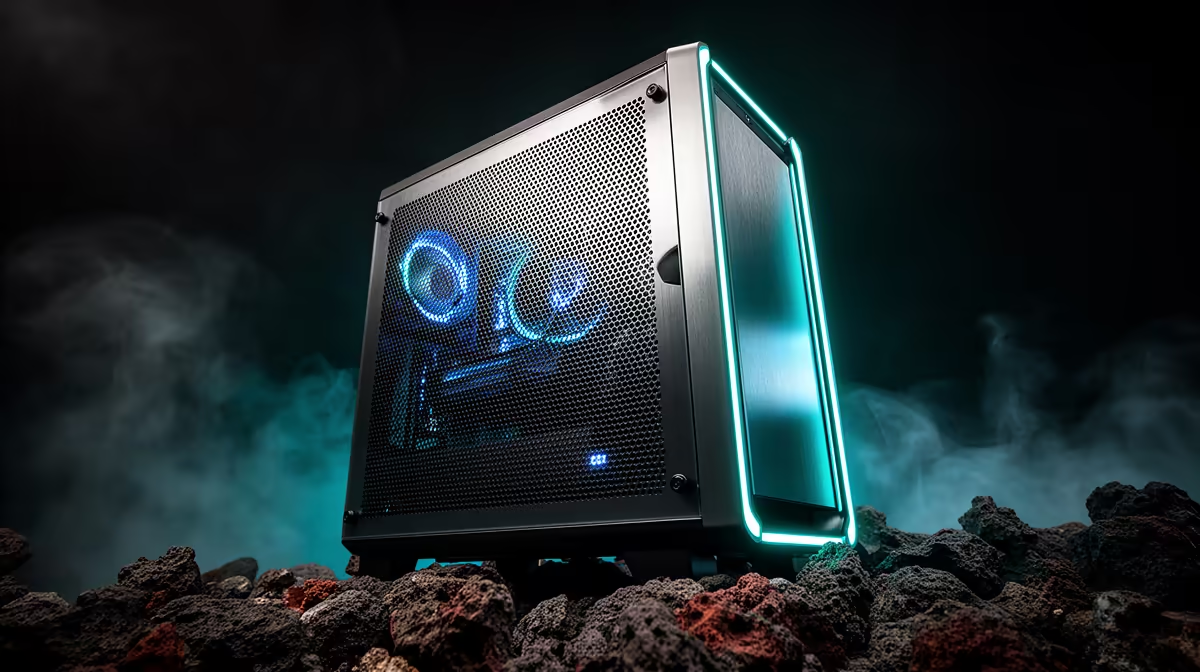
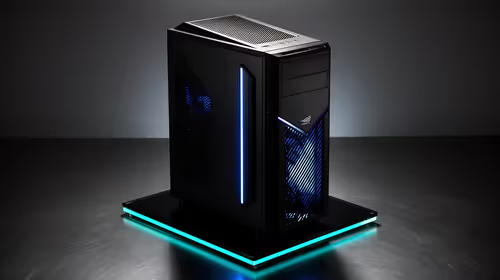
An E-ATX airflow case typically costs between R3,500 and R6,500 in South Africa, representing 8 to 15 percent of a high-end R40,000 to R50,000 build budget. It sits after the GPU and CPU as the third or fourth largest spend and is worth prioritising if you are running an E-ATX motherboard or a multi-radiator cooling setup.
Budget Allocation in a ZAR High-End Gaming Build 💰
A flagship South African gaming build in 2026 typically allocates the bulk of spending to the GPU: an RTX 5090 or RX 9070 XT takes R18,000 to R32,000 of the budget. The CPU, typically a Ryzen 9 9950X or Core Ultra 9 285K, adds another R8,000 to R14,000. Cooling, RAM, storage, and power supply account for a further R10,000 to R15,000 combined. That leaves the case as the final large purchase, and many builders underinvest here by choosing a cheaper chassis to protect GPU and CPU spend. An R4,000 to R5,500 E-ATX airflow case is the right call if your motherboard requires the larger form factor, because a mismatched mid-tower creates clearance conflicts that cost time and potentially damage components.
What You Give Up Below R3,500 and Gain Above R5,500 🔧
Below R3,500, E-ATX cases often compromise on fan quality (bundling 120mm rather than 140mm fans), use thinner steel that resonates at higher RPM, and may only support 360mm rather than 420mm radiators. Above R5,500, premium cases add genuine 420mm front-mount support, tool-free side panel access, integrated fan hubs with PWM control, better internal cable routing channels, and tempered glass panels that withstand years of repeated opening without scratching. The R4,000 to R5,000 sweet spot delivers most of the premium features without the top-tier pricing of flagship chassis from brands with high import premiums.
Timing the Case Purchase in Your Build Sequence 📅
For South African builders ordering components over several pay cycles due to the strong import cost of PC hardware, buying the case first makes practical sense. A case purchase does not change with the Rand-to-Dollar exchange rate as sharply as GPU and CPU imports do, since cases are generally larger, lower-margin products with less price volatility. Purchasing the case first also lets you assess real internal dimensions, fan headers, and clearance before finalising your motherboard and cooling choices. Discovering that a particular E-ATX case has a tight top-radiator-to-RAM clearance before you order RAM is far cheaper than discovering it after.
Factor In Fan Header Count When Budgeting ⚡
A premium E-ATX case with a built-in fan hub may save you R300 to R600 on a separate fan controller or hub. Add the hub cost to your case budget comparison rather than evaluating the case price in isolation. A case with four pre-installed fans and an integrated hub often costs R400 less than buying the same case bare and adding fans and a hub separately.
FAQ
What percentage of a total PC build budget should go to the case?
For a high-end build, 8 to 15 percent on the case is a sensible guideline. On a R40,000 build, that equates to R3,200 to R6,000. Spending less risks thermal or clearance compromises; spending more typically delivers cosmetic rather than functional gains.
Does a more expensive case meaningfully improve PC performance?
Yes, in thermal terms. A premium mesh case with quality fans and proper radiator support can keep CPU and GPU temperatures 5 to 12 degrees Celsius lower than a budget case with the same components. Cooler operation preserves boost clocks and extends component longevity.
Are there E-ATX cases under R3,000 worth considering?
Very few offer genuine value below R3,000 in the E-ATX category. Most sub-R3,000 options compromise on structural rigidity, fan quality, or actual E-ATX motherboard support. An R3,500 to R4,000 case from a reputable brand is a more reliable minimum for the E-ATX form factor.
Putting together a serious ZAR-based high-end build?
Evetech stocks E-ATX airflow cases at every price tier, alongside the GPUs, CPUs, and cooling gear to complete your build in one place.