Quick Answer
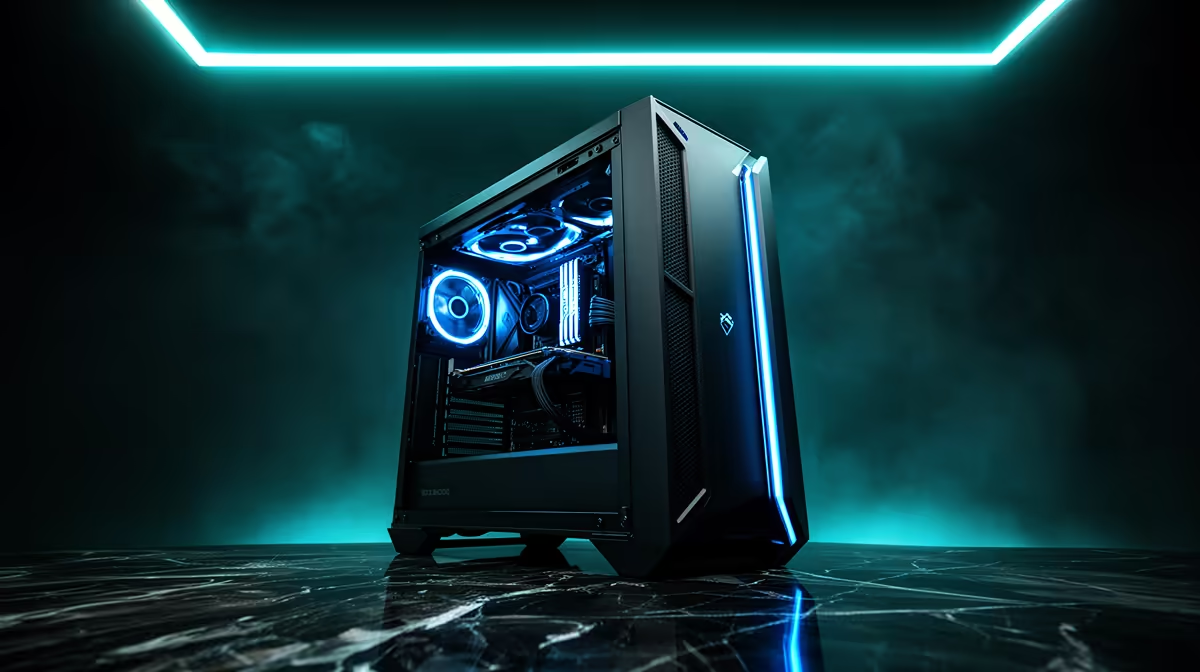
An E-ATX gaming case typically costs R2,800 to R4,500 locally, which is roughly 5 to 8 percent of a R55,000 to R80,000 high-end ZAR build. That percentage is appropriate: the case is infrastructure that supports every other component, and skimping on it undermines a premium CPU, GPU, and cooling investment.
High-End ZAR Build Budget Breakdown 💰
A current-gen high-end gaming PC built in South Africa with an RTX 5080 or RX 9070 XT, a Ryzen 9 9950X or Core Ultra 9 285K, 64 GB DDR5, and a 2 TB NVMe SSD lands between R55,000 and R80,000 depending on component choices and stock availability. In that spend, the case is not where you save money. An E-ATX chassis in the R3,000 to R4,500 range contributes cable routing quality, radiator support for a 420mm AIO, and the physical space needed to house an EATX or XL-ATX motherboard, which is a prerequisite for multi-GPU or heavy overclocking setups. Dropping to a cheaper R1,800 case to redirect funds toward GPU memory is a false economy when poor airflow raises sustained GPU temperatures by 8 to 12 degrees Celsius under gaming load.
Why E-ATX Form Factor Justifies Its Cost Tier 🖥️
E-ATX boards measure 305mm by 330mm, larger than standard ATX at 305mm by 244mm. Not all cases labelled full-tower actually support true E-ATX. A case that genuinely supports E-ATX provides motherboard tray clearance for the extra rows of expansion slots and VRM heat spreaders that protrude toward the edge of the board. It also allows wider PSU shrouds, more cable management real estate behind the tray, and typically more fan and radiator mounting options. At R3,500 to R4,500, an E-ATX case from a reputable brand also ships with pre-routed cable management channels, removable drive cages, and front-panel USB 3.2 Gen 2 Type-C, all of which are missing or compromised on budget chassis.
SA-Specific Budget Planning Tips 🇿🇦
Component prices in South Africa fluctuate with the rand-dollar exchange rate, so high-end build costs can shift by R3,000 to R6,000 between budget planning and purchasing. Locking in case and PSU spend early is wise because these components see less price volatility than GPUs and CPUs. Allocating R3,000 to R4,000 to the case and R2,200 to R3,000 to a modular gold-rated PSU protects the entire build from a single point of failure. The case also ships first, letting you plan component layout before other parts arrive, which is valuable for builds using triple-radiator liquid cooling across front and top mounts.
Confirm Motherboard Standoff Pattern ⚡
True E-ATX support requires nine or more motherboard standoffs matching the EATX hole pattern. Before purchasing, verify the case spec sheet lists EATX standoff positions, not just ATX, because some cases claim EATX compatibility but only include ATX standoffs in the box. Contact Evetech support if the spec sheet is unclear.
FAQ
Can I fit a standard ATX board in an E-ATX case?
Yes, all E-ATX cases support standard ATX, Micro-ATX, and Mini-ITX boards using the same standoff positions. The extra internal space goes unused but does not cause any fitting or compatibility problems.
Is R4,500 too much for a case in a R60,000 build?
No. At 7.5 percent of total build cost, R4,500 for a chassis that houses R55,000 worth of components is proportionate. A quality case protects your investment for a decade and eliminates thermal and cable management problems that would otherwise require costly fixes.
Do E-ATX cases fit standard desks?
Most E-ATX full-tower cases are 250mm to 280mm wide and 500mm to 560mm tall. Measure your desk space and under-desk clearance before buying. Tower cases placed on the floor benefit from a case stand that lifts the bottom intake filter above carpet fibres.
Building a high-end rig that demands the right chassis?
Check out Evetech's E-ATX case range and find a build-ready option sized for your platform and cooling setup.