Quick Answer
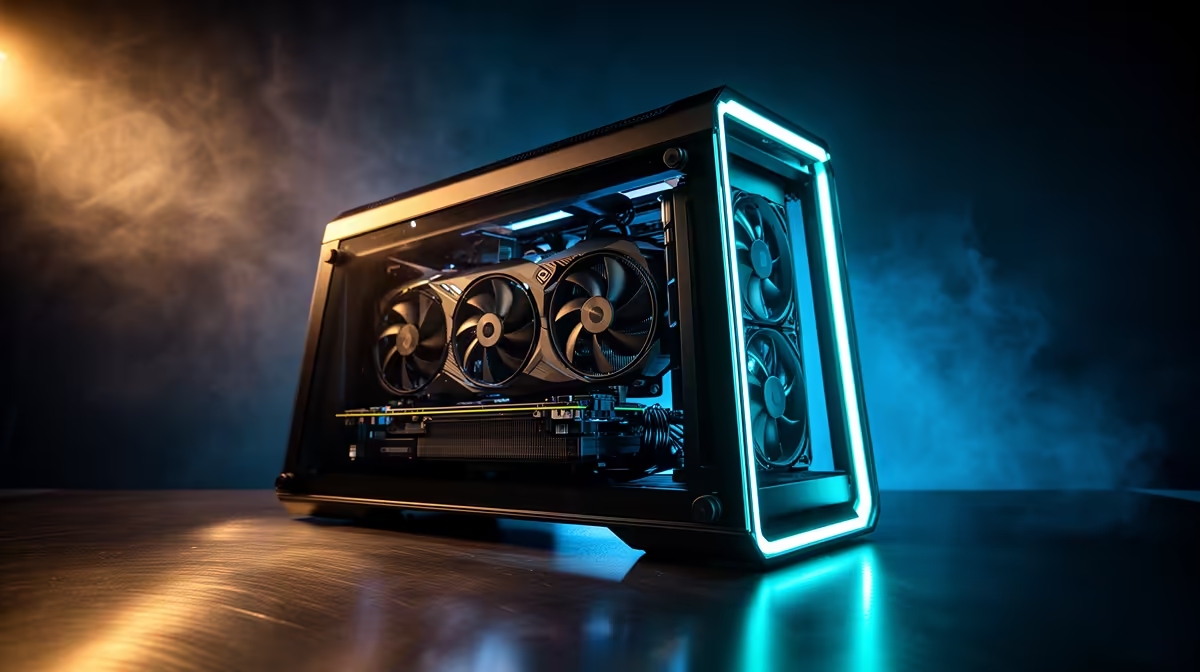
For heavy GPUs like an RTX 5090 or RX 9070 XT, the three case features that matter most are a built-in GPU support bracket, at least 380mm of GPU clearance with the front radiator installed, and PCIe slot cover spacing of the correct width for your card. After these, priority goes to front intake fan area and cable routing for the 12VHPWR connector.
GPU Physical Clearance: The First Gating Check 📐
A large triple-fan GPU like an RTX 5090 AIB variant can reach 360mm long, 145mm high, and 62mm thick. Before buying any case, confirm three dimensions against your GPU's spec sheet: length clearance (mid-towers clear 330 to 380mm, full-towers 380mm and above), GPU height clearance (most cards exceeding 145mm need 150 to 165mm of internal width), and slot thickness. Cases with slot covers secured by thumbscrews rather than break-off tabs allow re-installation if you swap the GPU later.
Built-In GPU Support: Essential for Cards Over 1.5kg 🔩
An RTX 5090 FE weighs approximately 2.0kg; large AIB triple-fan variants can exceed 2.3kg. This weight is supported entirely by the PCIe x16 slot. Over months of operation, gravity permanently bends the slot downward by 1 to 3mm. Cases with built-in adjustable GPU support arms (Phanteks Enthoo 719, Lian Li O11D EVO XL, Corsair 7000D) include a height-adjustable support leg that contacts the GPU shroud underside and eliminates sag. If your chosen case lacks one, a universal aftermarket GPU support brace costs R200 to R500 and installs in under five minutes.
Airflow Design and the 12VHPWR Cable Route 🔧
Heavy GPUs generate substantial heat. An RTX 5090 at 575W TDP demands that cool air reach the GPU's downward-facing fans. Aim for at least three 120mm or two to three 140mm fan positions at the front, unobstructed by drive cages. The 12VHPWR connector on RTX 50-series cards requires a minimum bend radius of 35mm to avoid stress cracking at the connector base. Cases with a grommet or cable routing channel positioned near the bottom of the motherboard tray, aligned with the GPU's power input position, make this routing clean. Cases where the only grommet is at the top force a long cable run that bends sharply near the GPU. Full-tower cases optimised for heavy GPU builds are stocked at Evetech from R3,500 to R8,000.
Check GPU Slot Cover Count Before Sealing ⚡
After installing a 2.5-slot or 3-slot GPU, confirm the case's slot cover bar applies firm and even pressure across all GPU-occupying positions. A loose retaining bar lets the GPU shift slightly under gravity, concentrating stress on the PCIe latch. Tighten until there is zero play and the GPU cannot rock in the slot, then re-engage the PCIe latch fully.
FAQ
Does a case with more ventilation always cool a heavy GPU better?
More front intake area helps significantly, but fan count and positioning matter equally. A case with a full-mesh front panel and three 140mm fans at 900 RPM will cool a heavy GPU better than a case with a solid front panel and a single 120mm fan regardless of how ventilated the case looks.
Can I install a triple-slot GPU in a case designed for dual-slot cards?
Physically, a triple-slot GPU requires about 60 to 65mm of internal width from the PCIe slot plane to the side panel. If the case's internal width is 165mm or more, the GPU fits regardless of slot count labels. Some cases list maximum GPU thickness in millimetres, which is more reliable than the slot count label.
Is a vertical GPU mount worth considering for heavy GPUs in an SA build?
Yes, if aesthetics and sag elimination are priorities. A vertical mount eliminates gravity sag entirely. However, GPU fans face the side glass panel, reducing airflow intake by 10 to 20 percent depending on panel distance. Ensure at least 30mm of gap between GPU fans and the glass.
Pairing a heavy RTX 5090 or RX 9070 XT with the right case?
Evetech stocks full-tower and premium mid-tower cases engineered for large GPUs, with built-in GPU supports and 380mm-plus clearance from trusted brands.