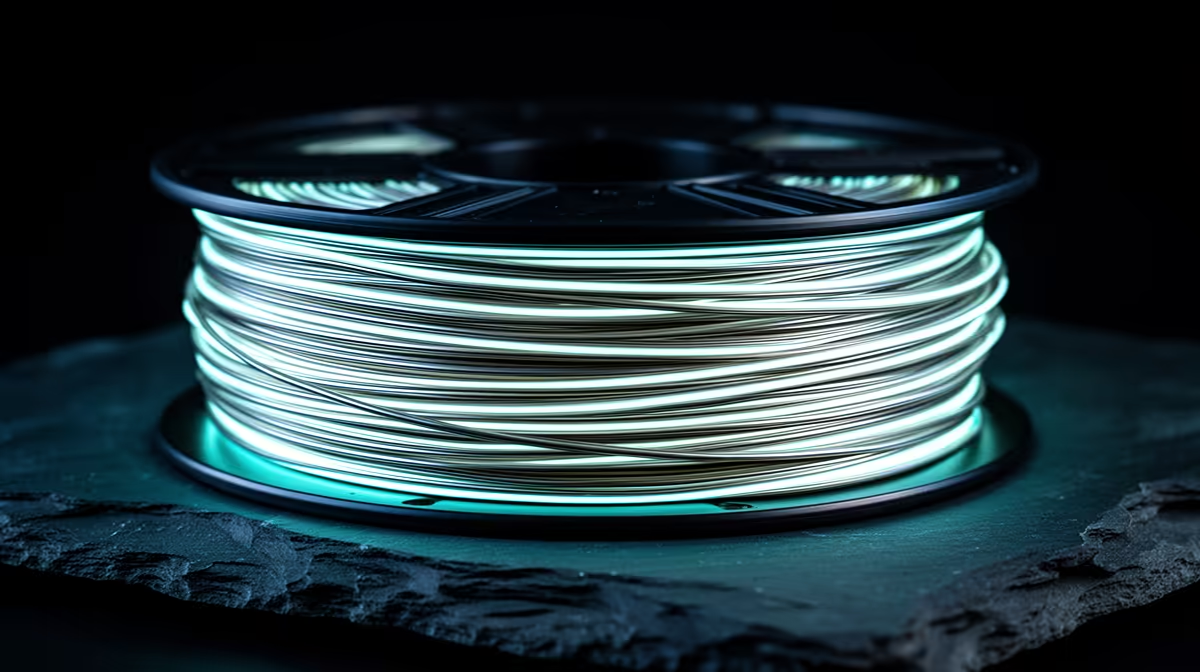
Leave a freshly printed skull or starship under a desk lamp for ten minutes, switch the lights off, and the good stuff still glows an hour later while the cheap stuff fades to a dull smear in minutes. The gap comes down to one ingredient. The glow-in-the-dark filament that lasts longest is built on strontium-aluminate phosphor, and knowing how that pigment behaves saves you from a worn nozzle and a disappointing afterglow.
Quick Answer
Strontium-aluminate (SrAl2O4 doped with europium and dysprosium) is the pigment to look for. It glows brighter and holds its afterglow for several hours per charge, far outlasting older zinc-sulphide blends that fade within minutes. The catch: those mineral crystals are abrasive enough to enlarge a brass 0.4mm nozzle after roughly 0.5kg to 2kg of printing, so a hardened steel or ruby nozzle is the real long-term play.
Why strontium-aluminate beats zinc-sulphide
Two phosphors dominate the glow filament market and they are not close in performance. The older chemistry is zinc-sulphide, which produces a faint green glow that drops off fast once the light source is removed. The pigment that actually holds a charge is strontium-aluminate, usually written SrAl2O4:Eu,Dy on a spec sheet. It absorbs light, stores the energy, then releases it slowly as visible photons, giving you a usable afterglow measured in hours rather than the few minutes a zinc-sulphide print manages.
Particle size and loading matter too. The crystals in a good glow filament sit around 20 to 50 microns and make up roughly 15 to 30 percent of the filament by weight. More pigment means a brighter, longer glow, but it also means a more brittle filament and faster nozzle wear, so the highest-loading filaments are a trade-off rather than a free win. If a filament does not state its phosphor type, assume it is the cheaper zinc-sulphide blend and expect a short glow.
The nozzle-wear problem nobody warns you about
Strontium-aluminate crystals are hard enough to score glass, and that same hardness turns your filament path into a slow grinding process. Every centimetre of glow filament dragging through a standard brass nozzle acts like fine sandpaper on the inner bore. The result is a nozzle that started at 0.4mm and quietly widens over time, which throws off your flow rate, line width and dimensional accuracy on every later print, not just the glow ones.
How fast does brass actually wear
The honest range is wide because it depends on how much pigment the filament carries and how hot and fast you print. A brass nozzle can show measurable enlargement after as little as 0.5kg of heavily loaded glow filament, and most will be noticeably off after 2kg. If you only ever print one glowing dragon for a school project, brass is fine. If glow prints become a regular thing, the cost of a worn nozzle and the reprints it causes outweighs the few hundred Rand a hardened nozzle costs.
Hardened steel or ruby
For repeat glow printing, swap to a hardened steel nozzle as the sensible default. Ruby-tipped nozzles resist wear even better and suit anyone who prints abrasive materials like carbon-fibre and glow filament regularly, though they cost more. The one thing to remember with hardened steel is that it conducts heat slightly differently to brass, so bump your printing temperature up by a few degrees and confirm your flow on a test print. A modern printer from the 3D printer range at Evetech makes nozzle swaps straightforward, and many ship with a hardened option in the box.
How the two phosphors compare in real prints
Side by side, the difference is obvious within seconds of the lights going off. A zinc-sulphide print flares briefly then fades to almost nothing in a couple of minutes, which is why so many cheap glow trinkets disappoint. A strontium-aluminate print of the same shape and size, charged under the same light, stays clearly visible far longer and degrades gradually rather than dropping off a cliff. For anything you actually want to see glowing at night, a model on a shelf, a light-switch surround, a costume piece, that longevity is the whole reason to print in glow filament at all.
Colour also shifts the result. The classic green strontium-aluminate blend is the brightest and longest-lasting because the human eye is most sensitive to green, so it reads as more luminous even at the same energy output. Blue and aqua blends look striking but generally glow a little dimmer and shorter, while novelty colours often lean on weaker pigments. If maximum afterglow is the goal, green is the safe pick; if you want a specific colour for a project, accept that you may trade some glow time for it.
Drying matters more than people expect
Glow filament is still PLA underneath, and PLA absorbs moisture from the air. A damp spool prints with a rougher surface, more stringing and weaker layer bonding, all of which dull the finished glow because light scatters off a poor surface instead of charging the pigment evenly. Keep your filament in a sealed container with desiccant between prints, and run a drying cycle if a model comes out hazy or rough. A well-dried spool of glow filament noticeably outperforms the same spool left open on a humid Cape Town day.
Charging the glow and getting the most afterglow
A glow print is only as bright as its last charge. Strontium-aluminate charges fastest under ultraviolet, which is why a cheap UV torch gives a far stronger and longer glow than ambient room light. Bright white light works too, just more slowly. Give a model a few minutes directly under a strong light source and it will outglow a piece that only caught indirect daylight through a window.
Print settings also shape the glow. Thicker walls and higher infill hold more pigment in the light path, so a model printed with two or three perimeters glows visibly brighter than a single-wall print of the same shape. White or translucent surroundings reflect the released light, while the pigment buried deep inside a solid print never gets to contribute, so glow filament rewards designs with generous surface area. The right tools and consumables for finishing and maintaining these prints sit in the accessories best sellers, worth a look once your printer is dialled in.
Frequently Asked Questions
Which glow filament lasts longest per charge?
A strontium-aluminate blend (SrAl2O4:Eu,Dy) holds a usable afterglow for several hours after a full charge. Zinc-sulphide filament, the cheaper option, fades within minutes, so always check the phosphor type on the spec sheet before buying.
Will glow filament really damage my nozzle?
Yes, if you use a standard brass nozzle for any volume. The phosphor crystals are abrasive enough to enlarge a 0.4mm brass bore after roughly 0.5kg to 2kg of printing. A hardened steel or ruby nozzle avoids this entirely.
How do I charge a glow-in-the-dark print for the brightest result?
Hold it under a UV torch or a strong white light for a few minutes. Ultraviolet charges strontium-aluminate fastest, producing a brighter and longer afterglow than ambient room light or indirect daylight.
Is glow filament harder to print than normal PLA?
The base is usually standard PLA, so temperatures are similar, but the pigment makes the filament more brittle and abrasive. Print a little hotter on a hardened nozzle, keep the filament dry, and avoid sharp feed-path bends to reduce snapping.
Does more pigment always mean a better glow?
Brighter, yes, but with diminishing returns. Higher pigment loading boosts glow intensity and duration while making the filament more brittle and wearing nozzles faster. Mid-to-high loading on a hardened nozzle is the practical sweet spot.
Planning a glow project worth doing properly? Start with the right machine and a hardened nozzle from the 3D printer range at Evetech so your afterglow lasts and your prints stay dimensionally accurate.