Generative 3D tools that turn a text prompt or a few photos into a textured mesh live and die on one number: VRAM. AI-assisted 3D workflows load model weights and intermediate tensors into graphics memory at the same time, and when that memory runs out the job either crawls or crashes. The GPU you pick decides which models you can run at all, not just how fast they run.
Quick Answer
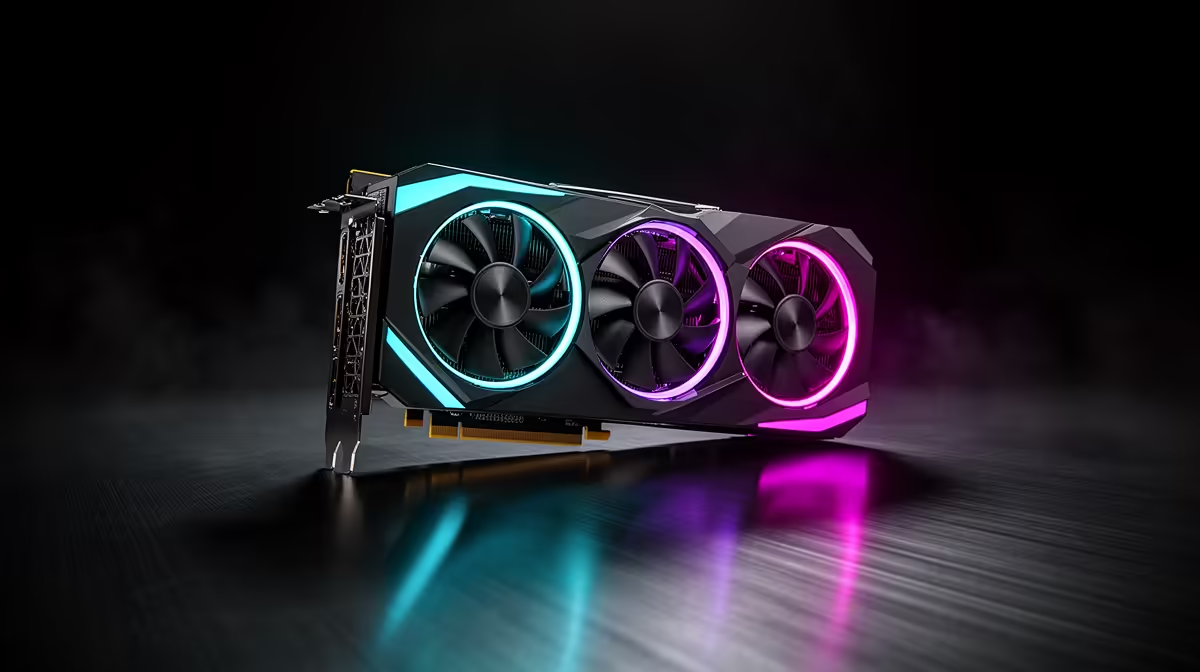
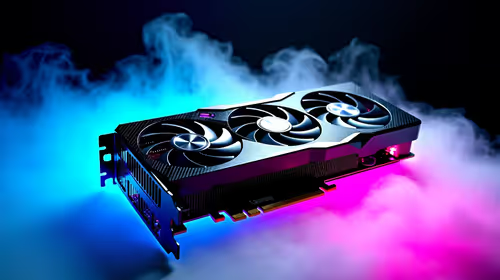
For AI-assisted 3D work, buy an NVIDIA RTX card with at least 16GB of VRAM and Tensor cores. Smaller diffusion and reconstruction models run on 12GB, but larger generative 3D pipelines need the headroom to hold weights and working tensors together. The RTX 4080 Super class is the sensible value pick, with the RTX 4090 and its 24GB the choice when memory ceilings keep stopping you.
Why VRAM Is the First Spec, Not Clock Speed
A generative 3D pipeline loads a neural model into VRAM, then allocates more memory for the data it processes as it runs. If the combined total exceeds your card's memory, the software falls back to system RAM over the PCIe bus, which is dramatically slower, or simply fails with an out-of-memory error. Raw core clock barely matters once you hit that wall.
This is why a mid-tier card with more memory often beats a faster card with less for AI work. The job that fits entirely in VRAM finishes; the one that spills does not. For 3D specifically, mesh generation, texture synthesis and neural reconstruction all stack memory demands, so headroom is insurance against the next bigger model you want to try.
How much VRAM for which work
- 12GB handles smaller image-to-3D and texture models and light experimentation.
- 16GB is the comfortable floor for serious generative 3D, leaving room for larger weights and batch sizes.
- 24GB removes most ceilings, letting you run high-resolution generation and several models loaded at once.
The current GPU lineup and the printers these workflows often feed into both sit in the 3D printers and components range at Evetech, worth scanning when you plan a print-and-generate pipeline end to end.
Why NVIDIA and Tensor Cores Dominate Here
Almost every AI 3D tool is built on CUDA, NVIDIA's compute platform, and accelerated by Tensor cores, the dedicated matrix-maths units inside RTX GPUs. Frameworks like PyTorch are optimised for this hardware first, so the broadest software support, the most tutorials and the fewest compatibility headaches all sit on the NVIDIA side.
Tensor cores speed up the matrix multiplications that dominate neural inference, and modern RTX cards add support for lower-precision formats that let larger models squeeze into the same memory. For someone choosing one card to cover both AI generation and traditional 3D rendering, an RTX with strong Tensor performance is the safe single answer.
The Value Picks, Tier by Tier
Entry to AI 3D
A 12GB RTX card gets you into image-to-3D and texturing without overspending. It is enough to learn the tools and produce usable assets, with the understanding that the biggest models will be out of reach.
The sensible middle
An RTX 4080 Super class card with 16GB is the value sweet spot. It runs the great majority of current generative 3D pipelines comfortably, renders quickly in Blender and similar apps, and leaves enough memory headroom that you are not constantly fighting the ceiling.
No-compromise headroom
The RTX 4090 and its 24GB is the pick when memory is the thing repeatedly stopping you. High-resolution generation, larger batches and keeping several models resident all become possible. It is the most expensive route, justified when the work genuinely demands the space.
Architecture Matters Beyond VRAM
Two cards with the same VRAM figure but different GPU generations can perform noticeably differently on AI 3D workloads. The key difference is Tensor core generation. NVIDIA has iterated on these matrix-maths accelerators with each new architecture, and newer generations support additional low-precision number formats that let larger models run efficiently inside a fixed memory envelope. An RTX 40-series card with 16GB of VRAM will process many generative pipelines faster than an older 30-series card with the same memory capacity, simply because the newer Tensor cores handle the mixed-precision computation more efficiently.
For buyers in South Africa, where import pricing and stock availability sometimes make older cards look attractive on price, it is worth checking whether the generation difference translates to a meaningful practical gap on the workloads you actually run. For text-to-3D and mesh generation, the architecture gap is real enough that choosing one RTX generation above what you could afford in the previous one is often worth it.
Used Cards: When They Make Sense
A used RTX 3090 with its 24GB of VRAM can be a compelling buy for AI 3D generation specifically, because memory capacity matters more than architecture for load feasibility. The card's older Tensor cores mean it runs more slowly than a current generation equivalent, but it will load models that a newer 16GB card cannot. If throughput speed matters less than being able to run the larger models at all, a well-priced 3090 is a legitimate option. Verify the card's history and check that the VRAM is fully functional before buying.
Don't Forget System RAM and Storage
The GPU does the heavy lifting, but a starved system around it bottlenecks the whole pipeline. Pair a 16GB-plus GPU with at least 32GB of system RAM so large meshes and datasets stage smoothly, and put your project files on a fast NVMe SSD so loading and saving generated assets does not stall the workflow. A balanced machine keeps the expensive GPU fed.
Frequently Asked Questions
How much VRAM do I need for AI-assisted 3D?
At least 16GB for serious generative 3D work. Smaller models run on 12GB, but larger pipelines need the extra memory to hold weights and working data together without spilling to system RAM and slowing to a crawl.
Why is NVIDIA recommended over AMD for AI 3D?
Most AI 3D tools are built on NVIDIA's CUDA platform and accelerated by Tensor cores, giving the widest software support and the smoothest setup. AMD cards can do graphics well, but the AI tooling ecosystem is built around NVIDIA first.
Is an RTX 4090 worth it over an RTX 4080 Super for this?
Only if memory ceilings keep stopping you. The 4080 Super's 16GB covers most generative 3D work, while the 4090's 24GB unlocks high-resolution generation and running several models at once. Buy the headroom only if your projects demand it.
Do Tensor cores actually matter for 3D generation?
Yes. They accelerate the matrix maths at the heart of neural inference and support lower-precision formats that let bigger models fit in the same VRAM. That translates to faster generation and access to larger models.
How much system RAM should pair with the GPU?
At least 32GB. The GPU handles the AI compute, but large meshes and datasets stage through system memory, so a thin 16GB system can bottleneck an otherwise capable card.