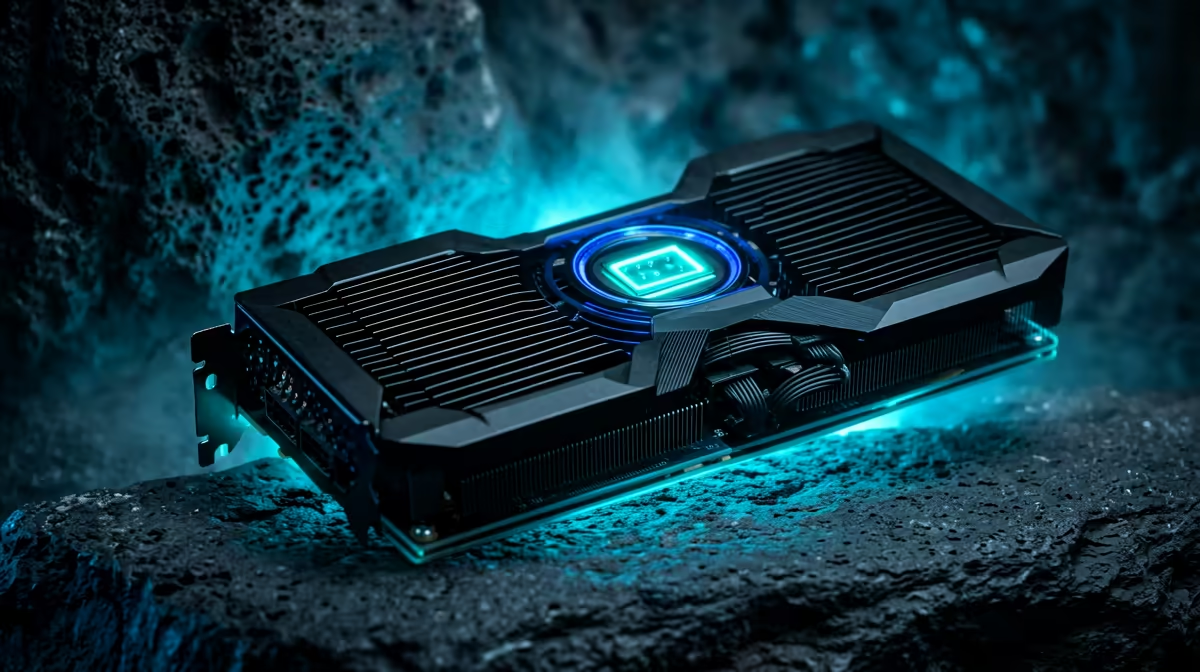
Smooth PC VR is a brute-force rendering problem. The headset has to draw two high-resolution images, one per eye, and hold a locked 90 frames per second so your inner ear never argues with your eyes. That single requirement, sustained 90fps at high per-eye resolution, is what sets the GPU floor. For most current PCVR titles on a Quest 3 tethered to a PC, an RTX 4070 or 5070-class card is the sensible entry point, with higher tiers reserved for the heavy sims.
Quick Answer
For most Quest 3 PCVR titles, an RTX 4070 or 5070-class GPU is the practical minimum to sustain 90fps at high per-eye resolution. Demanding flight sims and racing titles benefit from stepping up to an RTX 4080 or 5080. Below the 4070 tier, you will be fighting resolution and reprojection compromises.
Why VR Punishes GPUs Harder Than Flat Gaming
A flat monitor renders one frame at one resolution. VR renders two views, each at a per-eye resolution that often exceeds 1080p, and it does so with almost no tolerance for dropped frames. A stutter on a monitor is mildly annoying. A stutter in a headset can trigger nausea within seconds, so the GPU has to maintain its frame budget consistently rather than on average.
This is why VR effectively doubles the pixel workload of an equivalent flat-screen resolution, and why a card that breezes through 1440p gaming can still struggle once a demanding VR title pushes supersampling and high refresh.
The Role of Per-Eye Resolution and Supersampling
The Quest 3 has a sharp panel, and PCVR users often push render resolution above native to reduce aliasing. Every step up in supersampling multiplies the pixels the GPU must draw. A 4070-tier card handles a sensible supersample on most titles, but crank the slider and you can humble even high-end hardware. The lever you control is render resolution, so matching it to your GPU is the real skill.
The Tiers, Mapped to Real VR Use
Here is how the practical GPU ladder breaks down for PCVR.
RTX 4070 / 5070 Class: The Entry Point
This is where comfortable PCVR starts. These cards sustain 90fps at high per-eye resolution across the bulk of the current PCVR library, from action titles to social and rhythm games. For someone buying their first serious VR rig, this tier hits the value sweet spot.
RTX 4080 / 5080 Class: For Sims
Flight simulators, space sims and racing titles are a different beast. They combine dense cockpit detail, long draw distances and heavy physics, and they reward every extra frame of headroom. If your VR library leans toward DCS-style flight or serious sim racing, the 4080 or 5080 tier earns its premium by keeping those worlds smooth at higher supersampling.
Below the 4070: Compromise Territory
You can run PCVR on weaker cards, but you will lean on reprojection (frame synthesis that fills gaps) and lower render resolution. That works for lighter titles, yet it undercuts the clarity and smoothness that make PCVR worth the cabling and setup in the first place.
What Else Has to Keep Up
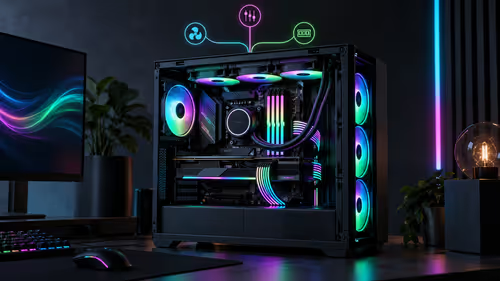
The GPU is the headline, but it is not alone. A PCVR rig needs a capable CPU to feed frames, since VR is sensitive to frame-time spikes that a weak processor introduces. Plenty of fast system RAM helps, and a tidy USB or wireless link to the headset matters for a clean image. You can see the headset and link gear in the AR and VR glasses range at Evetech, which sits alongside the components that drive them.
Before you commit to a card, sanity-check the whole build. A 5080 paired with a starved CPU still stutters in sims. For a wider view of what other builders are pairing, the accessories best sellers at Evetech show the supporting gear that rounds out a VR-ready setup.
DLSS, Frame Generation and the VR Caveat
NVIDIA's upscaling and frame-generation tools change the GPU calculation, but VR adds a wrinkle. DLSS upscaling, rendering at a lower internal resolution and reconstructing detail, can hand a mid-tier card real headroom in VR titles that support it, and it is one reason a 5070-class card stretches further than its raw specs suggest.
Frame generation is more complicated in VR. Inserting synthesised frames adds latency, and VR is the one place where added latency can break immersion or cause discomfort. The headset's own reprojection already performs a form of frame synthesis, so stacking generated frames on top is not always the win it is on a flat screen. The practical takeaway: lean on DLSS upscaling where a title supports it, and treat frame generation in VR with more caution than you would for monitor gaming.
Matching the Card to Headset Resolution
The 90fps target is fixed, but the per-eye resolution is not. The Quest 3 pushes a sharp panel, and the render resolution you choose multiplies the GPU load directly. A 4070-class card at native or modest supersampling is comfortable, while the same card chasing aggressive supersampling on a demanding title will drop frames.
This is the most useful habit to build: treat render resolution as a slider you tune to your card, not a fixed setting. A mid-tier GPU running a sensible resolution gives a smoother, more comfortable experience than a higher resolution that the card cannot sustain at 90fps. Clarity matters, but consistent frame pacing matters more in a headset.
Who Should Buy What
If you mostly play action, social and rhythm VR, the 4070 or 5070 tier is all you need and the smart spend. If you are a sim pilot or sim racer chasing maximum clarity, budget for the 4080 or 5080 tier. And if your card sits below the 4070 line, target lighter titles and modest render resolutions until you can step up, rather than expecting flagship VR experiences.
Frequently Asked Questions
What is the minimum GPU for smooth PC VR?
An RTX 4070 or 5070-class card is the practical minimum to sustain 90fps at high per-eye resolution across most current Quest 3 PCVR titles. Weaker cards force reprojection and lower render resolution.
Do I need an RTX 4080 or 5080 for VR?
Only if your library leans toward demanding flight sims, space sims or racing titles. These reward extra GPU headroom for high supersampling. For most action and social VR, the 4070 or 5070 tier is enough.
Why does VR need a stronger GPU than a normal monitor?
VR renders two high-resolution views, one per eye, and must hold a locked 90fps to avoid nausea. That roughly doubles the pixel workload of equivalent flat-screen gaming and leaves little room for dropped frames.
Does the CPU matter for PC VR?
Yes. VR is sensitive to frame-time spikes, so a capable CPU is needed to feed the GPU consistently. A top GPU paired with a weak CPU will still stutter, especially in physics-heavy simulators.
Can I run PC VR on a card below the RTX 4070?
You can, by leaning on reprojection and lower render resolution, which suits lighter titles. But you sacrifice the clarity and smoothness that make tethered PCVR worth the effort.