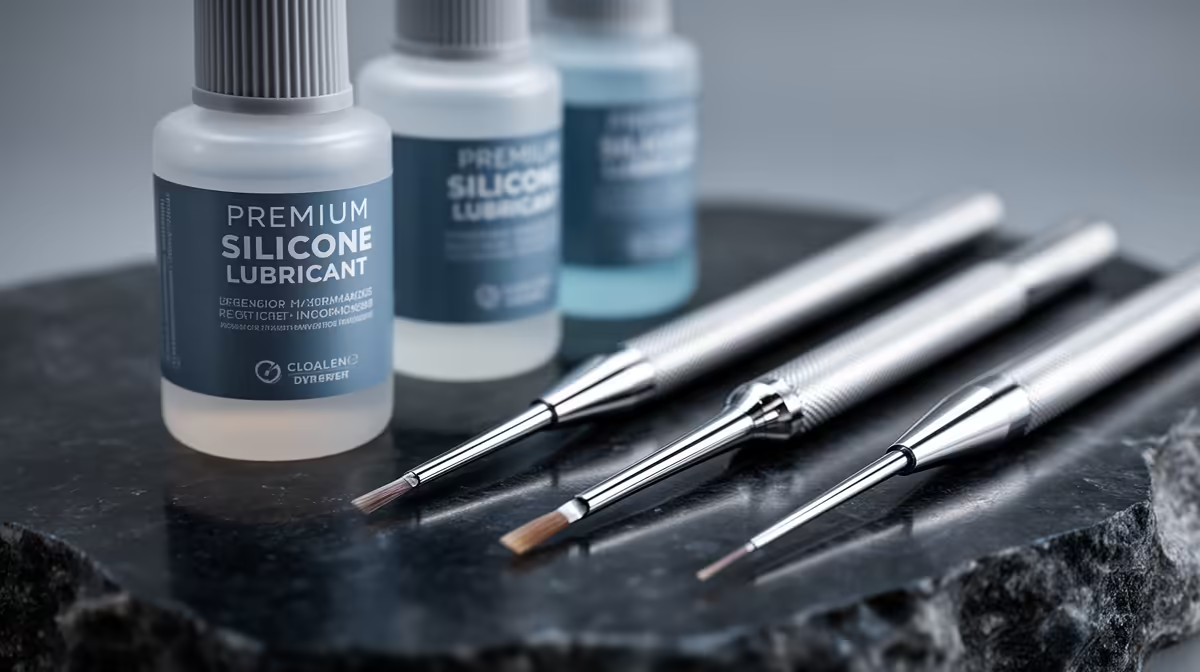
A 3D printer is a precision motion machine, and the parts that move thousands of times per print, the linear rails, the smooth rods and the Z lead screw, all need the right lubricant to stay quiet and accurate. Reaching for generic household oil or a can of WD-40 is the single most common way South African owners quietly ruin their machines. 3D printer lubrication is not complicated once you know which product goes where, and the whole maintenance kit costs less than a single failed bearing.
Quick Answer
Use a PTFE or white lithium grease on the Z lead screw, a light synthetic grease or machine oil on the X and Y linear rails and smooth rods, and never WD-40, which strips factory grease and accelerates wear. A basic kit of PTFE grease, lithium grease, isopropyl alcohol and lint-free cloths runs roughly R250 to R600 and lasts most hobbyists a year or more.
Why the right lubricant matters more than the brand
Every axis on your printer rides on a thin film of lubricant. When that film breaks down, the stepper motors have to work harder to push the carriage, which shows up as grinding noise, layer shifting and rounded corners on what should be sharp prints. The classic rule that experienced builders repeat is simple: oil for the rails, grease for the screw.
Grease stays put under heavy vertical load, which is exactly what the Z lead screw deals with as it lifts the entire X gantry. PTFE-based grease suspends micro-fine Teflon particles in a synthetic base oil, giving one of the lowest drag coefficients of any lubricant and working equally well on metal-on-metal and plastic-on-metal contact. White lithium grease is the affordable, widely available alternative that resists heat and water and lasts a long time between applications.
What to use on each part
Z lead screw
This is the slow, high-load component, so it wants grease, not oil. A pea-sized amount of PTFE or lithium grease worked along the threads by jogging the Z axis up and down a few times is enough. Too much grease simply collects dust and turns into an abrasive paste, so wipe away any excess.
X and Y linear rails and smooth rods
These move fast and frequently, so a lighter touch wins. A thin film of synthetic machine oil or a light grease lets the carriage glide without dragging. Apply a small bead, run the axis end to end by hand, then wipe off what beads up at the limits.
Linear bearings and blocks
For MGN-style linear rail blocks, inject a small amount of grease into the block and cycle it across the full rail so the recirculating balls distribute it evenly. Open the smooth-rod bearings the same way, working the lubricant in by sliding the carriage.
The maintenance tools that earn their place
You do not need a workshop, just a handful of items. Isopropyl alcohol and lint-free cloths clean off the old, dirty grease before you reapply, because layering fresh grease over grit just grinds the contamination into the surface. A set of hex keys and a small brush handles belt tension checks and clearing debris from the nozzle area. A digital caliper helps you verify dimensional accuracy after a service so you know the lubrication actually fixed the drift. These items are well stocked among the accessories best sellers at Evetech, making it straightforward to order them alongside your next filament run.
How often, and how to tell
A practical schedule for a home printer running a few prints a week is a clean-and-relube every two to three months, or sooner if you hear new noise or see motion artefacts. The clearest signal is the colour of the grease: clear or white grease that has turned grey or black is full of dust and metal, and it is time to clean and reapply. Heavy users who treat the printer as a small production machine should service when cumulative travel reaches roughly 100 kilometres.
Sealed bearings: what not to lubricate
A common mistake is adding grease to sealed, pre-packed bearings. These arrive from the factory with a lifetime grease charge held inside a rubber seal, and attempting to add more grease externally pushes the internal seal out rather than supplementing the lubricant. If a sealed bearing starts making noise, the correct action is replacement rather than lubrication. On the other hand, open linear bearings and lead screw nuts are maintenance parts that genuinely need the regular clean-and-reapply cycle, so knowing the difference saves both time and components.
Choosing a machine with the right motion system
The lubricant your printer needs also depends on how it is built. CoreXY machines like many current models use long paired belts and MGN linear rails, so the rail blocks and the Z lead screw are the main maintenance points. Bed-slinger designs rely on the X carriage rail and a single or dual Z screw. A few premium machines use precision ballscrews on Z rather than a trapezoidal lead screw, and while those need less frequent attention they still benefit from a light grease application every few months.
For makers comparing current models before settling on a platform, the 3D printer range at Evetech covers machines across different motion architectures so you can match build quality to your maintenance expectations before committing.
Frequently Asked Questions
Can I use WD-40 on my 3D printer rails?
No. WD-40 is a solvent and water displacer, not a long-term lubricant. It can quieten a squeak for a day but it washes away the factory grease and leaves precision rails and bearings running dry, which speeds up wear. Use a proper PTFE or lithium grease instead.
What is the difference between oil and grease for a printer?
Oil is thinner and suits fast, light-load parts like the X and Y rails, where it reduces friction without dragging. Grease is thicker and stays put under heavy or slow load, which is why it belongs on the Z lead screw. Using grease on fast rails can feel sticky, and using oil on the screw lets it drain off.
How much grease should I apply to the Z screw?
Very little. A pea-sized amount spread along the threads by cycling the Z axis is plenty. Excess grease attracts dust and forms an abrasive paste, so it is better to under-apply and top up than to slather it on.
Is PTFE grease better than lithium grease?
Both work well. PTFE grease has an extremely low drag coefficient and handles mixed plastic and metal contact slightly better, while white lithium grease is cheaper, easy to find and very heat and water resistant. For most home printers either is a sound choice.
How do I know it is time to re-lubricate?
Listen and look. New grinding or squealing during moves, layer shifting, or grease that has darkened from white to grey or black all point to a service. A quick wipe of the lead screw on a cloth tells you instantly how dirty the lubricant has become.
A quiet, accurate printer comes down to clean rails and the right grease in the right place. Stock up on the maintenance basics from the accessories best sellers at Evetech and keep your machine printing crisp layers for years.