Quick Answer
Gold-plated connectors are essential for professional video connectivity because gold does not oxidise under normal atmospheric conditions. Oxidised or corroded contacts increase electrical resistance, degrading signal integrity on high-bandwidth connections like DisplayPort 1.2 (21.6Gbps), causing colour-depth drops and link instability that interrupt professional production workflows.
The Chemistry Behind Gold-Plated Connectors 🔬
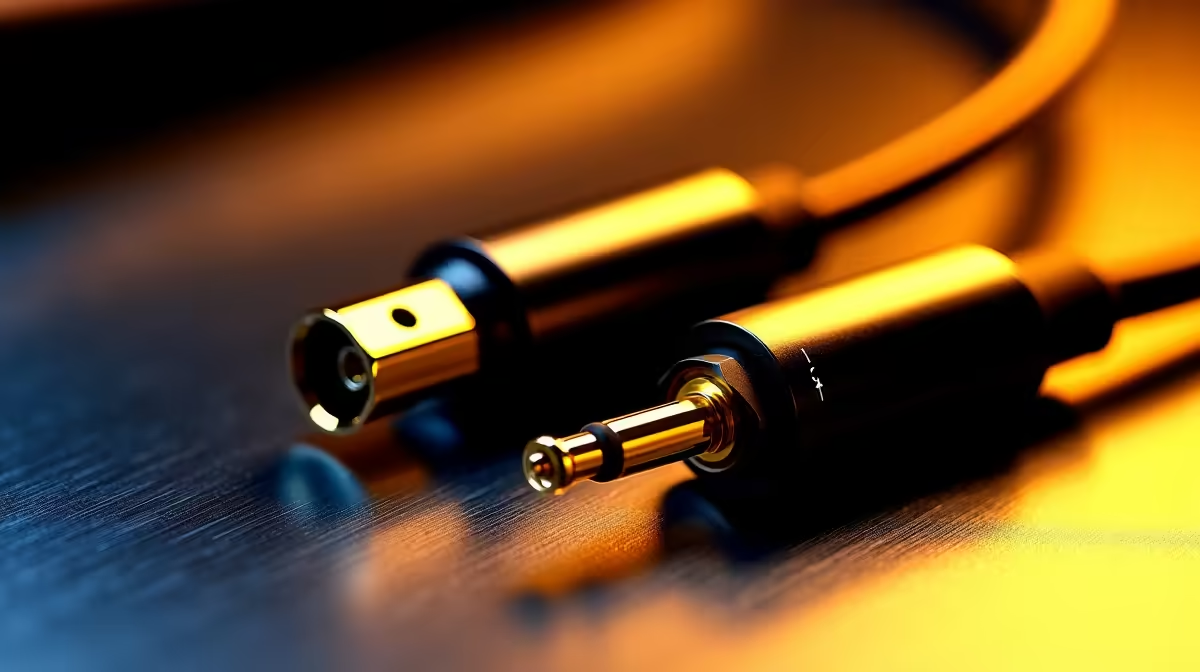
Most connector pins use a copper alloy base for conductivity, then a plated finish that determines long-term reliability. Bare copper and nickel-plated contacts react with oxygen and moisture to form oxides that increase resistance progressively. Gold is chemically inert; a 24-karat gold layer as thin as 0.5 to 1 micron prevents oxidation indefinitely. For South African professionals in Cape Town or Durban, where coastal humidity accelerates contact degradation, gold plating extends connector service life from months (with unplated contacts) to several years. Gold also reduces galvanic corrosion when the connector mates with dissimilar metals inside the port housing.
Why Signal Integrity Demands Gold in Pro Setups 🎬
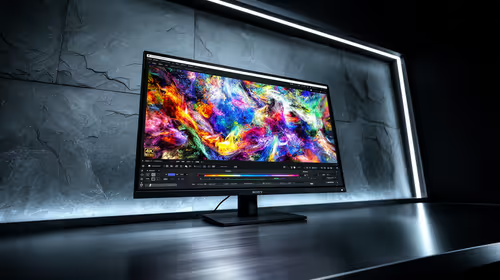
DisplayPort 1.2 carries 21.6Gbps of data through connectors no larger than a USB plug. At multi-gigabit transfer rates, even a small increase in contact resistance causes signal reflections and bit errors. A professional video editor in Johannesburg delivering 4K footage at 10-bit colour needs every pixel transmitted exactly as the GPU renders it. A corroded connector adding a few extra milliohms of resistance can force the monitor to drop from 10-bit to 8-bit colour depth, causing banding in gradients and inaccurate shadow reproduction, precisely where a colourist's work is most visible. Gold plating eliminates this variable entirely.
Professional Scenarios Where Gold Plating Pays Off 💡
Broadcast production houses in Sandton, corporate AV integrators fitting boardroom displays, and solo creatives running home studios all benefit for the same reason: reliability over time without maintenance. Professionals who regularly reconfigure workstations for client presentations need connectors that maintain consistent contact through hundreds of plug cycles. Gold's hardness rating also resists the micro-scratching that degrades bare-copper contacts with repeated insertion. The price premium for a gold-plated certified cable over an unplated alternative is typically R50 to R150 for a 1.5m to 2m cable.
Cap Unused Ports to Protect Contacts ⚡
Fit plastic dust caps to monitor ports and cable connectors when not in use for extended periods. Dust traps moisture and accelerates oxidation even on gold-plated contacts, particularly in coastal South African cities where ambient humidity is persistently high. Dust caps cost under R20 at local electronics suppliers.
FAQ
Does gold plating improve performance over nickel plating?
For low-current signal connections like DisplayPort and HDMI, gold plating provides superior long-term performance by preventing oxidation. Nickel-plated contacts work adequately when new but degrade faster in humid or variable environments.
How thick does gold plating need to be to be effective?
A 0.5 micron gold flash provides basic oxidation protection. Professional-grade cables typically use 24-karat plating at 1 micron or more, which provides both oxidation resistance and sufficient hardness to withstand repeated plug cycles without exposing the base metal.
Are gold-plated cables significantly more expensive in SA?
The price premium is typically R50 to R150 over bare-nickel alternatives for standard 1.5m to 2m display cables. Given the extended service life and elimination of signal degradation, this is cost-effective for any professional or enthusiast display setup.
Fitting out a professional video suite or upgrading your display chain?
Evetech stocks gold-plated, certified DisplayPort and HDMI cables built for professional workloads across South Africa.