Quick Answer
Compact gaming PCs are growing in South Africa because student accommodation, small urban apartments, and shared home offices make space efficiency a real priority. For compact builds, prioritise GPU length under 260 mm, a two-slot design, and a TGP below 160W to fit within Mini-ITX and Micro-ATX thermal and power limits.
The SA Housing Context Behind the Compact PC Trend 🏠
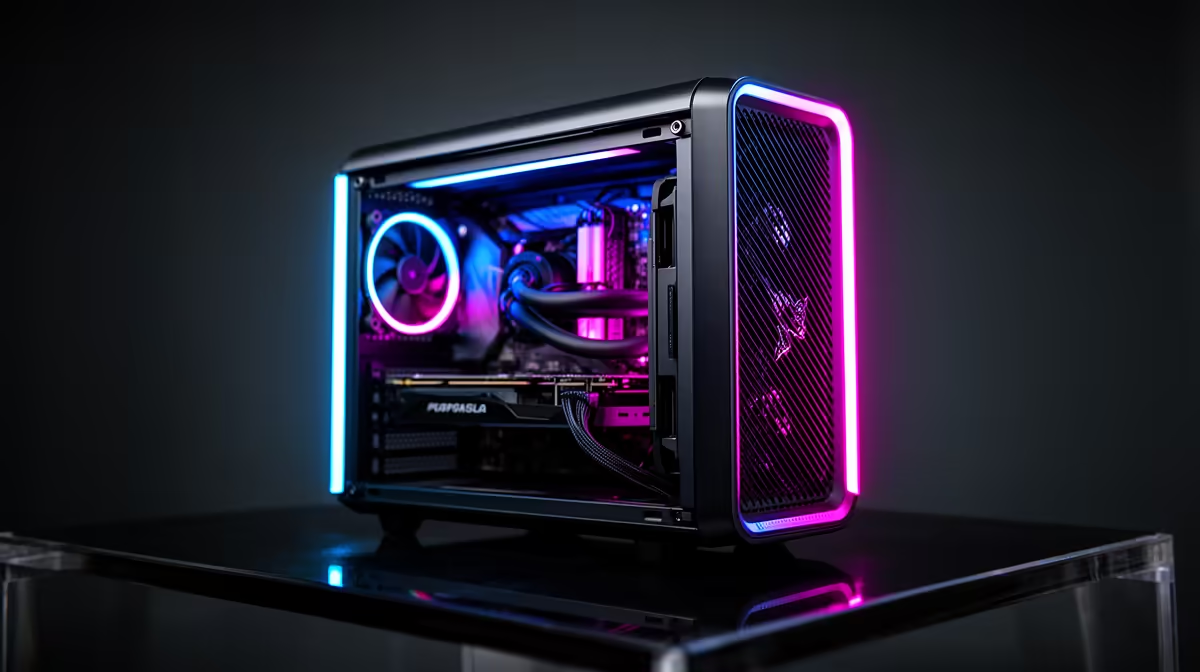
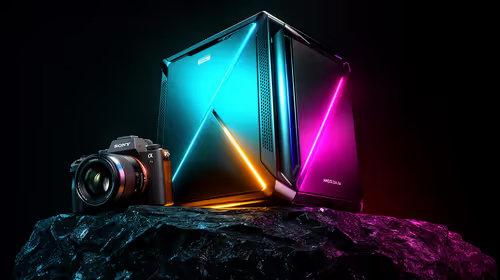
Student residences at UCT, Wits, UP, and UKZN feature small single rooms where desk space is the primary constraint. A full ATX tower with a large GPU is impractical when the desk doubles as a study and gaming surface. Compact Mini-ITX cases measuring under 300 mm by 400 mm fit on a shelf or corner desk, leaving the main workspace clear.
Private student accommodation in areas like Hatfield, Braamfontein, and Rondebosch similarly features smaller furnished rooms. The growth of remote work in SA has pushed urban professionals into smaller apartments where a dedicated home office is impractical, making compact gaming PCs that double as workstations increasingly attractive. They are also easier to transport between cities during semester breaks.
GPU Specifications That Matter for Compact Builds 🔧
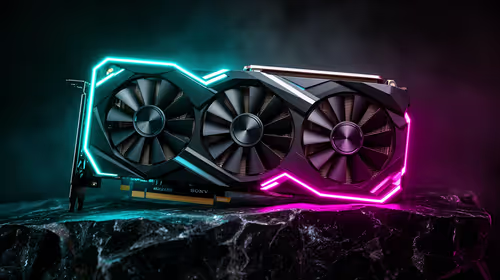
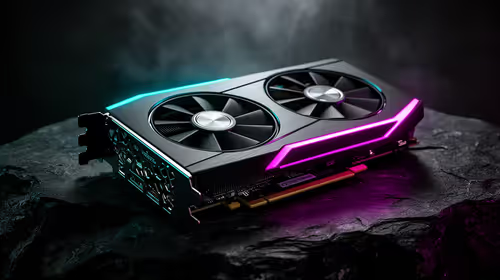
GPU length is the primary physical constraint. Most Mini-ITX cases, including the Cooler Master NR200 and Lian Li Q58, support GPU lengths of 320 to 336 mm maximum. But 260 mm or shorter gives more routing flexibility. Dual-fan cards from the Palit Dual or ASUS Dual sub-range typically land in the 200 to 260 mm range.
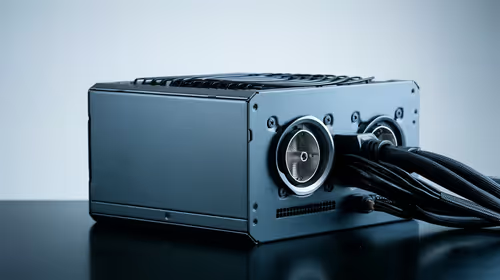
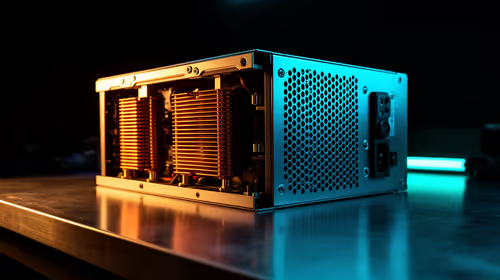
Slot width matters nearly as much. Almost all Mini-ITX cases support two-slot GPU designs. Three-slot designs require confirming clearance against specific case specs. Power delivery is the third consideration. Compact SFX or SFX-L PSUs top out at 600W to 850W, sufficient for an RTX 5060-class card at 115W TGP paired with a Ryzen 5 or Core i5. A GPU with TGP under 150W ensures comfortable headroom without needing an ATX PSU adapter.
Performance Compromises in Compact Builds 💡
The main trade-off is thermal. Smaller cases result in slightly higher GPU temperatures than mid-tower builds. Cards with 0-dB fan mode manage this well with proper case fan selection. Choose a compact case with a full-mesh front panel to maximise airflow. A dual-fan GPU running at 85 degrees Celsius in a compact case is operating safely and at full performance.
Add 20 to 30 mm to GPU Length for Power Connector Clearance ⚡
GPU length stated in spec sheets does not include the power connector overhang. When comparing against your case's maximum GPU clearance, always add 20 to 30 mm to the stated length to account for the connector. A card listed as 280 mm needs roughly 300 to 310 mm of actual internal clearance.
FAQ
Can a compact gaming PC handle 1080p 144 Hz gaming?
Yes. A compact system with an RTX 5060 8GB and Ryzen 5 7600 in a Mini-ITX case delivers identical gaming performance to the same components in a full ATX tower. Only thermal efficiency differs slightly.
Is it harder to upgrade a compact PC later?
GPU upgrades are limited by your case's physical size constraints, meaning not every future card will fit. Choosing a case with generous GPU clearance now reduces this limitation. CPU and RAM upgrades are unrestricted.
What SFX PSU wattage suits an RTX 5060 compact build?
A 650W SFX PSU handles an RTX 5060 at 115W TGP paired with a Ryzen 5 or Core i5. A 750W SFX PSU gives headroom for a future GPU upgrade. Avoid units below 550W as they leave insufficient headroom for peak load spikes.
Building a compact gaming PC that fits your SA space?
Evetech stocks compact-friendly dual-fan graphics cards from Palit, ASUS, and Gigabyte sized for Mini-ITX and Micro-ATX builds. Browse the graphics card category and check length specs to find a GPU that fits your case.