Quick Answer
Radiator clearance determines which AIO sizes fit in your case. In South African conditions where summer ambient temperatures reach 30 to 35 degrees Celsius, under-sized radiators cause liquid temperatures to climb faster than the same hardware experiences in cooler markets. A case with 360mm or 420mm radiator clearance gives you the headroom to run a Ryzen 9 9950X or Core Ultra 9 285K without sustained thermal throttling.
What Radiator Clearance Actually Measures 📐
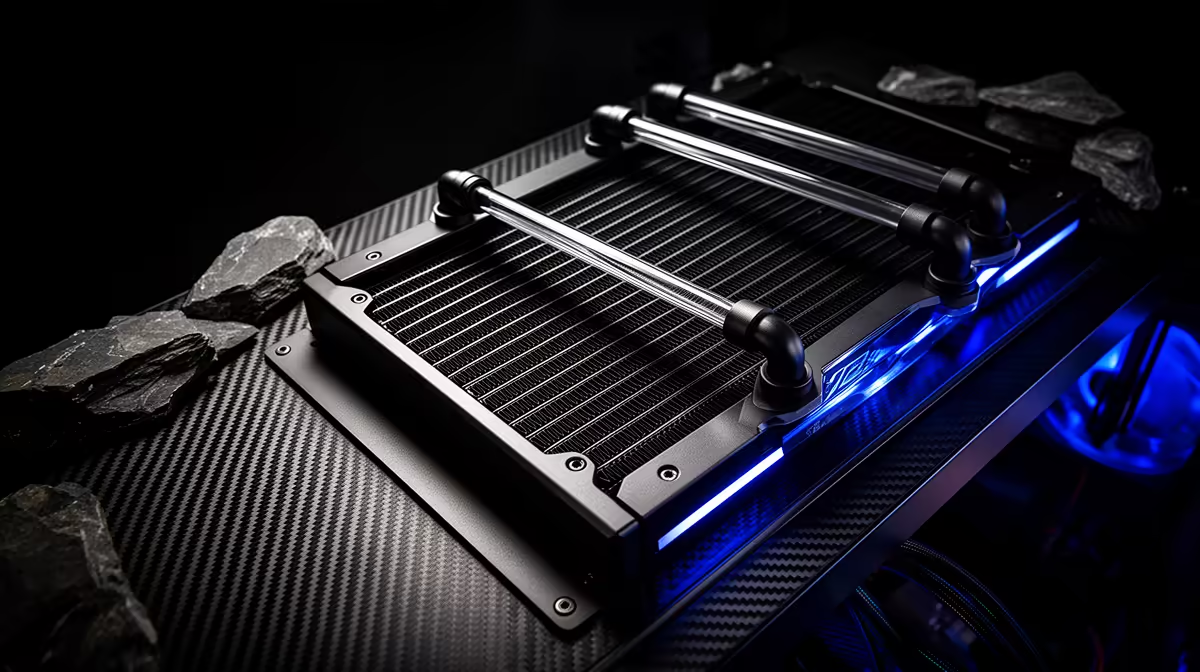
Radiator clearance is the maximum radiator length the case can physically accommodate in a given mounting zone (front, top, or bottom). A 360mm clearance means the front or top panel zone has rails long enough to seat a three-fan 120mm radiator (approximately 394mm including port headers). A 420mm clearance accommodates a three-fan 140mm radiator (approximately 438mm including headers).
This is distinct from fan mount count. A case might have six 120mm fan positions but only 360mm of continuous clearance in the front zone, meaning a 420mm radiator will not physically fit. Always check the stated radiator clearance in millimetres, not just the fan mount count.
SA Ambient Temperatures and AIO Sizing 🌡️
An AIO liquid cooler dissipates heat through the radiator into ambient air. The larger the radiator surface area, the more heat it can shed at any given ambient temperature. At 25 degree ambient (a baseline for many international reviews), a 240mm AIO handles a Ryzen 7 9800X3D adequately. At 32 to 35 degree ambient typical of a Gauteng summer study room, that same 240mm AIO's liquid temperature climbs 7 to 10 degrees higher.
Upgrading from 240mm to 360mm, or from 360mm to 420mm, buys 4 to 8 degrees of liquid temperature headroom at the same ambient. This is why 360mm radiator clearance matters more for SA gamers than builders in cooler climates.
Clearance Conflicts to Resolve Before Building 🔧
Front radiator clearance is the most commonly conflicted zone. Three issues arise: a long GPU can reduce front radiator access; tall RAM sticks can conflict with top-mounted AIO pump heads; and PSU length can restrict bottom-zone mounting in cases that support bottom AIO placement. For top-mounted AIO placement in the 360mm or 420mm range, measure from the top mounting rails to the top of your RAM sticks.
Most DDR5 kits with standard heatspreaders stay under 44mm tall, which clears most top-mount radiators. If using tall custom heatspreaders above 48mm, verify clearance specifically before purchasing.
Future-Proof Your Cooling Slot ⚡
Even if you install a 240mm AIO today, choose a case with 360mm or 420mm front clearance. A 360mm AIO upgrade costs R1,200 to R2,000; replacing the case to accommodate a larger AIO costs considerably more and requires a full rebuild.
FAQ
Is 360mm radiator clearance enough for a Ryzen 9 9950X in SA conditions?
For most gaming and mixed workload use, yes: a quality 360mm AIO keeps Ryzen 9 9950X temps manageable in SA conditions if the case has adequate intake airflow. For sustained all-core rendering in warm ambient conditions, a 420mm AIO offers meaningful additional headroom.
Does top or front radiator placement work better in SA's warm conditions?
Front placement is slightly more efficient for CPU cooling because the radiator sees ambient air directly rather than air that has already passed over other components. In SA's warm conditions, front-mount is the preferred configuration when GPU clearance permits.
What is the minimum radiator size for a Ryzen 7 9800X3D gaming build in SA?
A 240mm AIO is workable for the Ryzen 7 9800X3D since its 3D V-Cache design runs cooler than conventional Ryzen 9 chips. For SA summer conditions and marathon gaming sessions, a 280mm or 360mm AIO is recommended to keep liquid temperatures stable.
Planning a high-performance gaming build that handles SA heat?
Browse cases with 360mm and 420mm radiator clearance at Evetech, paired with a full range of AIO coolers for every CPU platform.