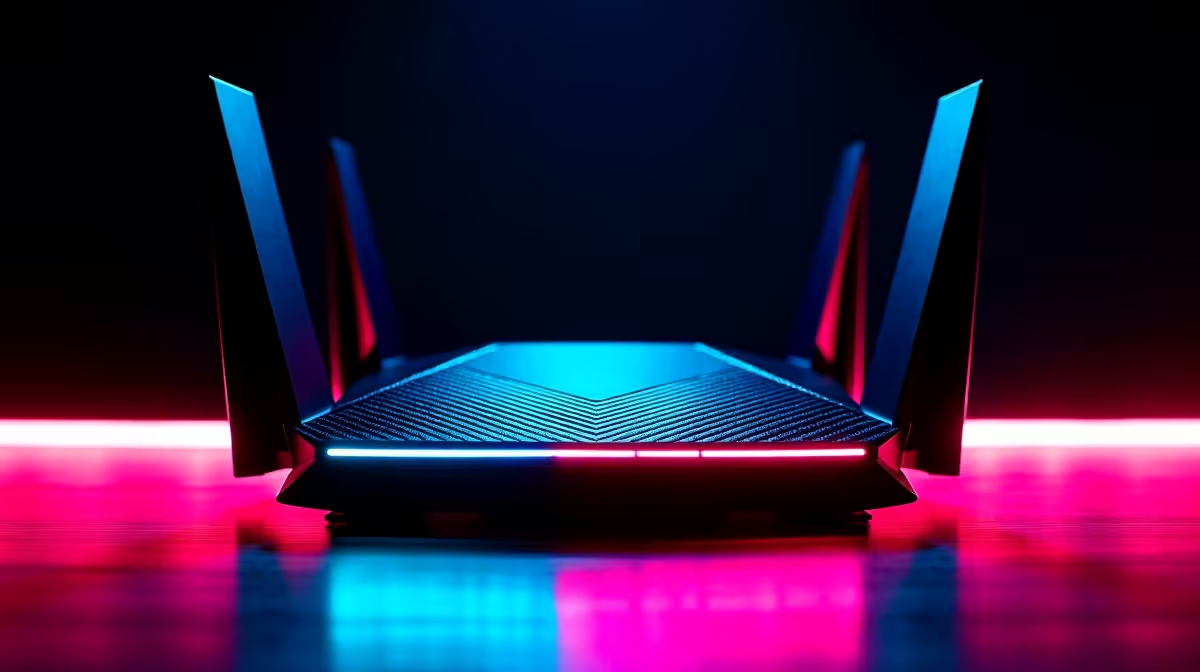
South African gamers eyeing Wi-Fi 7 over Wi-Fi 6E for competitive esports should look past the box claims and at what actually changes during a ranked grind where a single dropped frame costs a duel.
Quick Answer
For competitive esports, Wi-Fi 7 only pulls clearly ahead of Wi-Fi 6E when your rig and workload are already built for it. Most SA buyers chasing hold a stable 240fps+ at 1080p with the lowest possible 1% lows see the gap shrink in practice. Budget the difference where it actually moves frames first.
When Wi-Fi 7 Is Worth It
Pick Wi-Fi 7 for lower jitter and headroom when many devices share the 6GHz band. If you are doing a ranked grind where a single dropped frame costs a duel on a fresh, well-cooled platform around R4,500, the headroom is genuine and worth banking for the future.
When Wi-Fi 6E Is The Smart Buy
Wi-Fi 6E is the value pick for clean low-latency play once you are already on 6GHz. At roughly R2,800 it frees budget for the CPU, GPU or cooling that actually drives hold a stable 240fps+ at 1080p with the lowest possible 1% lows. For most competitive esports setups it is more than enough.
What It Means For SA Builds
For a South African build aimed at hold a stable 240fps+ at 1080p with the lowest possible 1% lows, put your rands where the bottleneck is. The Wi-Fi 7 versus Wi-Fi 6E gap is real but narrow for competitive esports; a stronger GPU or more RAM usually shifts frame pacing, input latency and consistency more for the money.
FAQ
Will Wi-Fi 7 boost my frame rate for competitive esports?
Not on its own. For competitive esports your GPU, CPU and settings drive hold a stable 240fps+ at 1080p with the lowest possible 1% lows far more than Wi-Fi 7 versus Wi-Fi 6E. Treat it as a small, situational gain.
Is Wi-Fi 6E already enough for Valorant, CS2 and Apex Legends?
For most setups, yes. Wi-Fi 6E comfortably supports hold a stable 240fps+ at 1080p with the lowest possible 1% lows in titles like Valorant, CS2 and Apex Legends. Save the difference unless you have a specific reason to go newer.
How much more does Wi-Fi 7 cost in SA?
Expect roughly R4,500 for the Wi-Fi 7 option versus about R2,800 for Wi-Fi 6E. Whether that gap is worth it depends on your frame pacing, input latency and consistency.
SA Buyer Tip
by your bottleneck: if frame pacing, input latency and consistency is your weak point, spend there first, then choose Wi-Fi 6E or Wi-Fi 7 with whatever budget is left. Aim for hold a stable 240fps+ at 1080p with the lowest possible 1% lows.