Quick Answer
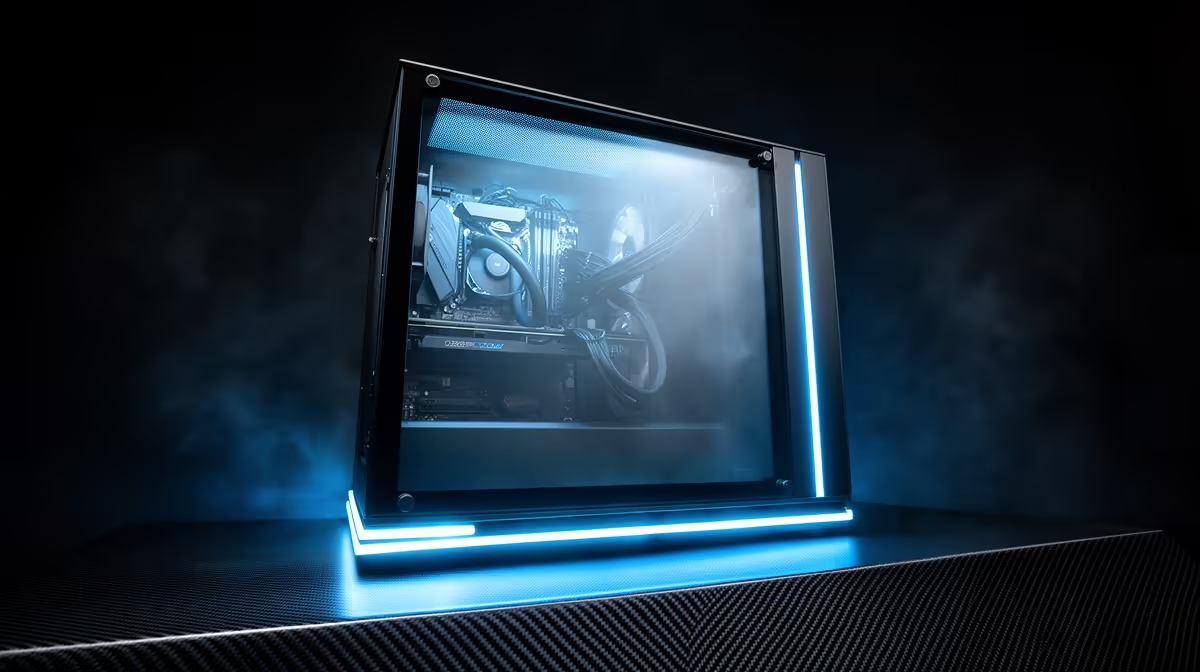
The features that genuinely justify a higher ZAR spend on a panoramic case are 360mm radiator support, 420mm or greater GPU clearance, and PWM-capable ARGB fans. Cosmetic extras like mirrored glass roofs or integrated touchscreen controllers are comfort upgrades, not performance necessities.
Features That Directly Impact Build Performance 🚀
Three structural features separate a capable panoramic case from an impressive-looking disappointment. First: verified GPU clearance. Cases at 420mm accommodate flagship RTX 5090 and RX 9070 XT triple-fan variants without removing drive cages. Paying R300 to R500 more for 420mm versus 380mm clearance is worthwhile if your GPU is a triple-fan flagship.
Second: simultaneous radiator support. Not just maximum radiator size, but can the case fit a 360mm front radiator and a 240mm top radiator at the same time? Many mid-range panoramic cases list 360mm top support but only 240mm front support. Full simultaneous radiator support appears in cases from R2,500 upward in South Africa.
Third: PWM fan control quality. A case with four ARGB fans controlled only through a voltage-switched hub prevents individual zone fan curves, which limits noise and thermal management capability.
Features That Are Nice But Not Essential 💡
Integrated LED controllers with remotes or touchpads add R200 to R600 to a case price without improving airflow. If your motherboard supports ARGB headers and ASUS Aura Sync, MSI Mystic Light, or Gigabyte RGB Fusion, you control all connected fans through software regardless of the built-in controller.
Panoramic top panels made of tempered glass look excellent but reduce top-exhaust effectiveness because glass is not perforated. Cases with solid glass tops run 3 to 5 degrees hotter than mesh-top equivalents and need extra front-intake fan pressure to compensate. Also look for rubber feet at least 15mm tall to allow bottom fan intake clearance on carpeted SA floors.
ZAR Price Bands and What Each Delivers 💰
R900 to R1,500: basic tempered glass, two to three non-PWM fans, 330 to 360mm GPU clearance. R1,500 to R2,800: PWM fans, 360mm radiator support, 380 to 400mm GPU clearance, modular drive cage. Above R2,800: simultaneous radiator support, 420mm GPU clearance, 4mm glass panels, tool-free assembly.
For most RTX 5070 or RTX 5080 builds with Ryzen 7 9700X, the R1,800 to R2,500 bracket delivers the best return per rand. Only step above R3,000 if your GPU is 380mm or longer or you are running a dual-radiator custom loop.
ZAR Case Budget Rule of Thumb ⚡
Allocate no more than 8 to 10 percent of your total build budget to the case. On a R25,000 build that is R2,000 to R2,500, comfortably in the mid-range panoramic tier. Spending R4,500 on a case for a R15,000 build skews component balance without improving gaming performance.
FAQ
Is a panoramic case with a mesh front worth more than a solid glass front?
Yes for high-TDP builds. A mesh front pulls meaningfully more air than a solid panel. The thermal difference can reach 5 to 8 degrees on GPU hotspot temps under sustained load.
Are tool-free side panels worth the premium?
For builders who regularly open the case for cleaning or upgrades, yes. For those who seal a system for months at a time, the premium is not meaningful.
Does case RGB affect GPU or CPU performance?
No. ARGB LEDs run at 5V and draw under 1W total across a full-case lighting setup. The thermal contribution is negligible.
Trying to maximise your ZAR case budget?
Browse the full range of panoramic gaming cases at Evetech to compare specs and find the right feature set for your build.