Quick Answer
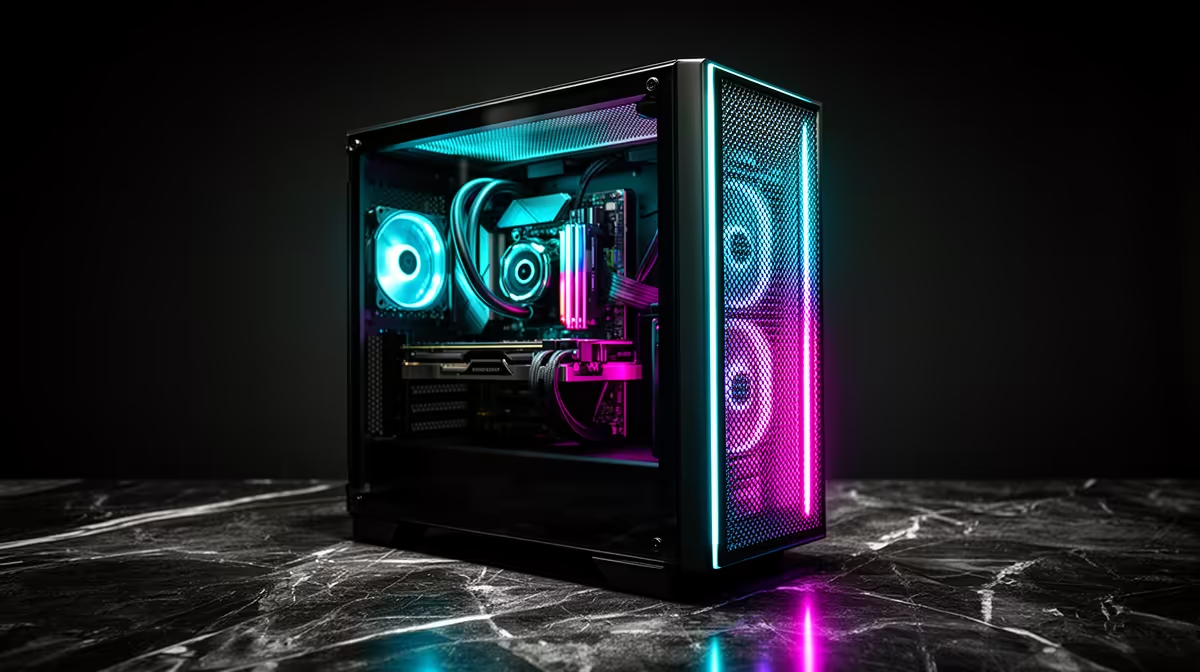
The premium case features worth paying for in South Africa are: a genuine mesh front panel for airflow, 4mm tempered glass over 3mm for rigidity, hinged panel access over thumb screws for convenience, and 420mm radiator support for future-proofing. Features not worth a premium include proprietary ARGB controllers, extra USB 2.0 ports, and decorative mesh that restricts airflow.
Features That Deliver Real ZAR Value 💰
A genuine mesh front panel is the single highest-value feature difference between otherwise similar cases. In testing, a mesh-front case drops GPU junction temperature by 5 to 10 degrees Celsius compared to a solid-panel equivalent. A 420mm radiator front mount gives future flexibility: buying a case that supports it now means adding a large AIO when you upgrade your CPU without replacing the case. Hinged tempered glass panels with a button-latch rather than four thumb screws save time every time you access the interior. Over a five-year build lifespan, this convenience compounds. Cases offering all three features are typically priced R500 to R1,000 above solid-panel thumb-screw equivalents in South Africa.
Features You Should Not Pay Extra For 🔧
Proprietary ARGB fan controllers bundled with cases require specific software and create dependency that may lose support after two years. A case routing all RGB through a motherboard header is more versatile and future-proof. Extra USB 2.0 Type-A front ports are a meaningless addition: USB 2.0 is useful only for wireless dongle receivers, and one port is sufficient. Paying a premium for three versus one USB 2.0 port delivers no real-world benefit. Decorative mesh patterns only 20 to 30 percent open are purely cosmetic and provide no meaningful airflow improvement over a solid panel.
What the ZAR Price Jump Between Tiers Buys 🖥️
From R1,200 to R2,000, you get adequate steel, basic tempered glass, standard ATX support, and functional cable routing. Spending R2,000 to R3,500 upgrades the steel gauge, adds a genuine mesh front panel, increases GPU clearance to 380mm-plus, and improves front I/O to include USB-C. The jump to R3,500 to R5,500 adds E-ATX support, 420mm radiator compatibility, 4mm tempered glass, hinged panels, and typically three to five pre-installed fans. The value of each tier jump diminishes above R5,500, where pricing increasingly reflects brand prestige rather than functional improvements.
Calculate Fan Inclusion Value Before Comparing Prices ⚡
A case listed at R2,800 with three 140mm PWM fans included may be better value than one at R2,200 with no fans. Three quality 140mm fans cost R600 to R1,200 purchased separately in South Africa. Do the full arithmetic on both options before deciding which delivers better ZAR value for your build plan.
FAQ
Is cable management quality worth a case price premium?
Yes. A case with deep cable routing channels (25mm-plus), multiple rubber grommets, and velcro anchor points saves hours during assembly and makes future upgrades easier. Paying R300 to R600 more for genuinely good cable management is worthwhile for any builder who intends to upgrade components over the case's lifespan.
Are dual tempered glass panels worth the extra cost?
For showcase builds where aesthetics are a priority, yes. For performance-focused builds, a solid or mesh front panel is better because it allows proper filter installation and does not restrict intake air. A front glass panel is a thermal compromise.
Do more pre-installed fans equal better value?
Only if they are quality 120mm or 140mm PWM units. Cases shipping with six non-addressable 3-pin fans of unknown quality are not delivering meaningful value. Three well-specified PWM fans with ARGB headers are more useful than six basic fans that cannot be individually speed-controlled.
Want to get the most from your rand when buying a premium case?
Browse Evetech's case range with full spec listings so you can compare value across every price tier before committing.