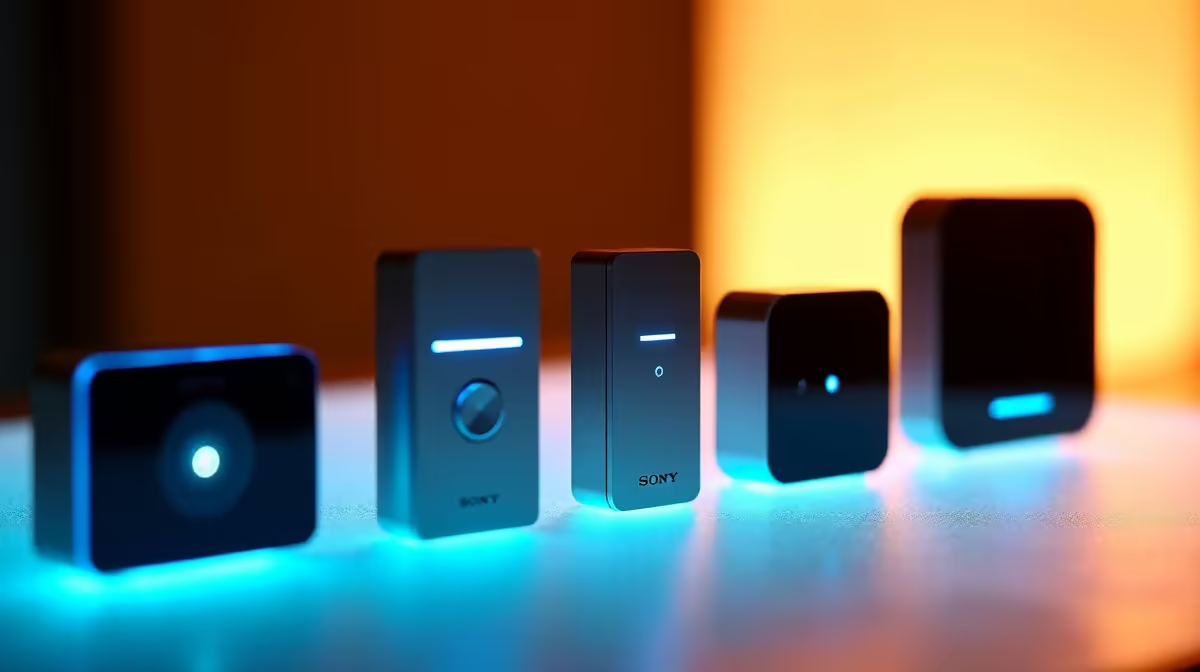
Walk into a smart home decision today and four protocol names fight for your attention: Zigbee, Z-Wave, Matter and plain Wi-Fi. The honest answer is that there is no single winner, because they do not all play the same position. Matter has become the interoperability layer most new devices speak, while Zigbee and Z-Wave keep doing the low-power mesh work underneath, and Wi-Fi covers the bandwidth-hungry corners. Picking well means knowing which one belongs in which slot.
Quick Answer
For new buys in 2026, choose Matter-certified devices wherever you can, since Matter 1.4 (released November 2024) lets a bulb, plug or sensor work across Apple, Google, Alexa and Samsung without being locked to one app. Underneath, Matter runs over either Wi-Fi or Thread, while Zigbee and Z-Wave remain excellent, mature meshes for sensors and lighting. Use Wi-Fi only for cameras, doorbells and anything streaming video.
The Four Protocols Are Not Rivals For The Same Job
The biggest mistake is treating these four as a straight shootout. Matter is an application layer, the common language devices speak. It does not define its own radio. It rides on Wi-Fi, Ethernet or Thread underneath. Zigbee and Z-Wave, by contrast, are full stacks: their own radio, their own mesh, their own device language.
So the real question is not "which one wins" but "which combination fits my home". A typical 2026 setup is a hybrid: Matter-over-Thread bulbs and sensors, a few legacy Zigbee or Z-Wave devices kept running through a hub, and Wi-Fi reserved for the camera at the gate.
Matter: The Interoperability Layer To Buy Into
Matter solves the problem that defined the early smart home, where a device bought for one ecosystem refused to work in another. A Matter-certified device pairs with Apple Home, Google Home, Alexa and SmartThings from the same box. Matter 1.4 also improved how battery-powered sleeping devices behave, narrowing the old gap where Wi-Fi sensors drained cells in weeks.
Matter itself has no range or battery story, because those depend on the transport underneath. A Matter bulb on Wi-Fi behaves like any Wi-Fi device. The same bulb on Thread joins a low-power mesh. That distinction matters more than the Matter badge alone, so it is worth checking which transport a device uses before buying.
Who Matter Suits
Anyone starting fresh, or anyone tired of juggling separate apps. If you are buying your first batch of smart devices, Matter-certified hardware is the safest bet because it will not strand you in one walled garden. Browse what is available across the smart home appliances category at Evetech and look for the Matter logo on the listing.
Zigbee: The Mature, Affordable Mesh
Zigbee has been the backbone of affordable smart lighting and sensors for years. It powers Philips Hue, Aqara and countless budget brands, runs a self-healing mesh where mains-powered devices repeat the signal, and offers by far the largest device library of any low-power protocol.
The catch is the band. Zigbee shares 2.4GHz with Wi-Fi and Bluetooth, so in a flat surrounded by neighbours' routers, a badly chosen channel invites interference. The fix is straightforward: set your Zigbee coordinator to a channel that avoids your Wi-Fi, and the mesh runs cleanly.
Who Zigbee Suits
Cost-conscious builders who want a large, proven catalogue and do not mind running a hub. A Zigbee bulb or sensor is usually the cheapest way into reliable home automation, and many of those devices are now also gaining Matter compatibility through hub bridging.
Z-Wave: The Quiet, Reliable Sub-Gigahertz Option
Z-Wave plays a different game by running on a sub-gigahertz frequency rather than the crowded 2.4GHz band. The latest Z-Wave 800 generation extends range and battery life further. Because it sits away from Wi-Fi congestion, its mesh reliability is arguably the best of the lot, which is why Z-Wave dominates door locks and security sensors where a missed signal is unacceptable.
The trade-offs are a smaller device catalogue than Zigbee and generally higher per-device prices. Z-Wave also runs on regional frequencies, so a unit bought for one region will not work in another. Confirm the device is sold for South African or European frequency use before ordering.
Who Z-Wave Suits
Larger homes with thick walls, and anyone prioritising rock-solid locks and security sensors over the widest possible choice of gadgets. In a double-storey house in a suburb like Durbanville or Sandton, where Wi-Fi already struggles to reach the far bedroom, a sub-gigahertz Z-Wave mesh often holds a connection that a 2.4GHz protocol drops. The cost premium per device buys reliability where it counts most, on the front door lock and the perimeter sensors.
Wi-Fi: Right For Video, Wrong For Everything Else
Wi-Fi needs no hub and every home already has it, which is why cheap smart plugs lean on it. For cameras and video doorbells it is the correct choice, because only Wi-Fi carries that bandwidth comfortably.
The problem appears at scale. Load a router with thirty Wi-Fi bulbs and sensors and you stress the very network your phones and TVs rely on, while battery devices on Wi-Fi drain fast. Keep Wi-Fi for the high-bandwidth devices and push the small sensors onto Thread, Zigbee or Z-Wave instead. A solid mesh router or access point, the kind listed among the best-selling accessories at Evetech, is worth having regardless, since every Matter-over-Thread setup still leans on a healthy home network for its border routers.
So Which One Wins In 2026?
Buy Matter as your standard for new devices, prefer ones that run over Thread for low power, and you future-proof your home against ecosystem lock-in. Keep Zigbee for affordable lighting and sensors, lean on Z-Wave for locks and security in a big house, and reserve Wi-Fi strictly for cameras. The winning setup is not one protocol; it is the right protocol in each role.
Frequently Asked Questions
Do I need to throw out my Zigbee devices to move to Matter?
No. Most hubs that speak Zigbee can bridge those devices into Matter, so your existing bulbs and sensors keep working while new purchases are Matter-native. There is no need to rip out a working mesh.
Is Matter a replacement for Thread?
No, they work together. Matter is the language devices speak, and Thread is one of the low-power radios that carries it. A device described as Matter-over-Thread uses both at once.
Which protocol is best for smart door locks?
Z-Wave is the traditional favourite for locks because its sub-gigahertz mesh is highly reliable and avoids Wi-Fi congestion. Matter-over-Thread locks are a strong modern alternative if you want cross-ecosystem control.
Will Zigbee interference be a problem in a flat?
It can be if the coordinator shares a channel with nearby Wi-Fi networks. Setting the Zigbee channel to one that avoids your router's band almost always clears it up, and the mesh runs reliably afterwards.
Can I run all four protocols in one home?
Yes, and most serious setups do. A multi-protocol hub plus a solid network lets Matter, Zigbee, Z-Wave and Wi-Fi devices coexist, each handling the role it does best.
Building a smart home that will not trap you in one app? Start with Matter-certified gear and a strong network from the smart home appliances range at Evetech and put each protocol where it belongs.