Staring at that “Disk Space Low” notification again? We’ve all been there. You’re ready to jump into the latest AAA title, but your PC says no. With games like Call of Duty and Baldur's Gate 3 demanding well over 150GB each, juggling your library has become a frustrating mini-game. For South African gamers and power users planning their ultimate 2025 rig, the solution is clear: it’s time to go big with one of the best 8TB SSDs. 🚀
Why an 8TB SSD is the New Standard for Enthusiast Builds
Let's be honest, a few years ago, an 8TB solid-state drive seemed like pure fantasy. Today, it’s the ultimate quality-of-life upgrade for any serious PC enthusiast. This isn't just about storing your entire Steam library without compromise. For content creators, an 8TB SSD means no more offloading massive 4K video projects to slower hard drives. Everything stays on one lightning-fast drive, from your OS to your active projects and your favourite games. It's about building a machine that simply… works, without storage bottlenecks. As prices become more accessible, exploring our wide range of SSDs shows just how feasible this massive upgrade has become.
Key Specs for Your 8TB Solid-State Drive
Choosing the right drive involves more than just picking the largest capacity. For an investment of this size, you need to ensure the performance matches your ambition. Here’s what to look for when browsing for 8TB SSDs.
NVMe vs. SATA
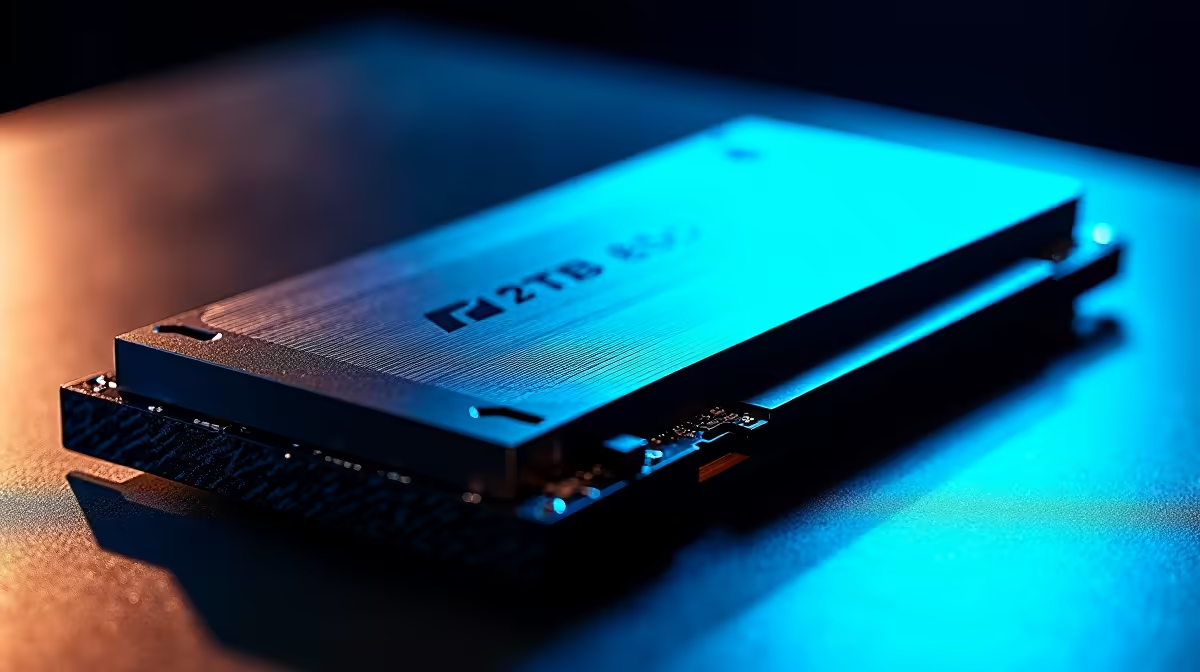
For any modern enthusiast build, an NVMe (Non-Volatile Memory Express) M.2 drive is the only way to go. These drives plug directly into your motherboard and use the PCIe bus, delivering speeds that are orders of magnitude faster than older SATA SSDs. This means ridiculously fast boot times, near-instantaneous game loading, and seamless file transfers. For the absolute peak of performance, explore the latest blazing-fast NVMe SSDs to unlock your PC's true potential.
Check Your Motherboard! 🔧
Before you buy a top-tier PCIe 5.0 SSD, double-check your motherboard's specifications. To get the maximum advertised speed, you'll need a compatible M.2 slot. While a Gen 5 drive will work in a Gen 4 slot, it will be limited to Gen 4 speeds. Matching your drive to your board ensures you get every bit of performance you paid for.
Speed and Endurance (TBW)
Look for sequential read/write speeds, measured in megabytes per second (MB/s). For a high-end NVMe drive, you should expect speeds well over 7,000 MB/s. Just as important is endurance, measured in Terabytes Written (TBW). This rating tells you how much data you can write to the drive over its lifespan. For an 8TB drive, a high TBW rating ensures it will last for years of heavy use, from constant game installs to video rendering. You'll find these specs listed on all high-performance solid-state drives.
Our Top Picks for 8TB SSDs in 2025 ✨
While specific models and prices fluctuate, the market is dominated by a few key players known for their reliability and performance.
The Performance King: Samsung & WD Black Tier
Drives like the Samsung 990 Pro or the WD Black SN850X series consistently top the charts. When their 8TB versions land, expect nothing less than cutting-edge PCIe 5.0 speeds, robust thermal management, and stellar reliability. These are the best 8TB SSDs for those who refuse to compromise, offering the lowest latency and highest throughput for competitive gaming and demanding creative workloads. Keep an eye on the latest SSD deals to snag one at a great price.
The Value Champion: Crucial & Sabrent Tier
Brands like Crucial and Sabrent often provide a fantastic balance of speed, capacity, and price. An 8TB SSD from this category might use a slightly older PCIe 4.0 interface but will still deliver incredible real-world performance that is more than enough for the vast majority of gamers and creators. They represent the smart choice for building a future-proof rig without completely breaking the bank. For those who need massive storage on the go, it's also worth noting that many brands offer high-capacity external SSDs for ultimate portability.
Is an 8TB SSD Worth It for a South African Gamer?
So, is an 8TB drive overkill? For the average user, perhaps. But for the enthusiast building a top-tier rig in 2025, it’s a logical and liberating upgrade. Think of it as an investment in convenience. No more deleting games to make room for updates. No more performance hits from running games off a slow HDD. It’s about creating a seamless, powerful, and future-proof system that lets you focus on what matters… playing your games.
Ready to End Storage Anxiety for Good?
An 8TB SSD is the ultimate upgrade for a no-compromise PC build. Stop juggling files and start enjoying your entire library, instantly. Explore our massive range of SSDs and find the perfect drive to power your 2025 rig.