Stuttering in the middle of a Beat Saber stream? Watching textures pop into existence in Half-Life: Alyx? We’ve all been there. That jarring lag completely shatters the immersion VR promises. Often, the culprit isn't your GPU or CPU… it's your slow storage. A sluggish hard drive simply can’t feed your system data fast enough. This guide will show you why finding the best SSDs for VR gaming is crucial for a seamless experience.
Why Your SSD is Crucial for a Smooth VR Experience
Virtual reality isn't like traditional gaming. To trick your brain into believing the world is real, it has to load enormous, high-resolution textures and assets constantly. When you quickly turn your head, the game has milliseconds to load everything in your new field of view. A traditional Hard Disk Drive (HDD), with its spinning platters and moving read/write heads, just can't keep up.
This bottleneck is what causes:
- Texture Pop-In: Seeing low-quality textures that suddenly "pop" into high detail.
- Stuttering: The game freezes for a split second while it waits for data.
- Long Loading Screens: Waiting ages to get into the action or move between levels.
A Solid State Drive (SSD) solves this. With no moving parts, it accesses data almost instantly, feeding your graphics card the assets it needs before you notice they're missing. The entire category of solid-state drives was built to solve this exact problem, making them a fundamental upgrade for any serious VR rig. 🚀
Choosing the Best SSD for Your VR Rig
Not all SSDs are created equal. When you're optimising for VR, speed and capacity are your two most important considerations.
NVMe vs. SATA: Speed is King
The biggest choice you'll make is between a SATA SSD and an NVMe SSD.
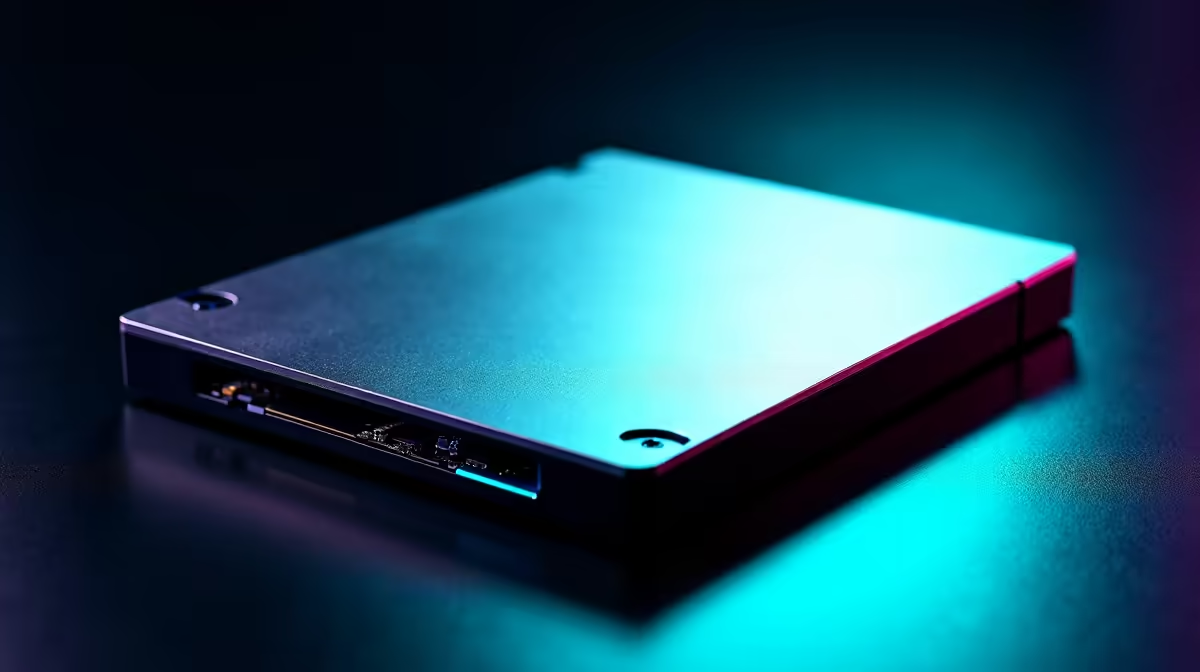
- SATA SSDs: These use the same rectangular shape and cables as older hard drives. They are a massive leap in performance over an HDD and a great budget-friendly option.
- NVMe M.2 SSDs: These look like small sticks of RAM and plug directly into a special M.2 slot on your motherboard. They are ridiculously fast, with speeds that can be over 10 times faster than their SATA counterparts.
For your operating system and primary VR library, nothing beats the raw speed of modern NVMe SSDs. The difference in loading times is immediately noticeable and contributes directly to a more fluid and immersive VR experience.
Check Your Motherboard! 🔧
Before you buy a super-fast NVMe drive, double-check your motherboard's specifications. Make sure you have a free M.2 slot that supports the NVMe protocol (not just SATA). Some boards have multiple slots, but they might share bandwidth with other components, so it's always best to consult your manual to use the fastest available slot for your primary drive.
How Much Capacity Do You Really Need?
VR games are notoriously large. Asgard's Wrath requires over 130GB of space, and Medal of Honor: Above and Beyond clocks in at a staggering 170GB+. A small 250GB or 500GB drive will fill up in no time.
For a dedicated VR gaming PC, we recommend a minimum of 1TB for your games drive. A 2TB drive is quickly becoming the new sweet spot, giving you plenty of room for a healthy library without constantly having to uninstall and reinstall titles. To see what fits your budget and build, you can browse Evetech's full range of SSDs here.
Beyond Your Internal Drive
What if your internal storage is already full? While an internal NVMe drive will always offer the best performance for VR gaming, you still have options. A fast external SSD connected via USB 3.2 or Thunderbolt is a fantastic option for storing games you play less frequently, freeing up precious space on your primary drive for your current favourites. ✨
Finding Great Value in South Africa
Building the ultimate VR machine doesn't have to empty your wallet. SSD prices have become incredibly competitive, and getting a top-tier drive is more affordable than ever. The key is to find the right balance of price, performance, and capacity for your needs. Always keep an eye on the best SSD deals to snag premium performance without breaking the bank. An upgrade today will pay dividends in smooth, immersive gameplay for years to come.
Ready to Banish VR Stutter for Good?
Upgrading your storage is one of the most impactful improvements you can make for a smooth, immersive experience. Explore our massive range of SSD specials and find the perfect drive to make your virtual worlds load in a flash.