



SecureGrip Vent Clip Mounts: Understanding the Clamp Mechanism
Discover how SecureGrip vent clip mounts provide superior stability for your smartphone. Learn the mechanics behind the clamp and why it matters for your daily drive. 📱🚗
Read moreWondering about budget smartwatch accuracy in SA? We tested popular affordable fitness trackers to see if their step, heart rate, and sleep data holds up. Discover which budget models deliver reliable stats for your fitness journey without breaking the bank. 🤔💪 Get the real data before you buy!
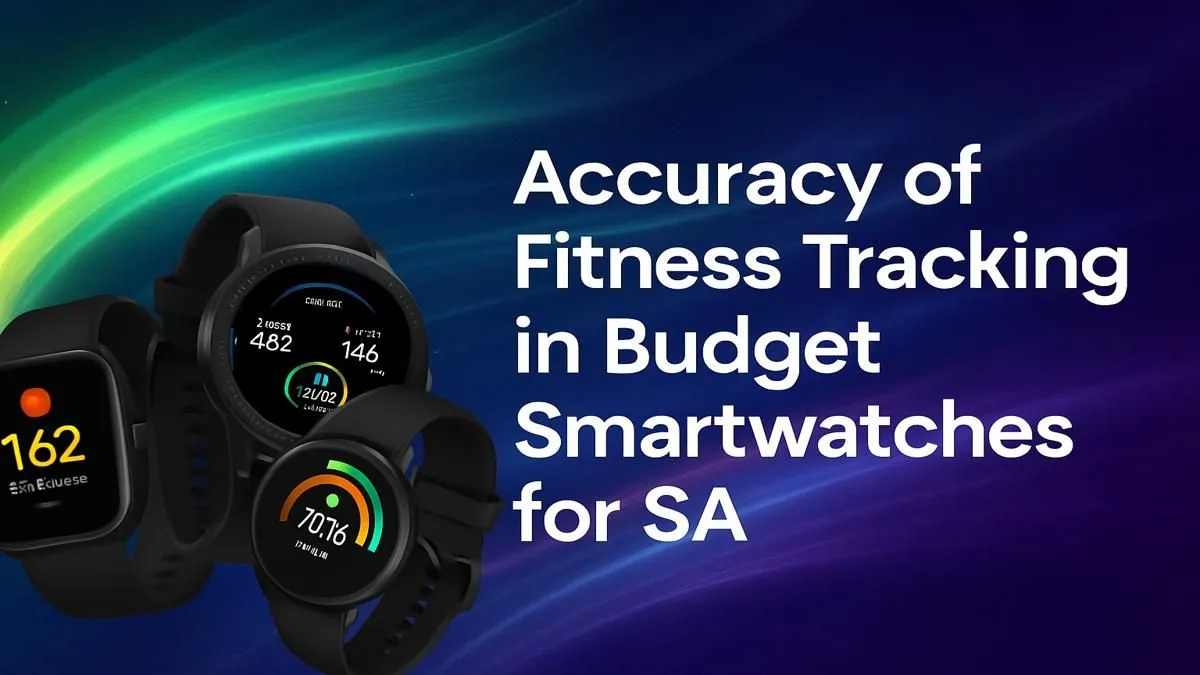
Thinking about grabbing a smartwatch but your wallet is giving you the side-eye? You're not alone. In South Africa, we love our tech, but we also love a good deal. The big question is, when you snag a budget-friendly smartwatch, are you sacrificing performance? Specifically, how is the budget smartwatch accuracy for things like steps and heart rate? Can you actually trust the data on your wrist, or is it just a fancy digital clock? Let's find out.
Before we declare a verdict, it's crucial to understand what "accuracy" even means for a wrist-worn device. Premium watches from brands like Apple or Garmin set a high bar, but affordable options are catching up fast. The key is knowing which features are generally reliable and which are more... directional.
For most users, the core metrics are:
The truth is, the gap in core tracking between budget and premium is smaller than ever. You can explore a wide variety of smart watches to see the range of features available at every price point.
So, what makes a smartwatch tick? It's all about the sensors and the software that interprets their data. A budget watch uses similar components to an expensive one—like accelerometers for movement and photoplethysmography (PPG) sensors for heart rate—but the quality of the components and the sophistication of the software algorithms can differ.
This is why some brands offer better value than others. They focus on refining the software for their chosen hardware to deliver reliable results without the premium price tag. Brands like Promate, for example, have carved out a niche by balancing cost with dependable performance, making their range of Promate smart watches a popular starting point for many South Africans. The accuracy of budget smartwatches from reputable brands is often more than enough for the average user's fitness goals.
For more accurate heart rate tracking, ensure your smartwatch is snug—but not too tight—about a finger's width above your wrist bone. A loose watch lets external light interfere with the sensor, leading to wonky readings, especially during a workout. Clean the sensor on the back regularly to remove sweat and grime!
Let’s be realistic. Are you training for the Comrades Marathon or just trying to close your activity rings and beat your friends in a step challenge? For the vast majority of us, a budget smartwatch is a fantastic tool.
Here’s where they truly deliver value:
For anyone looking to dip their toes into the world of wearables without a massive financial commitment, checking out the best smartwatches under R1000 is a no-brainer. You get about 80% of the functionality for 20% of the price. That's a deal any South African can appreciate.
So, can you trust the data from an affordable smartwatch? For everyday fitness and wellness tracking, the answer is a resounding yes. The budget smartwatch accuracy in South Africa has reached a point where these devices are no longer just toys; they are genuinely useful gadgets for a healthier lifestyle.
While a pro athlete might need the pinpoint precision of a high-end device, for the rest of us, a budget-friendly watch provides actionable and reliable data to help us stay active and informed. They offer incredible value and are the perfect entry point into the world of wearable tech.
Ready to Track Your Progress Without Breaking the Bank? Finding the right smartwatch is about matching features to your lifestyle, not just paying for a brand name. For incredible value and choice in South Africa, a budget-friendly option is hard to beat. Explore our massive range of smart watches and find the perfect device to start your fitness journey today.
For most users, yes. Budget smartwatches provide good directional data for steps, general heart rate, and sleep, making them great for tracking daily activity and trends.
The affordable smartwatch heart rate accuracy is generally decent for resting and steady-state cardio but can be less reliable during high-intensity interval training (HIIT).
Most cheap fitness trackers are surprisingly good at counting steps, often within a 5-10% margin of error compared to premium models during normal walking or running.
Basic sleep tracking (duration, light/deep sleep) on budget watches is quite reliable for identifying patterns, though detailed REM cycle analysis may be less precise.
Brands like Xiaomi, Amazfit, and Huawei offer some of the best budget smartwatch options in SA, balancing feature sets with dependable fitness tracking accuracy.
The GPS accuracy on affordable smartwatches varies. Models with built-in GPS are generally more accurate for tracking runs or cycles than those relying on a phone connection.
Discover how SecureGrip vent clip mounts provide superior stability for your smartphone. Learn the mechanics behind the clamp and why it matters for your daily drive. 📱🚗
Read more
For a stable RTX 5070 starting point, use 1440p, the High preset, Ray Tracing Medium and DLSS Balanced, then measure the base frame rate before adding Frame Generation. Path tracing is a separate showcase mode, not the default.
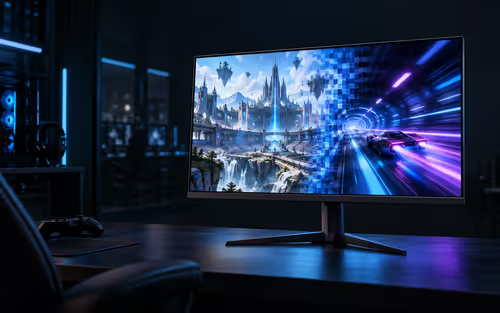
HKC's 27-inch Shield 27Q560 runs QHD at 560Hz or 1280 x 720 at up to 1060Hz. The headline rate is specialised: resolution, sustained frame rate, ports and eventual South African support decide whether it is useful.
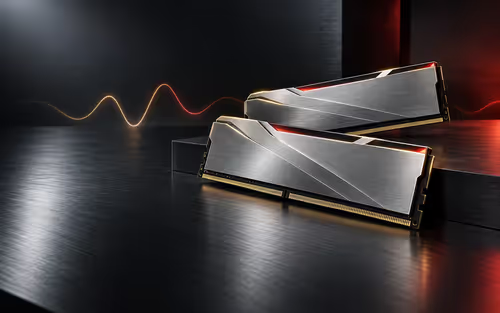
G.Skill's Trident Z5 Royal NeoX range pairs DDR5-6000 with timings from CL36 down to CL26 and adds an AMD EXPO ULL profile. Buyers still need a supported CPU, motherboard and BIOS before treating the lowest timing as guaranteed.
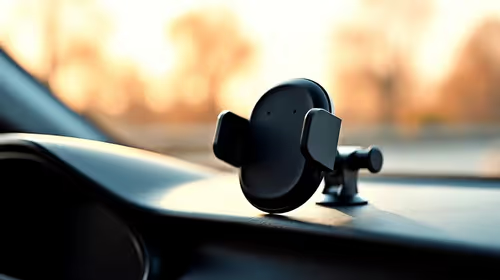
Stop struggling with bulky mounts. We break down the essential compact car phone holder features that ensure stability, safety, and ease of use for your daily commute. 🚗💨 Find your perfect fit.
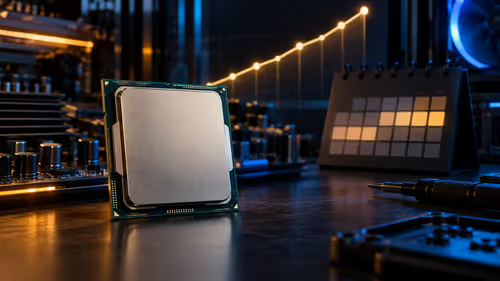
Industry reports point to another roughly 10 percent Intel processor increase from 5 October, but Intel has not published a consumer price list confirming the scope. South African buyers should treat it as a risk signal, not a guaranteed Rand change.

Put the headphones in pairing mode, open Bluetooth and devices in Windows 11, then add the headset. If it fails, remove the old pairing and check charge, range and drivers.

Microsoft says upcoming Windows 11 work will target memory use on 8GB PCs and improve boot and sign-in responsiveness. There is no public release date or measured uplift yet.
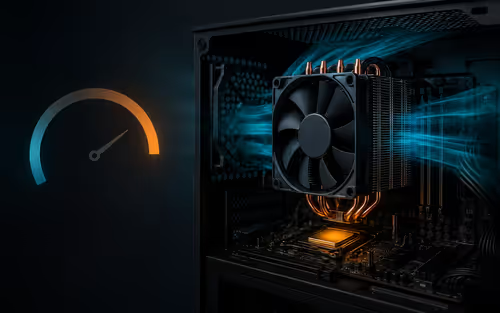
Windows 11 does not show CPU temperature in its standard Settings pages. Use your CPU maker's supported utility or a trusted monitor, then read idle and loaded temperatures in context.

Diablo 4 HDR settings work best after Windows and the display are calibrated, then the game's black point, brightness and white point are adjusted in that order. Use visible shadow detail and controlled highlights, not copied values from another screen.

The best HOTAS for Elite Dangerous is a separate stick-and-throttle set with enough analogue axes for pitch, roll, yaw and thrust, plus local support. Evetech's captured flight-simulation sample lists the complete Logitech X56 at R4,999.

The Alienware AW3926QW is a 38.9-inch 5120 x 2160 OLED monitor that runs at 165Hz or 2560 x 1080 at 330Hz. Dell lists it at $1,099.99 in the US, while South African price and availability remain unconfirmed.
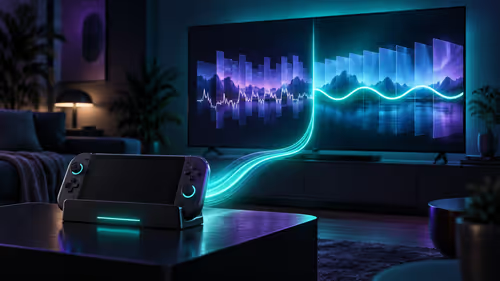
Nintendo Switch 2 docked VRR arrives with system version 23.0.0 and also requires a dock update. The connected TV or monitor and the running software must support VRR before the output can follow changing frame rates.