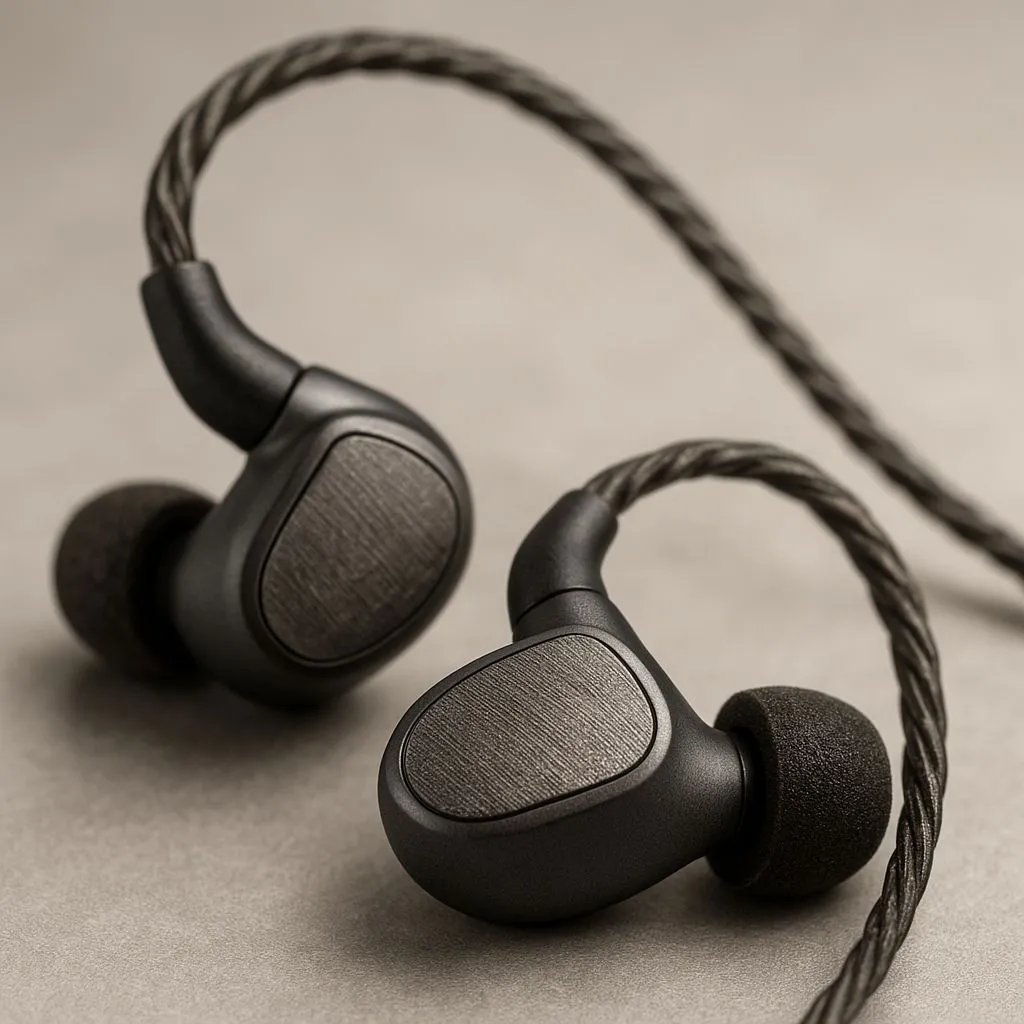
Ever watched a major esports final and noticed the players aren't wearing bulky cans on their heads? Instead, they are plugging in discreet earbuds. It’s not just a fashion statement. Whether you are grinding rank in Johannesburg or competing at a LAN in Cape Town, the shift towards In-Ear Monitors (IEMs) is reshaping how we experience game audio. Let's explore why pros are ditching traditional gear for these precision tools.
The Precision of Sound Isolation 🎯
The primary reason professional gamers gravitate towards IEMs is the superior passive noise isolation. Unlike open-back headphones that let sound bleed in, IEMs create a seal directly in your ear canal. This blocks out the roar of the crowd—or the noise of a busy household—allowing you to focus entirely on footsteps and reload sounds.
When you are trying to clutch a round, you want your audio to be as responsive as your rig. Just as you wouldn't bottleneck your PC with slow storage, opting instead for high-speed Solid State Drives to load textures instantly, you shouldn't let ambient noise bottleneck your auditory awareness.
Comfort and the "Streamer Look"
Let's be honest: "headset hair" is a real struggle. Traditional headphone headsets can be heavy, causing fatigue during marathon sessions. IEMs are lightweight and barely noticeable, which is a massive plus for content creators who want to look professional on camera without a chunky headband ruining their aesthetic.
If you are building a setup to broadcast your gameplay, combining IEMs with other streaming essentials like a ring light or capture card creates a much cleaner, studio-quality vibe.
The Microphone Trade-off
There is one major catch when switching to IEMs: they rarely come with a broadcast-quality microphone. Traditional gaming headsets usually have a boom mic attached. With IEMs, you will need to invest in standalone microphones to communicate clearly with your squad.
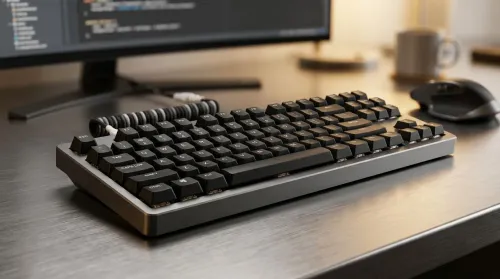
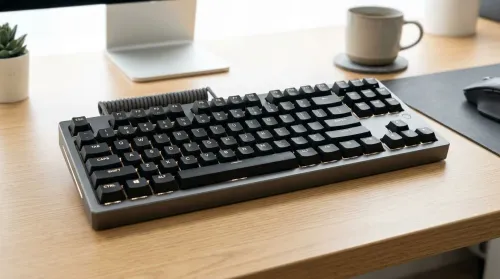
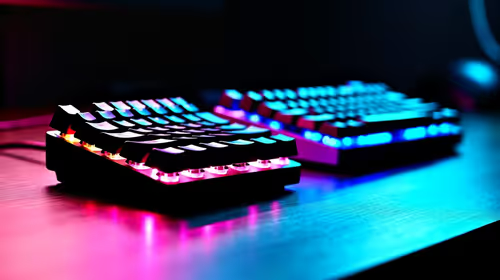
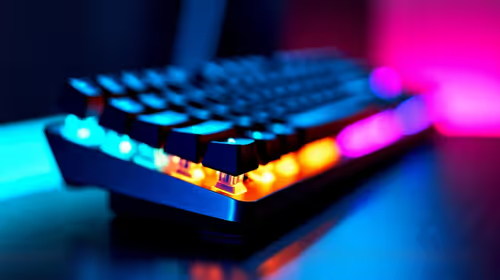
However, this separation is often a blessing in disguise. A dedicated USB or XLR mic sounds significantly better than any headset mic ever could. It ensures your callouts are crisp, even if you are frantically mashing keys on the cheapest gaming keyboard in South Africa or a high-end mechanical board.
Immersion Across Platforms 🚀
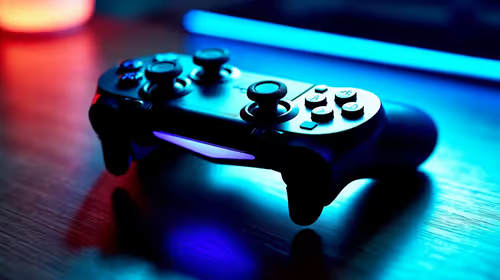
It isn't just PC gamers making the switch. Competitive console players are also plugging IEMs directly into their gaming controllers. The low impedance of most IEMs means they are easy to drive without a massive amplifier, delivering detailed sound straight from the controller's 3.5mm jack.
This level of detail pairs perfectly with high-refresh-rate visuals. If you have invested in top-tier PC monitors to see the enemy first, you owe it to yourself to hear them first too.
Audio EQ Pro Tip ⚡
Many IEMs have a 'flat' sound profile compared to bass-heavy gaming headsets. Download an equaliser software like Equalizer APO (for Windows) to boost the treble slightly. This highlights high-frequency sounds like footsteps and glass breaking, giving you a competitive edge in shooters like Valorant or CS2.
Accuracy is Everything
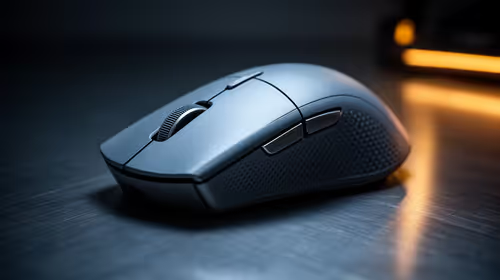
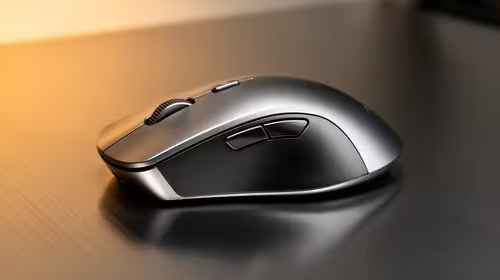
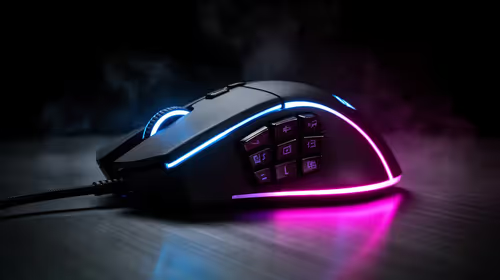
In the end, it comes down to competitive advantage. Your gaming mouse provides the aiming precision, but your audio provides the information needed to aim in the right place. While headsets offer convenience and an "all-in-one" solution, IEMs offer the granular detail required for high-stakes play.
Upgrade Your Audio Experience Whether you prefer the total immersion of a headset or the precision of IEMs, audio is half the battle. Browse our extensive range of audio gear to find the perfect soundstage for your setup and hear every footstep before it's too late.