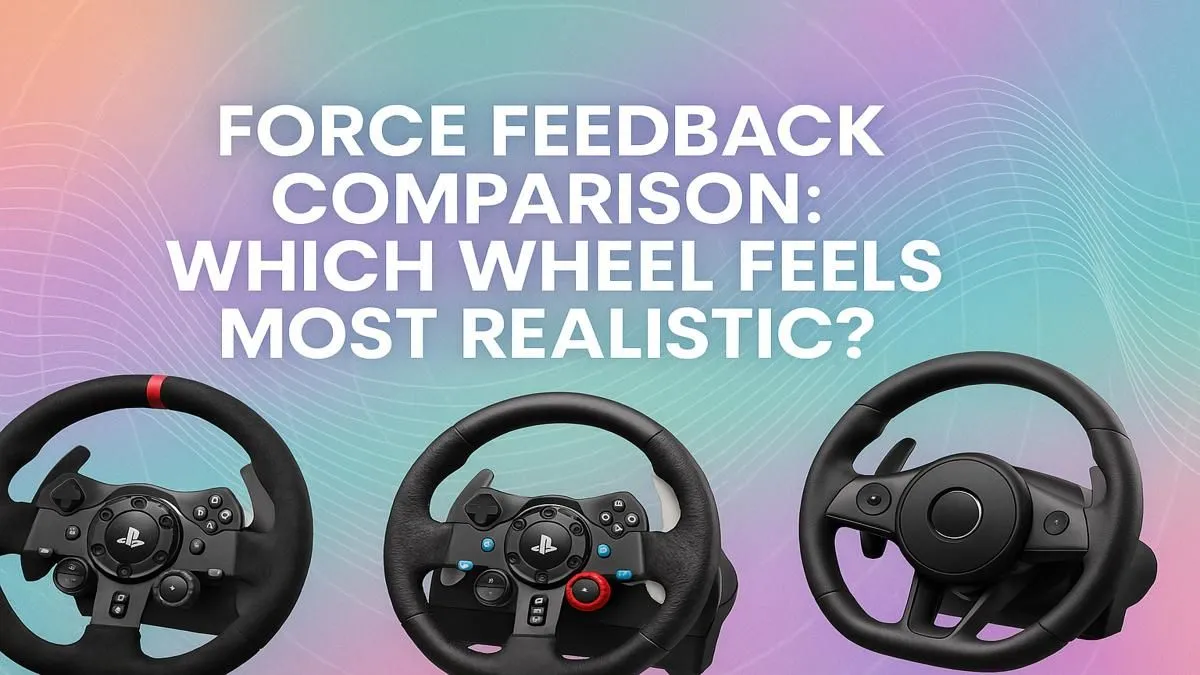
Tired of feeling like you're playing a game instead of driving a car? That vague rumbling from your old wheel just doesn't cut it when you’re trying to nail the apex at Kyalami. For South African sim racers, the quest for immersion is real. Finding the most realistic sim racing wheel isn't about bells and whistles; it's about translating the digital tarmac into tangible, gut-feel feedback. Let's dive into what truly separates the toys from the training tools.
What Makes a Sim Racing Wheel "Realistic"?
Realism isn't just one feature... it's a combination of technologies working together to trick your brain. Before you even think about lap times, you need to understand the core components that create an authentic driving experience. The difference between a basic setup and the most realistic sim racing wheel often comes down to the quality of these key elements.
Force Feedback (FFB) Fidelity
This is the heart and soul of a good wheel. Force feedback is the system that uses motors to simulate the forces you'd feel through a real steering column—like tyre slip, road texture, and weight transfer. The more detailed and powerful the FFB, the more information you have to control the car. High-end options from top-tier brands like Thrustmaster deliver nuanced feedback that lets you feel every ripple in the road.
Build Quality and Materials
A wheel that feels like a plastic toy will always break the immersion. Premium wheels use materials like steel, aluminium, and Alcantara or leather grips. This not only feels better in your hands but also ensures the wheel can withstand the powerful forces generated by the motor without flexing or creaking. 🔧
Pedal Precision
Your connection to the car's power and brakes happens at your feet. Standard pedals use potentiometers, which measure position. High-end pedals use load cells, which measure pressure. A load cell brake pedal is significantly more realistic because it mimics the feel of a real hydraulic brake system, allowing for much finer control and muscle memory.
The Force Feedback Showdown: Direct Drive vs. The Rest
When hunting for the best force feedback wheel, you'll encounter a few main types of FFB systems. While gear and belt-driven wheels offer a fantastic entry point, one technology stands above all for pure realism.
- Gear-Driven: The entry-level option. It's effective but can sometimes feel "notchy" or less smooth as you feel the gears meshing.
- Belt-Driven: A massive step up. A belt-and-pulley system delivers smoother, more detailed, and stronger feedback. This is the sweet spot for many serious racers.
- Direct Drive (DD): This is the pinnacle. 🚀 The steering wheel is mounted directly to the motor shaft. There are no gears or belts to dampen the feeling. The result is the purest, fastest, and most realistic sim racing wheel experience possible. You feel everything instantly, from the slightest loss of traction to the jarring impact of a kerb.
While Direct Drive offers the ultimate immersion, the entire ecosystem of wheels, pedals, and shifters has incredible options at every price point. It's worth it to explore the full range of sim racing gear to see what fits your budget and racing ambitions.
Pro Tip: Dial In Your FFB! ⚡
In games like Assetto Corsa Competizione or iRacing, don't just crank the FFB to 100%. This can cause "clipping," where the motor maxes out and you lose detail. Instead, use in-game telemetry apps to adjust the gain so that only the biggest impacts hit the maximum force. This preserves the subtle details of the road texture and tyre slip, giving you more information.
Beyond the Wheel: Building the Ultimate Rig
Getting the most realistic sim racing wheel is a huge step, but it's only half the battle. A powerful direct drive wheel can literally rip itself off a flimsy desk. To truly handle the forces and maintain immersion, you need a solid foundation.
Investing in one of the many available dedicated sim racing cockpits provides a rock-solid, flex-free platform for your wheel and pedals. This ensures that every bit of force feedback is transmitted to you, not lost in a wobbling desk. A proper seat also puts you in an authentic driving position, making those long endurance races far more comfortable and immersive. ✨
Ready to Hit the Virtual Track?
From your first belt-driven wheel to a full direct drive cockpit, the perfect setup is waiting. Stop playing and start racing. Explore our massive range of sim racing gear and find the equipment to fuel your podium finish.