Shure SM7B vs RE20: Broadcast Mic Comparison 2025
Checklist: compare sound & specs; test noise rejection; assess studio vs streaming use; recommend purchases. Shure SM7B vs RE20 — side-by-side broadcast mic comparison for 2025 🎙️✅
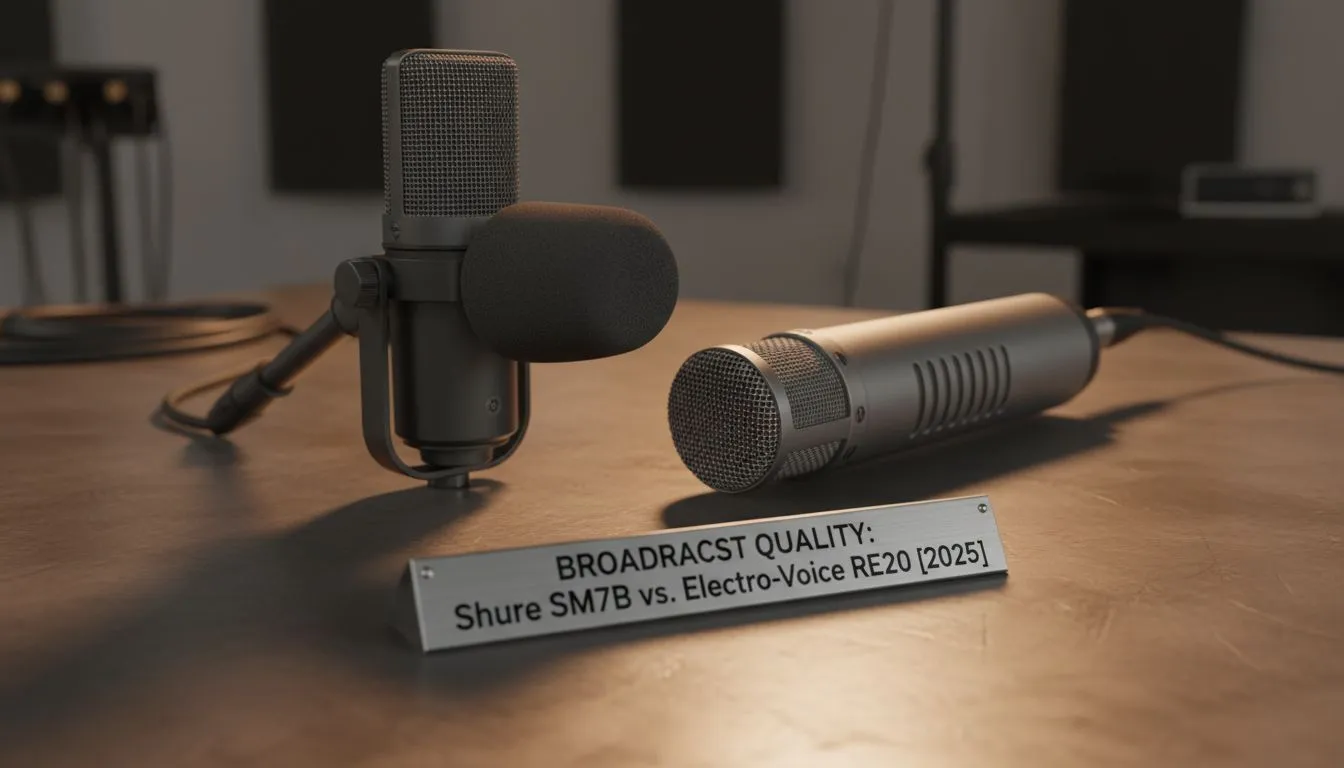
The Battle of the Broadcast Titans: Shure SM7B vs RE20
Deciding between the Shure SM7B and the Electro-Voice RE20 is the ultimate dilemma for South African content creators in 2025. Both are legendary dynamic microphones that have defined the sound of radio and podcasts for decades. But which one deserves the prime spot on your desk? We’re breaking down the specs, the sound signatures, and the real-world value to help you make the right call. 🎙️
Understanding the Sound Signatures
When you invest in high-end audio, you aren't just buying a device... you are buying a specific "colour" for your voice.
Shure SM7B: The Warm Embrace
The Shure SM7B is famous for its "proximity effect." It adds a rich, dark low-end to your voice that makes you sound intimate and authoritative. It is the sound of modern podcasting (think Joe Rogan). However, it is notoriously "gain hungry." You will likely need a powerful interface or an inline preamp to get a clean signal without hissing noise.
If you are browsing our range of studio-grade microphones, you will notice the SM7B is often paired with heavy-duty boom arms because of its weight. It does an excellent job of rejecting background noise—perfect if your recording space isn't perfectly treated.
Electro-Voice RE20: The Honest Workhorse
The RE20 is different. It uses "Variable-D" technology, which virtually eliminates the proximity effect. This means you can move around the mic, lean back in your chair, or get right up on the grille, and your voice remains consistent. It offers a flatter, more "honest" sound with crisp highs.
To really hear the difference while monitoring your audio, you need a pair of flat-response closed-back headphones. This ensures what you hear is exactly what your stream hears.
The Setup: It’s More Than Just a Mic
Upgrading to an XLR broadcast mic requires a holistic approach to your setup. These aren't plug-and-play USB toys; they are professional tools that integrate into a wider ecosystem.
Managing Your Production
Whether you choose the Shure or the EV, recording high-fidelity audio creates large uncompressed WAV files. You don't want your storage bottling up your creativity, so ensure you are writing to high-speed solid state drives to keep latency low during multi-track recording sessions.
Furthermore, a professional broadcast setup usually involves managing OBS, chat, and your audio software simultaneously. We always recommend dual PC monitors for this workflow—one for your game or content, and one dedicated to your audio levels and stream health.
TIP FOR YOU
Gain Staging Pro Tip ⚡
The Shure SM7B has a low output level (-59 dB). If your audio interface preamp maxes out at +50dB gain, you will introduce noise by cranking it to 100%. In South Africa, where gear can be pricey, a simple inline activator (like a FetHead or Cloudlifter) is a cost-effective way to add +25dB of clean gain before the signal hits your interface.
Background Noise and Peripherals
One major advantage of dynamic microphones like the SM7B and RE20 is their ability to ignore room noise compared to sensitive condenser mics. However, they aren't magic.
If you are a variety streamer, the sound of you mashing buttons can still bleed through. Pairing your mic with a quiet mechanical gaming keyboard (perhaps with linear red switches) can drastically improve your audio quality. The same goes for your mouse; a lightweight, smooth-gliding gaming mouse reduces the "thudding" sound of lifting and resetting the mouse on your desk, which travels through the boom arm.
For those who prefer console-style play on PC, using gaming controllers allows you to sit back from the desk. The RE20 shines here because its Variable-D tech keeps your voice sounding natural even as you lean back with the controller in hand.
Verdict: Which Mic Wins in 2025?
Choose the Shure SM7B if:
- You have a higher-pitched voice and want that "radio DJ" warmth.
- You have a noisy room (fan noise, PC hum).
- You already have other streaming essentials like a strong preamp or audio interface.
Choose the Electro-Voice RE20 if:
- You move around a lot while talking.
- You want a clear, articulate sound that cuts through a mix.
- You prefer a "what you hear is what you get" natural tone without heavy EQ processing.
Both microphones are built like tanks and will likely outlast your current PC build. It ultimately comes down to the tonal character you prefer for your brand. 🚀
Ready to Broadcast Your Voice? Whether you need the warmth of the SM7B or the clarity of the RE20, Evetech has the gear to make you sound like a pro. Browse our full range of Audio & Streaming Gear and start your journey to studio-quality sound today.
Both excel, but SM7B often wins for intimate vocals while RE20 shines on voice clarity and broadcast presence; test both for your voice.
SM7B frequently needs a clean, gain-heavy preamp or booster; RE20 demands less extreme gain. Consider a quality interface or inline gain for SM7B.
RE20's Variable-D design reduces proximity effect and handles off-axis noise well; use the RE20 for noisy broadcast environments.
SM7B offers warm, smooth midrange; RE20 gives punchy low-end and crisp presence—choose by voice and genre.
Yes. SM7B is popular for streaming for its warm sound; RE20 works great for broadcasters who want more articulation and presence.
RE20 often needs lighter EQ for clarity, while SM7B can need gentle high-frequency lift and de-essing depending on the voice.
Both work with USB via an XLR-to-USB interface or audio interface; ensure the interface supplies enough clean gain for SM7B.
Related Articles