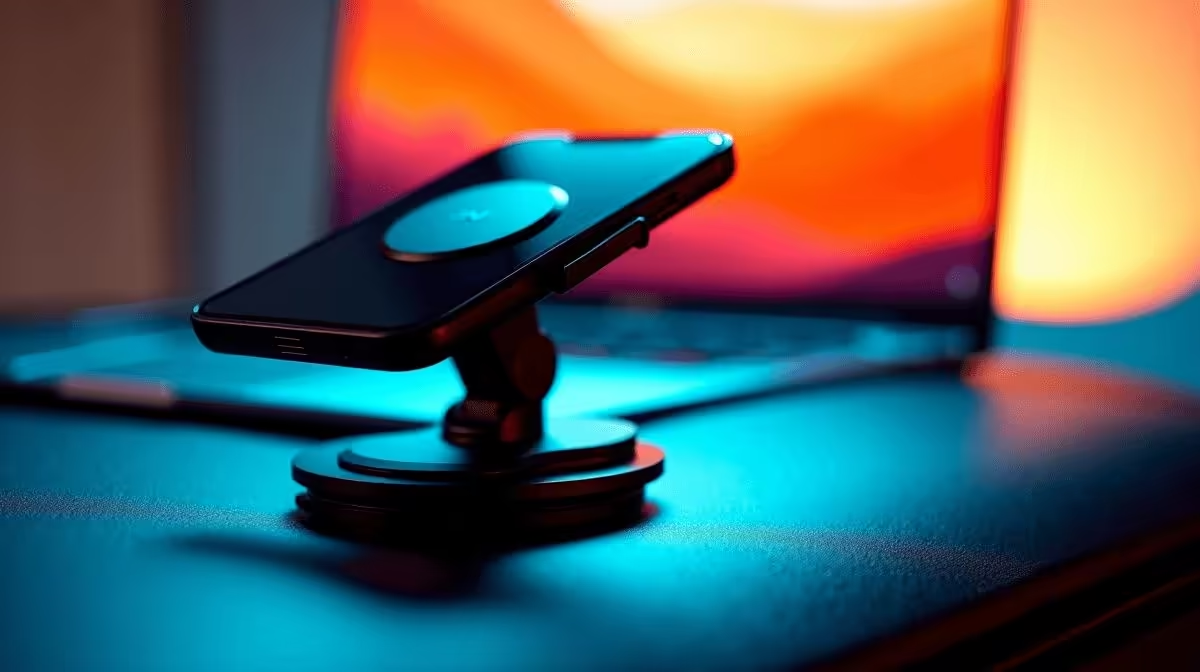
A one-touch release cradle solves a specific problem: removing your phone at the destination with a single button press rather than squeezing side levers while your hands are full. The mechanism is more precise than it looks, and using it correctly, with the phone mounted before you drive rather than at the lights, makes a measurable difference to cabin safety.
Quick Answer
One-touch release cradles use a spring-loaded or motor-assisted arm that stays open until you press the phone down into the base. Pressing seats the phone and the spring drives the side arms closed around it automatically. A single button on the base or side of the mount presses to retract the arms and release the phone. The mount-before-you-drive habit is the critical safety pairing with this design.
🔘 The Press-to-Close Mechanism Explained
When you place the phone onto the cradle's base plate and apply light downward pressure, a central pin or lever engages the arm mechanism. The arms are pre-loaded: the spring has been drawing them inward since the last time you pressed the release button, and the only thing holding them open is a small catch linked to the base plate. Pressing the phone down releases that catch, and the spring snaps the arms closed against the phone body in roughly half a second. The result feels positive and deliberate, a clear mechanical click that confirms the phone is seated. This is intentionally different from a loose friction-fit. The click gives you auditory and tactile confirmation without looking down, which matters when you are reaching across to mount the phone before driving off. If the phone is not correctly positioned on the base, the arms close but the phone sits off-centre and will rattle. Repositioning requires pressing the release button, reseating, and allowing the arms to close again.
👆 How the Single-Button Release Works
The release button is typically a square or round button on the front lower face of the mount body, positioned so you can press it with a thumb while your fingers are already wrapped around the phone. Pressing it drives a cam or pin that simultaneously retracts both side arms outward by a set distance, wide enough for the phone to slide forward freely. You do not need to hold the button while removing the phone. Press once, the arms open and stay open, you lift the phone out, and the arms remain spread until your next phone placement. On spring-only models, the arms stay open automatically. On motorised one-touch models, the motor holds the arms open briefly before returning them to the pre-loaded position ready for the next placement. The button position matters for ergonomics. A button on the front base of the mount is reachable without looking, while a button on the rear or underside requires more deliberate manipulation. Front-facing buttons are the better practical design for one-handed operation.
🚗 The Mount-Before-You-Drive Safety Habit
The biggest safety gain from a one-touch cradle is that it removes the temptation to mount the phone while moving. The press-to-close action takes about two seconds and can be done by feel without looking at the mount. If you build the habit of placing the phone before engaging the handbrake release, you never need to interact with the mount while the vehicle is in motion. Removing the phone at the destination is equally quick: press the front button, lift the phone. No squeezing levers, no fumbling to find the right pressure point. For most drivers, this end-of-trip interaction is where the time is actually saved compared to a standard manual cradle. The arrival habit matters because reaching across to a standard cradle and squeezing the arm-release lever at an awkward angle while a passenger is waiting is where mounts get dropped or phone screens get cracked. A single accessible button removes that fumble completely.
Frequently Asked Questions
What happens if the release button sticks or becomes hard to press?
Stiff buttons are usually caused by dust or grit entering the spring mechanism behind the button. Use a thin brush to clear debris from the button gap, then press repeatedly without a phone inserted to work the spring. A small amount of silicone-based lubricant applied to the button edge restores smooth action on older mounts.
Can I mount the phone with one hand while the other is on the wheel?
Yes, if the mount is positioned at a comfortable angle. The press-to-seat action requires only downward pressure rather than a squeeze, making single-hand placement significantly easier than a lever-operated cradle. Position the mount within natural reach before starting any journey.
Does the spring lose its snap force over time?
All springs fatigue gradually with repeated cycling. A quality one-touch cradle rated for 5,000 open-close cycles should maintain adequate arm tension for two to three years of daily commuting. If arm tension noticeably reduces, the spring assembly on some premium mounts can be replaced as a unit.
Is a one-touch cradle compatible with a case on my phone?
Yes. One-touch cradles accommodate phones with cases the same as any spring cradle, provided the case-plus-phone width falls within the maximum arm spread of the mount. Check the mount's maximum width spec against your case-fitted phone measurement.
Can I use a one-touch release cradle with wireless charging?
Some one-touch cradles include a built-in Qi charging coil in the base plate. When the phone seats and the arms close, the coil aligns with the phone's charging receiver. Functionality depends on matching Qi standard support between the mount and the phone.
Want the fastest, safest way to mount and release your phone every trip? Find one-touch cradle mounts in Evetech's car phone mount collection, with options for every phone size and cabin setup.