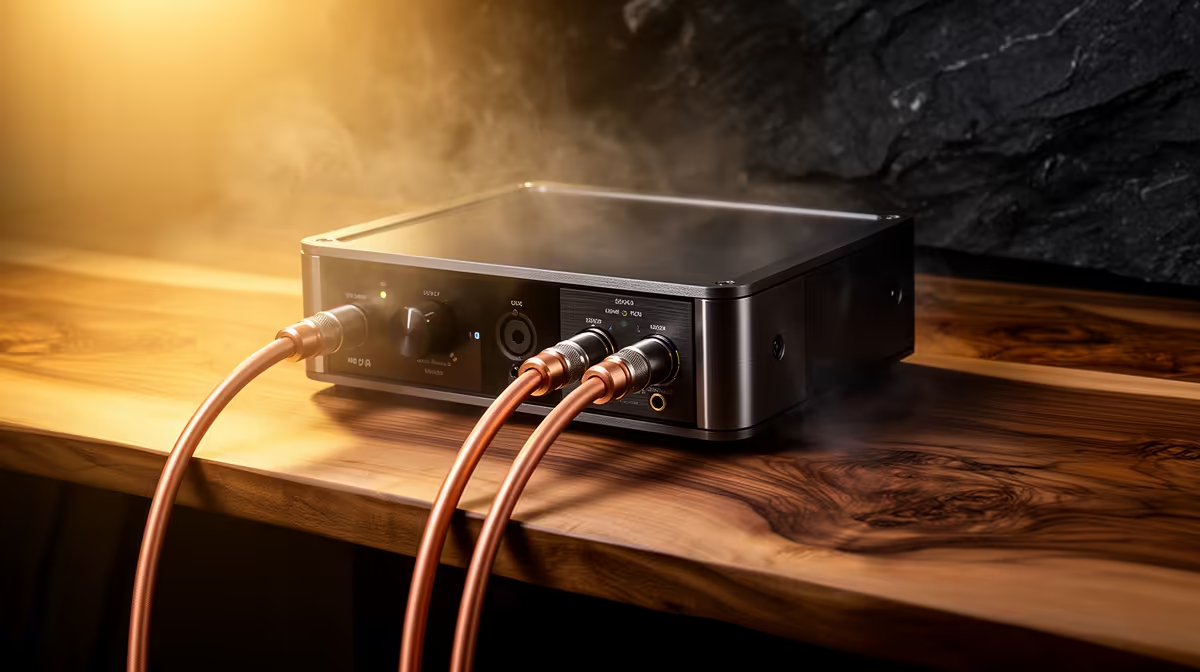
That low, steady buzz under your music or game audio is almost never a faulty cable, and replacing the speakers will not shift it. It is a ground-loop hum, and the cure is to break one of the two earth paths your audio signal is travelling through. Switch to an optical TOSLINK connection or drop a USB isolator into the chain, and the buzz usually vanishes the instant the loop is broken.
Quick Answer
To kill ground-loop hum from a PC audio setup, break the earth loop. The two reliable fixes are an optical TOSLINK cable, which carries audio as light and is immune to electrical interference, or a USB isolator that decouples the data and power grounds between PC and DAC. In South Africa the hum sits at 50Hz, matching mains frequency, which is the tell-tale sign you are dealing with a ground loop and not something else.
Why the hum happens
A ground loop forms when your DAC and your PC both reach earth through two separate paths. That creates a small loop of current flowing through the audio signal ground, and in South Africa it shows up as a steady 50Hz hum riding under everything you play. The ground your DAC shares with the computer is electrically dirty, because it is shared with the processor, the graphics card, and other components, all of which inject noise into the line.
Onboard audio is the usual culprit. The analogue output sits on the same circuit board as the rest of the PC, so the noise gets passed straight through to your headphones or speakers. That is why the buzz appears even with good cables and a decent amp.
Fix one: optical TOSLINK
Optical is the guaranteed cure. A TOSLINK connection carries the audio as light down a fibre rather than as electricity down copper, so there is no shared ground at all and no loop to form. If your DAC or amp has an optical input and your motherboard or source has an optical output, this is the cleanest fix available. Plug it in and the hum has no electrical path left to travel.
The catch is that both ends need an optical port. If your DAC is USB-only, optical is not an option, which is where the second fix comes in. Good closed-back headphones and DACs in the headphone and headset range at Evetech often include optical inputs worth checking for before you buy.
Fix two: a USB isolator
For a USB DAC, a USB isolator slots between the PC and the DAC and decouples the data and power grounds. An isolator chip creates a fresh ground reference on the device side, breaking the loop and removing the noisy shared ground while still passing the audio data cleanly. It is an inexpensive inline device and the standard answer when optical is not available.
A couple of related moves can help in stubborn cases. Plug the PC and the audio gear into the same wall outlet or power strip so they share one earth point rather than two. And try the audio device on a different USB port, since some ports are noisier than others. Make one change at a time so you know which one solved it. Once the hum is gone, a quality headset from the best-selling headsets at Evetech will finally sound as clean as it should.
Frequently Asked Questions
What causes ground-loop hum in a PC audio setup?
It happens when your DAC and PC reach earth through two separate paths, creating a loop of current that flows through the audio ground. In South Africa it appears as a 50Hz hum, matching mains frequency, and onboard audio sharing a dirty ground is the common source.
Does an optical cable fix ground-loop hum?
Yes, completely, when both ends have optical ports. TOSLINK carries audio as light rather than electricity, so there is no shared ground and no loop can form. It is the most reliable fix if your gear supports it.
What is a USB isolator and will it stop the buzz?
A USB isolator sits between PC and DAC and decouples the data and power grounds, creating a fresh ground reference that breaks the loop. It removes ground-loop noise on USB DACs and is the go-to fix when optical is not available.
Why is my hum exactly 50Hz?
Because 50Hz is South Africa's mains frequency. A hum at that pitch is the signature of a ground loop drawing on the power supply, which helps you distinguish it from hiss or interference that needs a different fix.
Will a better DAC alone remove the hum?
Not necessarily. If the cause is a ground loop, the hum can persist on a new DAC because the loop is about the earth paths, not the converter quality. Breaking the loop with optical or a USB isolator is the actual fix.