We've all been there… staring at a loading screen, the progress bar mocking you while your mates are already dropping into the action. It's the ultimate immersion-breaker. Now, imagine that loading screen simply vanishing. Not just faster, but gone. That's the promise of a 14,000MB/s SSD, a piece of tech that feels like it’s pulled straight from 2030. But by 2026, it won't be science fiction… it'll be your biggest competitive advantage. 🚀
What Powers a 14,000MB/s SSD?
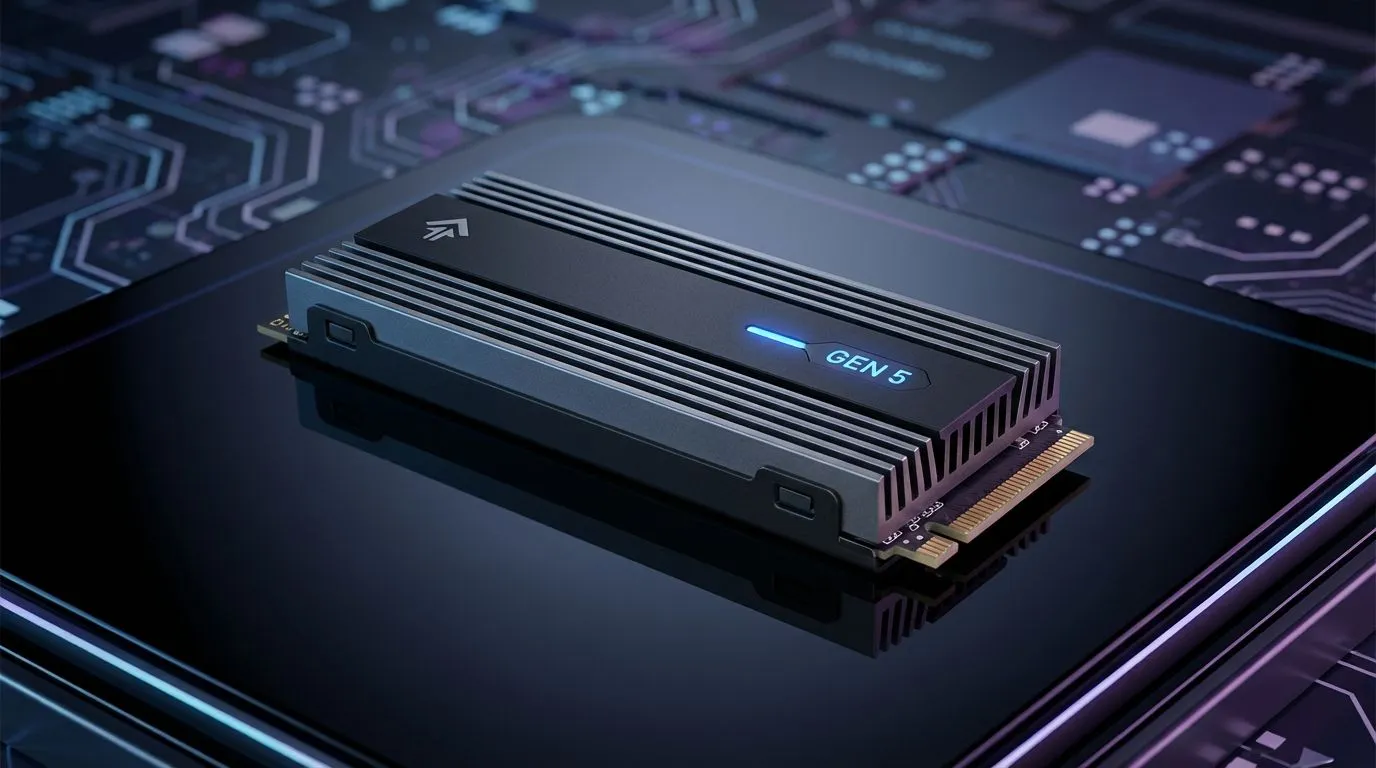
At the heart of this incredible speed is the next generation of connectivity: PCIe 5.0. Think of it as doubling the lanes on a highway. While today’s excellent PCI Express (NVMe) SSDs use the already-fast PCIe 4.0 standard, PCIe 5.0 offers twice the bandwidth. This allows data to move between your storage and the rest of your PC at speeds that were previously unthinkable, making these the new champions of blazing-fast Gen 5 NVMe drives.
This isn't just a small step up; it's a monumental leap that will redefine what we expect from our PCs.
Real-World Gaming Benefits of Extreme SSD Speed
By 2026, game developers will be fully leveraging technologies like Microsoft's DirectStorage. This is where the magic happens. Instead of your CPU being a bottleneck for game assets, a 14,000MB/s SSD will be able to stream textures, models, and environments directly to your graphics card.
What does this mean for your gameplay?
Truly Seamless Open Worlds
Remember the texture pop-in or stuttering when flying across a massive map in games like Microsoft Flight Simulator or Starfield? With a drive this fast, the world can be loaded in real-time. You’ll experience vast, detailed environments with zero interruptions, just pure, fluid exploration. It's the kind of smooth performance that top brands like ADATA and Kingston are striving for with their next-gen products.
The End of Loading Screens
We're not talking about reducing load times from 30 seconds to 10. We're talking about near-instantaneous transitions. Clicking "Continue" on your saved game could mean you're back in the action in the blink of an eye. Fast-travel will actually feel… fast. This single benefit of a 14,000MB/s SSD will fundamentally change game design and player experience. ✨
Beyond the Game: A Creator's Power Tool
While gamers will rejoice, creative professionals might be the biggest winners. Imagine scrubbing through 8K video timelines in DaVinci Resolve with no lag or dropped frames. Or compiling massive software projects in a fraction of the time. For 3D artists, architects, and data scientists, the benefits are enormous.
Transferring hundreds of gigabytes of raw footage from portable external storage to your main drive would take seconds, not minutes. This level of performance, championed by manufacturers like Western Digital's reliable drives, transforms professional workflows from a waiting game into a creative flow state.
Check Your Motherboard! 🔧
Before dreaming of a 14,000MB s SSD, check your motherboard's specifications. You'll need a motherboard that explicitly supports PCIe 5.0 for M.2 slots to unlock these insane speeds. A Gen 5 drive will work in a Gen 4 slot, but it will be limited to Gen 4 speeds, so you'd be paying for performance you can't use!
Is It Worth the Upgrade in 2026?
Right now, a drive this fast is overkill for most. But by 2026, as games and applications become more demanding, it will start to look less like a luxury and more like a necessity for high-end builds. It’s about future-proofing your rig to handle whatever comes next.
Even if you're not ready for the absolute cutting edge, the technology is constantly improving. Today's high-speed Gen 4 drives and even high-speed external SSDs offer a massive upgrade over older hardware. The key is finding the right balance of price and performance for your needs today, while keeping an eye on the incredible future that awaits.
Ready to Feel the Speed? Whether you're future-proofing for 2026 or just want to obliterate today's loading screens, the perfect SSD is waiting. Explore our full range of solid-state drives and find the right performance for your rig and budget.