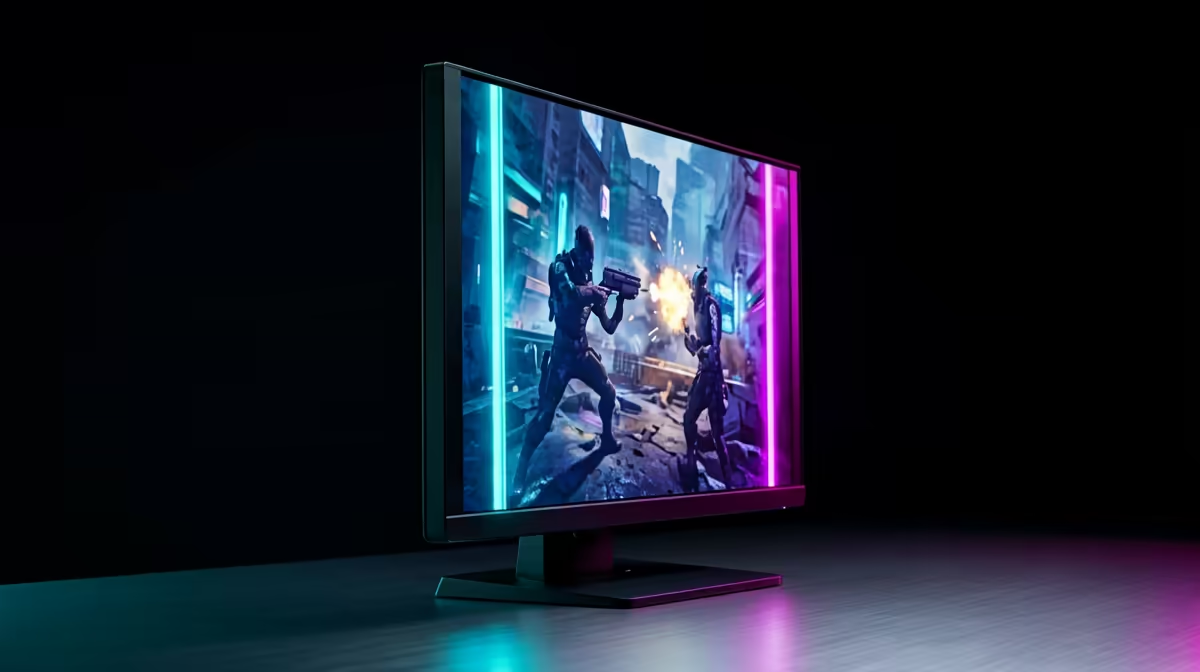
Howzit, gamers! Staring at your screen, wondering if upgrading from 144Hz to a 240Hz monitor is the secret to climbing the ranks in Valorant? Or is it just expensive overkill? In South Africa, where every rand counts, making the right choice is crucial. This guide breaks down the real-world difference between a 240Hz and a 144Hz monitor, helping you decide where to invest your hard-earned cash for the ultimate competitive edge. Let's dive in. ✨
Understanding Refresh Rates: What Does Hz Even Mean?
Before we pit these two refresh rates against each other, let's quickly cover the basics. A monitor's refresh rate, measured in Hertz (Hz), tells you how many times per second the image on the screen is updated.
Think of it like a digital flipbook:
- 60Hz: The screen redraws the image 60 times per second. This was the old standard.
- 144Hz: The screen redraws 144 times per second.
- 240Hz: The screen redraws a massive 240 times per second.
More "pages" per second means smoother motion, less blurring, and a more responsive feel, which is absolutely critical in fast-paced games.
The 144Hz Monitor: The Gold Standard for Modern Gaming
For years, the jump from 60Hz to 144Hz has been one of the most significant upgrades a PC gamer could make. It's the point where motion becomes incredibly fluid, aiming feels more connected, and you gain a tangible advantage.
A 144Hz monitor is the perfect sweet spot for the vast majority of South African gamers. It provides a massive performance leap without requiring a god-tier PC to run effectively. Whether you're exploring the world of Elden Ring or in a heated firefight in Apex Legends, 144Hz delivers a premium experience. It's a fantastic choice among the wide range of essential PC monitors available today.
The 240Hz Monitor: For the Competitive Edge 🚀
So, what about 240Hz? This is where we enter the realm of esports and hyper-competitive gaming. A 240Hz monitor offers the absolute smoothest image possible, further reducing motion blur and input lag. While the visual jump from 144Hz to 240Hz is less dramatic than from 60Hz to 144Hz, the competitive benefits are real.
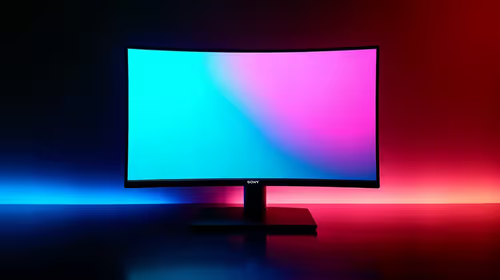
For players of tactical shooters like CS:GO or Valorant, seeing an enemy a few milliseconds sooner as they peek a corner can be the difference between winning and losing a round. To take full advantage, however, you need a powerful PC that can consistently push 240+ frames per second (FPS). Many high-end setups even pair these powerful screens with immersive curved monitors for maximum engagement.
Match Your Machine! 🔧
Your monitor's refresh rate is only as good as your PC's framerate (FPS). Before buying a 240Hz monitor, check if your GPU can consistently push 240+ FPS in your main game. Otherwise, you're paying for performance you can't even use!
240Hz vs 144Hz Monitor: A Head-to-Head Breakdown
Let's break down the core differences in the 240Hz vs 144Hz monitor debate to help you decide.
### Visual Fluidity
The difference is there. On a 240Hz panel, tracking fast-moving targets feels slightly cleaner and more defined. However, for many people, this improvement is subtle and subject to diminishing returns compared to the massive leap felt when first moving to 144Hz.
### Competitive Advantage
This is where 240Hz shines. The lower latency and superior motion clarity give you a slight but measurable edge in reaction-based scenarios. Pro players and aspiring pros will feel this advantage most keenly.
### Hardware Demands & Price
This is the big one for us in SA. A 144Hz monitor can be comfortably driven by a mid-range gaming rig. A 240Hz monitor demands a high-end CPU and GPU to be worthwhile, which adds significantly to the total cost. You'll want to keep an eye out for the best PC monitor deals in SA to manage your budget.
The Final Verdict: Which Monitor Should You Buy?
Ultimately, the choice between a 240Hz vs 144Hz monitor comes down to your games, your hardware, and your budget.
You should choose a 144Hz monitor if:
- You play a wide variety of games, from AAA adventures to casual multiplayer.
- You're upgrading from 60Hz and want the best value for your money.
- Your PC is in the entry-level to mid-range tier.
You should choose a 240Hz monitor if:
- You are a serious, competitive esports player in games like Valorant, CS:GO, or Overwatch.
- You have a high-end PC that can consistently deliver 240+ FPS.
- You want every possible competitive advantage and budget is a secondary concern.
No matter your choice, upgrading your monitor is one of the best ways to improve your entire gaming experience. ⚡
Find Your Perfect Refresh Rate Whether you're landing on 144Hz or aiming for the 240Hz peak, we've got the screen for your setup. Shop all gaming monitors at Evetech for performance that leaves lag in the dust.