Ever explored a dark cave in Alan Wake 2 only for the shadows to look like a murky grey mess? Or felt an explosion in Helldivers 2 lacked that blinding flash? That's often the difference between standard displays and true High Dynamic Range (HDR). Understanding a key spec, HDR peak brightness, is your ticket to visuals that don't just look good... they feel real. Let's dive in and get this HDR peak brightness explained properly. ✨
Demystifying Nits: The Building Block of Brightness
Before we talk about peaks, let's start with the basics: nits. A "nit" is simply a unit of brightness, technically a candela per square metre (cd/m²). Think of it this way: one nit is roughly the brightness of a single candle.
A typical office monitor might have about 250-350 nits. It’s perfectly fine for spreadsheets and browsing. But for HDR content—like modern AAA games or 4K movies—that’s not nearly enough to create the stunning contrast and lifelike highlights that make visuals pop. This is where the magic of HDR comes in, demanding much higher brightness levels across the board in modern PC monitors.
HDR Peak Brightness Explained: It's Not Just One Number
Here’s the part that trips many people up. When you see a monitor advertised with "1000 nits," it doesn't mean the entire screen can blast out that brightness all the time. If it did, looking at a white screen would feel like staring into the sun. ☀️
Instead, we have two key measurements:
- Sustained Brightness: This is the brightness the monitor can maintain across its entire screen for an extended period. This is usually a much lower number, maybe 400-600 nits on a good HDR display.
- Peak Brightness: This is the maximum brightness the monitor can hit in a small portion of the screen for a short time.
This is the secret sauce of great HDR. It allows for intense, pinpoint highlights—like the glint of sunlight off a sword, a distant muzzle flash, or the searing glow of a starship's engine—without making the whole image uncomfortably bright. These details are what make the image feel deep and realistic, especially on premium 4K HDR monitors where every pixel counts.
Finding Your Sweet Spot: How Many Nits Do You Really Need?
So, what's the magic number for gaming? It depends on your standards and your budget. The VESA DisplayHDR certification is a great guide:
- DisplayHDR 400: This is the entry point. It's a noticeable step up from a standard (SDR) display but won't deliver those jaw-dropping highlights. It’s a good start, but the "peak" brightness is often close to the sustained brightness.
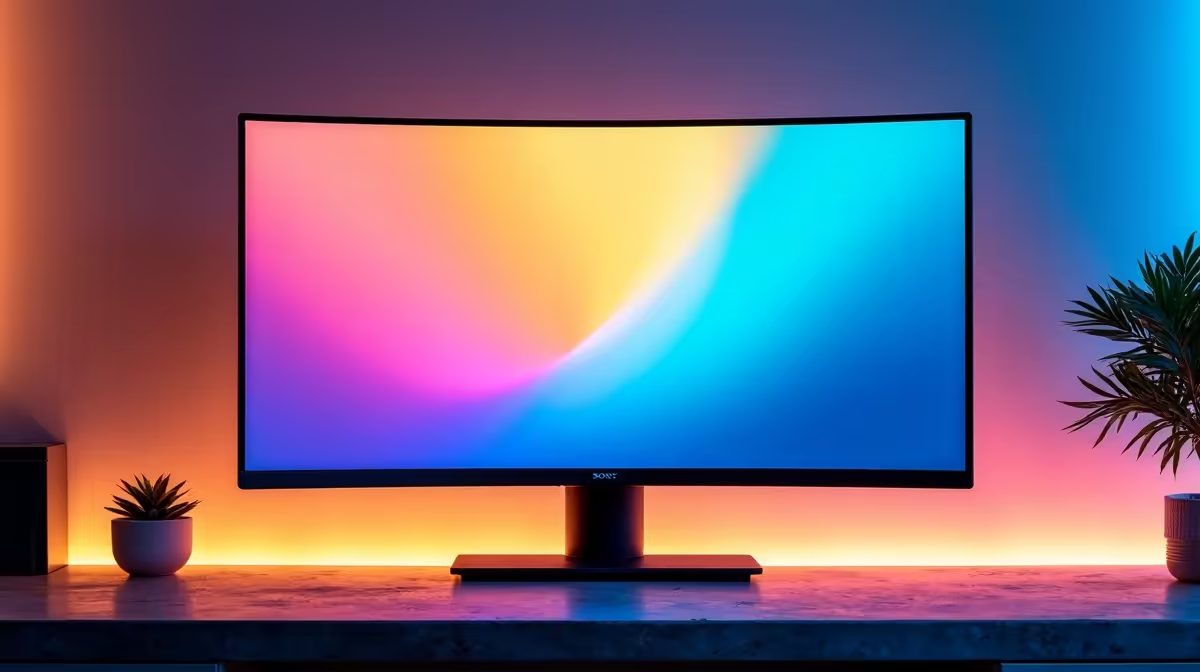
- DisplayHDR 600: Now we're talking! At this level, you get a real taste of what HDR can do. Highlights will have a proper punch, and the overall dynamic range is significantly better. Many gamers find this to be the sweet spot for performance and price, especially on immersive curved gaming monitors.
- DisplayHDR 1000+: This is the premium experience. With 1000 nits or more, explosions are blindingly brilliant, and sunlit scenes feel incredibly lifelike. If you want the absolute best visual fidelity without compromise, this is where you should be looking.
Pro Gamer Tip ⚡
Don't let your room sabotage your HDR! A bright light or window behind you can create glare and wash out those deep blacks. For the best HDR experience, try to play in a dimly lit room or use bias lighting—a soft light behind your monitor—to reduce eye strain and make the colours on screen pop.
Even on the go, understanding brightness is key, with many high-quality portable monitors now offering basic HDR support for a better mobile experience.
More Than Brightness: The Full Picture for Perfect Visuals
While peak brightness is a massive factor, it doesn't work in a vacuum. To get a truly spectacular image, you also need to consider:
- Black Levels: Bright highlights are only impactful if they contrast with deep, inky blacks. This is why OLED and Mini-LED technologies, with their superior contrast ratios, are so prized for HDR.
- Local Dimming: This feature allows a monitor to brighten or dim specific zones of the screen independently. The more zones, the better the control, preventing bright objects from creating a "halo" effect on dark backgrounds.
- Colour Gamut: High brightness needs a wide range of vibrant, accurate colours to truly shine. Look for displays with high DCI-P3 coverage (90% or more).
Putting it all together is the key to finding your perfect display from the entire range of gaming monitors available. And don't forget you can always improve your setup with essential monitor accessories like a good quality stand or calibration tool.
Is Upgrading for Peak Brightness Worth It?
Absolutely. Moving to a display with excellent HDR peak brightness is one of the most significant visual upgrades you can make. It adds a layer of depth, realism, and immersion that a standard display simply cannot match. By understanding the difference between sustained and peak brightness, you can cut through the marketing jargon and choose a monitor that will genuinely transform your gaming experience. When you're ready to make the leap, be sure to check out the latest PC monitor deals to get the best value in ZAR.
Ready for a Visual Upgrade? Understanding HDR peak brightness is the first step to truly next-gen gaming visuals. Stop guessing and start seeing every spectacular detail. Explore our incredible PC monitor deals and find the perfect screen to bring your games to life.