Stuck on a 60Hz display while your mates are bragging about their buttery-smooth gameplay? That slight stutter in a fast-paced shooter can mean the difference between victory and defeat. Before you drop thousands of Rands on a new screen, what if you could squeeze extra performance from the one you already own? Learning how to overclock your monitor might just be the free upgrade you’ve been looking for, giving you a smoother, more responsive experience.
What is Monitor Overclocking, Really?
In simple terms, monitor overclocking is the process of pushing your display’s refresh rate (measured in Hertz or Hz) beyond its official factory specifications. Think of it like tuning a car engine. The manufacturer sets a safe, standard limit, but there’s often a little extra performance hiding under the hood. By increasing the refresh rate, you’re telling your monitor to draw more frames per second, resulting in visibly smoother motion on screen. ⚡
This isn't some dark art reserved for pro gamers. Most modern PC monitors have some overclocking headroom. A standard 60Hz panel might happily run at 75Hz, and a 144Hz gaming screen could potentially hit 165Hz. It’s a fantastic way to get more value from your existing hardware.
The Big Question: Is It Safe to Overclock Your Monitor?
This is the most common concern, and it’s a valid one. The short answer is: yes, it's generally safe if you’re careful. Pushing any component past its rated specs carries some risk. The main things to be aware of are:
- Warranty: Technically, this could void your monitor’s warranty.
- Reduced Lifespan: Running the components hotter and faster could potentially shorten the panel's life over several years.
- Instability: At worst, an unstable overclock on your monitor can cause screen artefacts, flickering, or black screens.
The good news? Permanent damage is extremely rare with modern displays. Most have built-in safety mechanisms that prevent you from setting a refresh rate that could cause harm. If you push it too far, the screen will likely just go black for a few seconds before reverting to the last stable setting. The entire process is completely reversible. High-resolution screens like premium 4K monitors often have less overclocking potential due to data bandwidth limitations, but many other panels have room to move.
Step-by-Step Guide to Boosting Your Refresh Rate 🚀
Ready to give it a try? The process to overclock a monitor is handled through your graphics card's software. Make sure you're using a quality DisplayPort cable, as HDMI can sometimes have bandwidth limitations.
For NVIDIA GeForce Users
If you have an NVIDIA GPU, the process is straightforward using the NVIDIA Control Panel.
- Open NVIDIA Control Panel: Right-click on your desktop and select it.
- Navigate to 'Change resolution': Under the 'Display' menu.
- Click 'Customize...': You'll see a list of available resolutions. Click the 'Customize...' button below.
- Create Custom Resolution: Tick the box for 'Enable resolutions not exposed by the display' and then click 'Create Custom Resolution...'.
- Increase the Refresh Rate: Find the 'Refresh rate (Hz)' box. Increase the value in small steps... say, 5Hz at a time. So if you're at 60Hz, try 65Hz first.
- Test: Click 'Test'. Your screen will go black for a moment. If it comes back on and looks stable, the test passed! You can then save the new resolution and apply it. Keep increasing by 2-5Hz and re-testing until you find the highest stable limit.
For AMD Radeon Users
AMD users can achieve the same result through the AMD Software: Adrenalin Edition.
- Open AMD Software: Right-click on your desktop and open the application.
- Go to Settings: Click the gear icon in the top right, then go to the 'Display' tab.
- Find 'Custom Resolutions': Next to the 'Display' heading, you should see 'Custom Resolutions'. Click 'Create New'.
- Increase Refresh Rate: In the new window, find the 'Refresh Rate (Hz)' field and increase it slightly.
- Create and Apply: Click 'Create' and the new profile will be saved. You can then select it from the main Display settings page to test it. Like with NVIDIA, use small increments to find your monitor's sweet spot.
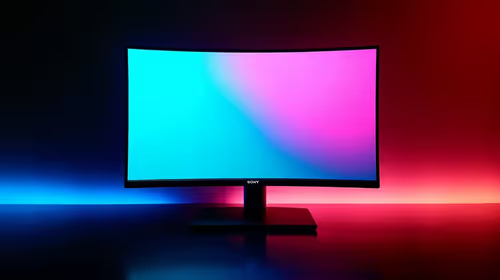
Many modern displays, including some fantastic curved monitors, can benefit from this simple tweak for an even more immersive feel.
Crucial Stability Check 🔧
An overclock isn't successful until you've checked for 'frame skipping'. This is where the monitor accepts the higher refresh rate but secretly drops frames to keep up, defeating the whole purpose. Use a web tool like TestUFO's Frame Skipping Test. If you see a solid, unbroken white bar, you're golden! If the bar has gaps, your overclock is unstable and you need to dial the refresh rate back down.
How to Test Your Monitor Overclock for Stability
Once you've found a new refresh rate that seems to work, you need to test it properly. A successful monitor overclock isn't just about the screen turning on; it needs to be stable and artefact-free.
Run a demanding game for 15-20 minutes and look closely for any visual glitches, such as flickering pixels, lines appearing on screen, or colour distortion. If you see anything unusual, your overclock is unstable, and you should lower the refresh rate by a few Hz and test again. Remember that not all panels are created equal; a desktop display will behave very differently from specialised screens like portable monitors, which are optimised for different priorities.
When Overclocking Isn't Enough: Time for an Upgrade?
Let's be realistic. You won't turn a basic 60Hz office panel into a 240Hz esports champion. Overclocking is about gaining a small, free advantage... maybe an extra 15-20Hz. If you've pushed your current screen to its absolute limit and still crave that ultra-fluid motion, it might be time to invest in a native high-refresh-rate display.
The benefits of a purpose-built high-Hz panel are undeniable: guaranteed stability, superior pixel response times, and adaptive sync technologies like FreeSync and G-SYNC. For any serious gamer in South Africa, browsing the latest all gaming monitors is the next logical step. You can often find incredible value in the best PC monitor deals, making the jump to a true gaming-grade display more affordable than ever. ✨
Ready for a Guaranteed Upgrade? Overclocking is a brilliant trick, but nothing beats the real deal. If you're ready for guaranteed smooth frames and a real competitive edge, it's time to explore a native high-refresh-rate monitor. Browse our full range of monitors today and find the perfect screen for your setup.