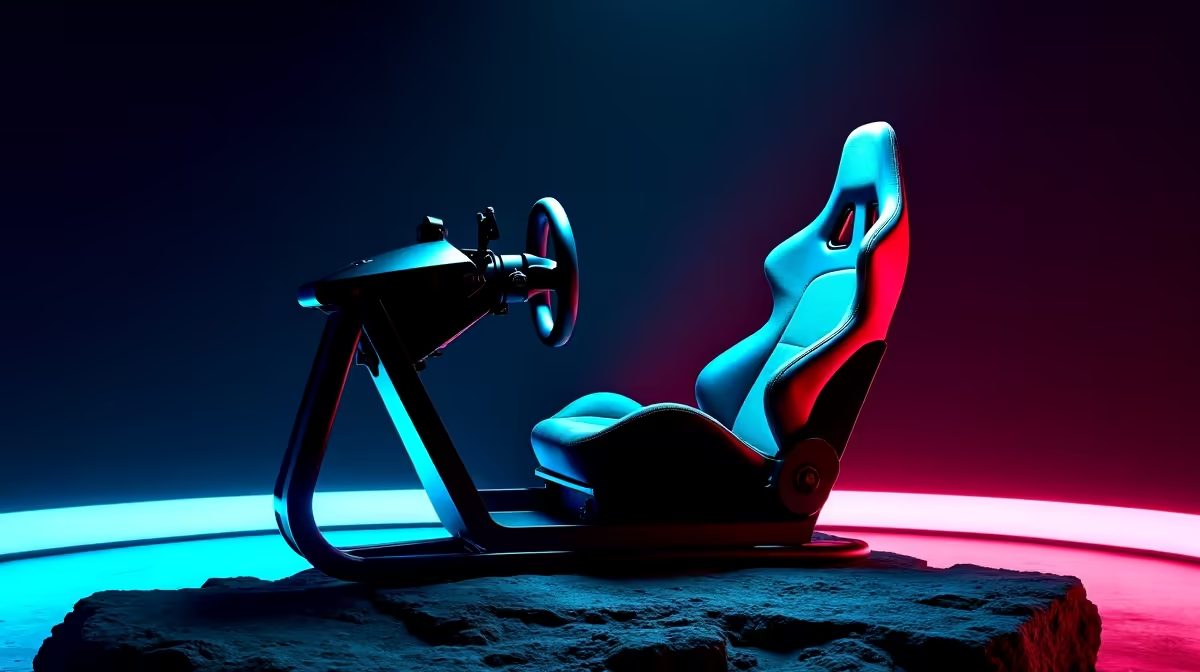
Quick Answer
A budget DIY racing cockpit in South Africa can be built for R3,000 to R6,000 using local materials and secondhand parts, making it considerably cheaper than entry-level Playseat models that start around R4,500 to R7,000. However, Playseats offer easier assembly, better adjustability, and a more polished finish that can justify the premium for casual sim racers who value convenience.
Sim racing has exploded in popularity across South Africa, and whether you are eyeing a Playseat or thinking about grabbing some steel pipe and bolts from the hardware store, cost is always the first question. The answer is not as straightforward as it looks - both routes have hidden costs that can surprise you once you are deep into the build.
What Does a Playseat Actually Cost in SA?
Playseat models available locally range from the entry-level Playseat Challenge at around R4,500 to the Evolution Pro series pushing past R9,000 once you factor in shipping and import duties that some retailers pass on. The Challenge is foldable and designed for apartment living, which suits many South African flat-dwellers who cannot dedicate a permanent room to sim racing. The Evolution line is more rigid, better for force feedback wheels in the Fanatec or Thrustmaster T300 class, and will not flex under aggressive cornering inputs.
The key advantage of buying a Playseat is that it arrives pre-engineered. Mounting points are tested, the seat angle is adjustable within safe parameters, and you get a warranty. For someone without a drill press or welder at home, that counts for a lot.
What Does a DIY Cockpit Cost in SA?
A well-planned DIY cockpit using 40x40mm aluminium extrusion or rectangular mild steel tubing can be completed for R2,800 to R5,500 depending on your fabrication skills and access to secondhand seats. Steel tubing from a local steel merchant runs roughly R80 to R120 per metre for the standard 25x50mm rectangular sections, and a complete frame needs around 10 to 14 metres. A bucket seat from a scrap yard costs R400 to R1,200. T-nuts, angle brackets, and bolts from Builders Warehouse or similar add another R500 to R800.
The real hidden cost in DIY is time. A first-time builder typically spends 20 to 40 hours designing, cutting, grinding, and assembling. If you factor in your time at even a modest rate, the cost gap narrows considerably. You also need access to tools - an angle grinder, drill, and measuring kit at minimum.
Total Cost Comparison Including Wheel and Pedal Compatibility
Neither a Playseat nor a DIY rig makes much sense without a compatible wheel and pedal set. Entry-level options like the Thrustmaster T150 or Logitech G923 are priced around R3,500 to R5,500 in SA. Most Playseats use a universal mounting system that fits these wheels without adapters. A DIY rig needs you to machine or weld a custom wheel plate, which costs R300 to R700 extra if you outsource it.
For pedal mounting, a DIY setup wins on flexibility - you can angle and position the pedals precisely for heel-and-toe technique, something the Playseat Challenge specifically struggles with due to its flat floor plate design. The Evolution handles pedal positioning better but still cannot match a custom-built platform.
Which Makes More Sense for South African Sim Racers?
If you live in a flat or do not have a garage workshop, a Playseat - particularly the Challenge model - is the smarter buy. It folds away, sets up in 15 minutes, and the R4,500 to R7,000 outlay is offset by saved time and zero tool investment. If you have garage space, basic welding or metal cutting access, and enjoy building as a hobby, a DIY cockpit will give you a stiffer, more upgradeable platform for less money. The real long-term advantage of DIY is modularity - you can bolt on a sim rig monitor arm, a shifter mount, or a handbrake bracket without buying a second product.
Frequently Asked Questions
Q: Is it worth buying a secondhand Playseat in South Africa? A: Yes, secondhand Playseats appear regularly on local classifieds for 40 to 60 percent of retail. Inspect all welds and nylon mounting points before buying - cracks near the wheel mount plate are common on heavily used units.
Q: Can I use a car seat from a scrapyard in a DIY sim rig? A: Absolutely. JDM-style bucket seats from local scrapyards are popular and cost R400 to R1,200. Make sure the seat base is flat or use adjustable runners so you can set your eye height correctly relative to the monitor.
Q: What aluminium extrusion profile works best for SA DIY rigs? A: The 40x40mm V-slot or T-slot profile (also called Item profile) is the most common. It is sold by local suppliers and lets you reposition components without drilling new holes - critical if you are still tuning your seating position.
Q: Do Playseat products come with a local warranty in South Africa? A: Warranty terms depend on the retailer. Always confirm local warranty coverage before purchasing - some imported units are covered only through the original supplier and returns can be complicated by shipping costs.
Ready to Find Your Perfect Match? Check out Evetech's current gaming PC deals to pair with your new sim rig setup.