

RX 9060 XT Like a Dragon Performance: FPS Test & Settings Guide 2026
RX 9060 XT Like a Dragon Performance: FPS Test. Real-world benchmark data, FPS numbers & performance analysis. What SA gamers can actually expect.
Read morePUBG DLSS explained: should you enable DLSS to boost FPS or avoid extra input lag? This guide compares frame rate vs input lag, shows test outcomes, and gives clear settings and tips 🎮⚡
You are final circle in Miramar... palms are sweaty... you need every single frame to count. In the high-stakes world of PUBG, the choice between fluid movement and visual clarity is often life or death. But does Deep Learning Super Sampling actually help you win... or does it introduce enough input lag to ruin your flick shots? Let's dive into the PUBG DLSS trade-off for South African gamers.
PUBG is notoriously unoptimised. Even with a high-end rig, hitting a stable 144Hz at 1440p can be a struggle during intense firefights. This is where DLSS comes in. By rendering the game at a lower resolution and using AI to upscale it, you can see a massive jump in your FPS. If you are looking to boost your numbers, checking out the latest NVIDIA graphics cards is the first step toward a smoother experience.
The extra frames make the game look more fluid... but there is a catch. Because the GPU has to process the AI upscaling, there is a tiny delay. In a game where milliseconds determine who gets the Chicken Dinner, this is a valid concern for competitive players.
Most casual players will never notice the micro-delay. However, if you are playing at a professional level, every bit of latency matters. Thankfully, modern Tensor cores have reduced this overhead significantly. When you pick up high-quality components like MSI graphics cards, the cooling and clock speeds help maintain a consistent frame delivery that offsets most perceived lag.
you enable DLSS in PUBG, always turn on NVIDIA Reflex in the game settings. This technology bypasses the render queue to deliver the lowest possible latency, giving you the best of both worlds: high frames and snappy mouse response.
Not everyone is on the Green Team. If you prefer the Red Team's approach to raw rasterization, you might want to buy AMD Radeon graphics cards instead. AMD uses FSR, which works similarly to DLSS but is more open-source. It offers a great performance boost without requiring specific hardware.
Even the newcomers are making waves in the budget sector. You can now find Intel Arc graphics cards that use XeSS technology. This provides another solid alternative for gamers who want to balance their budget while still hitting those high refresh rates in the Erangel fields.
Sometimes, AI upscaling isn't the answer. If you are building a rig for both high-end rendering and gaming, you might look at workstation graphics cards. While these are built for stability in professional apps, they have the raw power to run PUBG at native resolutions without needing DLSS at all. 🔧
In South Africa, where a decent GPU can cost several thousand ZAR, making the right choice is vital. If you play at 1080p, you probably don't need DLSS. But at 4K... it becomes a necessity to keep the game playable. 🚀
Ready to Find Your Perfect Match? The PUBG DLSS debate is complex, but for maximum power, choice, and value in South Africa, having the right GPU is hard to beat. Explore our massive range of graphics card specials and find the perfect machine to conquer the battlegrounds.
DLSS mainly raises FPS; reduced input lag is indirect because higher FPS can lower latency. Real-world results vary by GPU and settings.
If DLSS raises your FPS above refresh rate limits, responsiveness usually improves, but enabled image reconstruction can add micro-latency on some setups.
Competitive players should test DLSS presets: if FPS increases without noticeable input lag or visual blur, use it for smoother play.
Start with DLSS Performance or Balanced to boost FPS. Test responsiveness and lower reconstruction modes if you notice aim latency issues.
DLSS 3 Frame Generation can boost apparent FPS but may add frame generation latency. Test vs native FPS to judge responsiveness.
Use an FPS counter and input lag tools or in-game aim tests. Compare native vs DLSS presets while monitoring frame times and responsiveness.
Yes. DLSS can significantly raise FPS on weaker GPUs, often improving responsiveness, but check for any added micro-lag at different settings.
RX 9060 XT Like a Dragon Performance: FPS Test. Real-world benchmark data, FPS numbers & performance analysis. What SA gamers can actually expect.
Read more
Head-to-head comparison of RTX 5080 vs RTX 4070 Super: Gaming Performance for SA gamers. Performance benchmarks, Rand pricing & which delivers better value.
Read more
Ryzen 7 9800X3D + RTX 5060 Build: Bottleneck. Real-world benchmark data, FPS numbers & performance analysis. What SA gamers can actually expect.
Read more
RTX 4070 Super Linux Support: Benchmark. Real-world benchmark data, FPS numbers & performance analysis. What SA gamers can actually expect.
Read more
RTX 5080 CS2 FPS: Performance Benchmark & Settings. Real-world benchmark data, FPS numbers & performance analysis. What SA gamers can actually expect.
Read more
RX 9070 PUBG at 4K: FPS Benchmark & Optimal. Real-world benchmark data, FPS numbers & performance analysis. What SA gamers can actually expect.
Read more
Snapdragon X2 NPU Explained: How 80 TOPS Changes. Plain-English explanation of what it means, why it matters & how it affects your buying decisions in SA.
HBM? High Bandwidth Memory Used in GPUs and AI. Plain-English explanation of what it means, why it matters & how it affects your buying decisions in SA.
How much should you spend on sim racing accessories in South Africa for a realistic setup? We break down budgets by quality tiers, so you buy smart gear and avoid overspending 🎮💸
G-Sync and FreeSync? Variable Refresh Rate. Plain-English explanation of what it means, why it matters & how it affects your buying decisions in SA.
AMD Laptop: Value. SA-focused analysis with local pricing data, real-world insights & actionable buying advice.
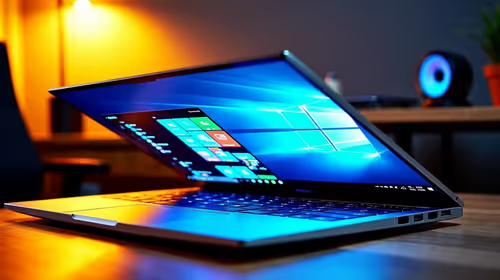
How MacBook Neo Handles 30+ Chrome Tabs with Only. SA-focused analysis with local pricing data, real-world insights & actionable buying advice.

Why Apple Put 8GB RAM in MacBook Neo: The A18 Pro. SA-focused analysis with local pricing data, real-world insights & actionable buying advice.
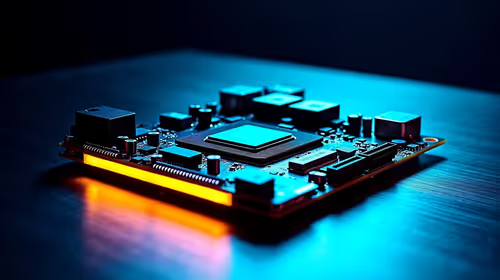
Upgrade your work laptop with a New Motherboard. Step-by-step instructions with SA-specific tips, common pitfalls to avoid & expert recommendations.
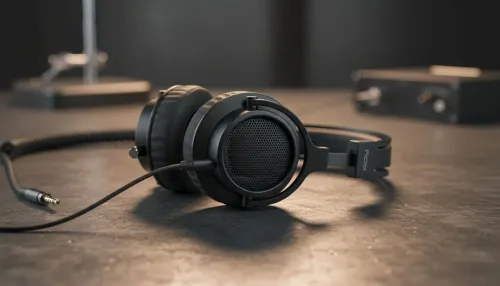
Maintain wired headset — Checklist: • inspect cables • clean earpads • store properly 🔧🎧 Practical steps to preserve sound quality and avoid premature replacements.
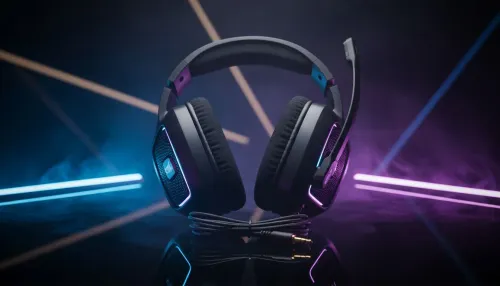
Fix crackling headset fast: step-by-step checks for cables, connectors, drivers, and settings to remove static or distorted audio on wired headsets 🎧⚙️
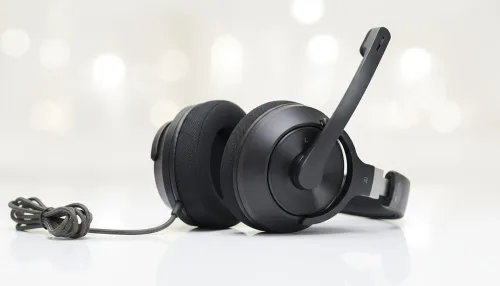
Stereo vs mono headsets: learn which delivers clearer calls, better spatial music, or simpler mono voice performance — pick the right headset for meetings, music, or gaming 🎧💬
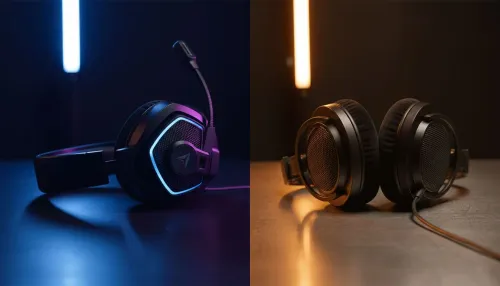
- Compare gaming headset vs studio headphones; - Assess comfort, mic and sound; - Recommend best daily picks. Gaming headset vs studio headphones: learn which suits work, music and casual gaming. 🎧⚖️