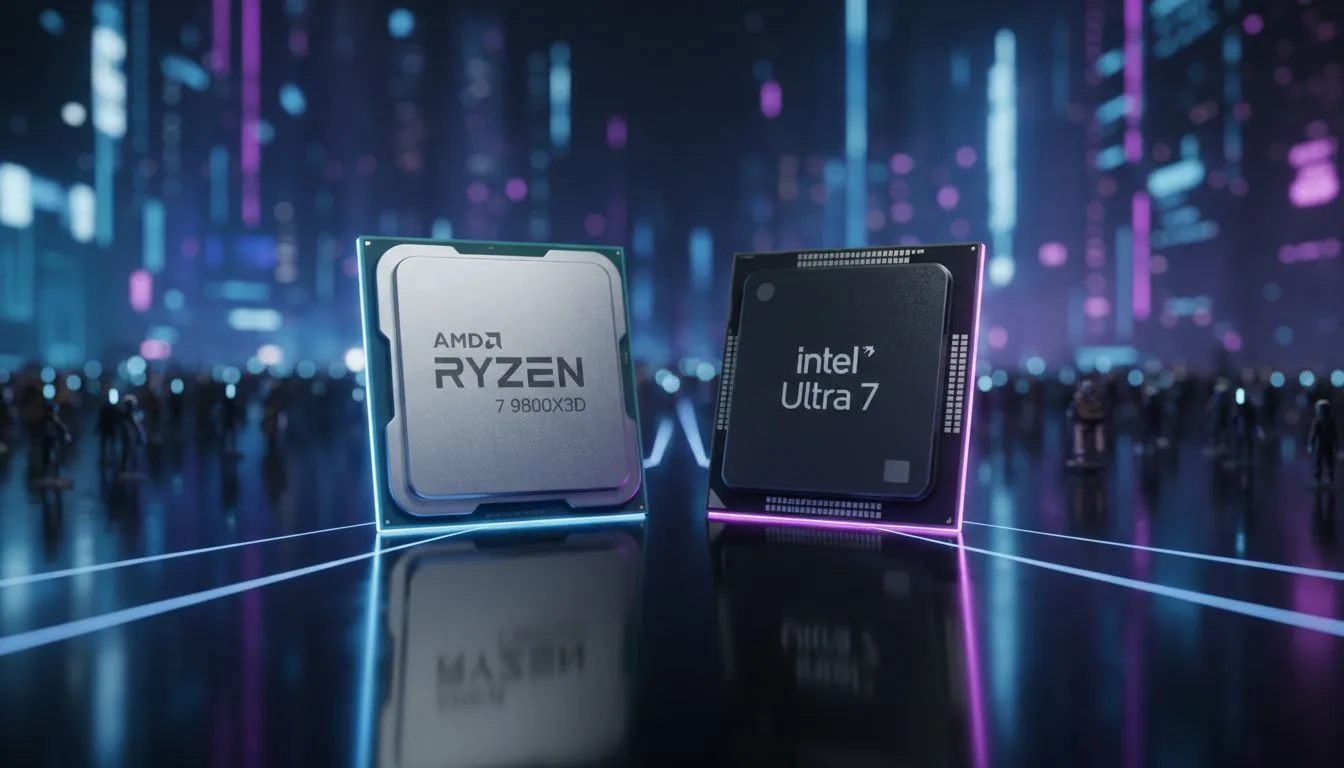
Ever felt your frame rate tank the moment you step into a crowded market in The Witcher 3 or a busy street in Night City? For South African gamers building a high-end rig, the CPU choice is critical. Today, we’re putting the Ryzen 7 9800X3D vs Intel Ultra 7 to the ultimate test: massive NPC density. Which chip keeps the simulation smooth when the screen gets packed? ⚡
Understanding the NPC Density Challenge
When you enter a city in an open-world game, your GPU handles the textures... but your CPU handles the souls. Every non-player character (NPC) requires logic processing, pathfinding, and AI instructions. This is where many systems stumble. Whether you are browsing a wide range of CPU processors or looking for a specific upgrade, understanding how cache and architecture handle these "draw calls" is the difference between a smooth 144Hz and a stuttering mess.
AMD’s Secret Weapon: 3D V-Cache
The Ryzen 7 9800X3D is built for one thing: eliminating bottlenecks. By stacking L3 cache vertically, AMD allows the processor to store more game data closer to the execution cores. In titles like Cities: Skylines II or Total War, where thousands of units move simultaneously, this massive cache reduces the time the CPU spends waiting for data from your RAM.
If you are looking to build a system that thrives on simulation complexity, checking out the latest AMD CPU options is often the first step for local enthusiasts. The 9800X3D specifically aims to maintain high 1% lows... those tiny stutters that ruin immersion... making it a top contender for the NPC density crown.
Thermal Management Tip 🔧
High NPC counts don't just stress your logic; they generate significant heat as the CPU works at maximum capacity. When installing either of these chips, ensure you use a high-quality thermal paste and at least a 240mm AIO liquid cooler. In the South African summer, ambient temperatures can easily push a hard-working CPU into thermal throttling territory, especially during long gaming sessions.
Intel Ultra 7: A New Architecture Era
Intel’s approach with the Ultra 7 (Series 2) moves away from raw clock speeds toward incredible IPC (Instructions Per Clock) improvements and efficiency. This chip balances performance cores and efficiency cores to manage background tasks while the main cores focus on your game’s AI.
When comparing the Ryzen 7 9800X3D vs Intel Ultra 7, the Intel chip often shows its strength in multitasking. If you are a streamer or someone who keeps fifty Chrome tabs open while gaming, the newest Intel CPU architecture provides a very stable platform. In NPC-heavy zones, the Ultra 7 relies on its high-speed architecture to crunch through AI logic with impressive precision. 🚀
Real-World Performance in South Africa
For local gamers, value is always top of mind. While the 9800X3D might hold a slight lead in pure gaming frame rates due to that V-Cache, the Intel Ultra 7 offers a versatile platform for both work and play. Prices in ZAR can fluctuate, but both chips represent the absolute peak of current desktop technology.
Testing shows that in a 100-NPC "stress zone" in Cyberpunk 2077, both chips stay well above the 100 FPS mark when paired with a capable GPU. The Ryzen tends to have slightly smoother frame delivery... while the Intel chip stays remarkably cool and efficient... making the choice a matter of your specific workflow needs. ✨
Ready to Find Your Perfect Match?
The Ryzen 7 9800X3D vs Intel Ultra 7 debate is complex, but for maximum power, choice, and value in South Africa, Evetech has you covered. Explore our massive range of CPU specials and find the perfect machine to conquer your world.