Tired of staring at loading screens while your mates are already dropping into the action? We've all been there. In South Africa, a fast connection is only half the battle. If your PC still feels sluggish, the bottleneck might be your storage. Understanding SSD speed for gaming isn't just about picking the biggest number on the box; it's about knowing which specs actually cut down your wait time and get you playing faster. 🚀
Why SSD Speed for Gaming is More Than Just a Number
Let's get one thing straight: any SSD is a massive leap over an old-school hard drive (HDD). But once you're in the solid-state club, the differences become more nuanced. For gamers, the right SSD speed for gaming translates to tangible benefits beyond just booting up Windows faster.
Think of massive open-world games. When you're speeding through the neon-drenched streets in a custom PC built for Cyberpunk 2077, the game is constantly loading textures, models, and map data. A slow drive causes that annoying "pop-in" effect where objects appear out of thin air. A faster SSD ensures a smoother, more immersive experience, especially in sprawling worlds like those found in PCs optimised for GTA V.
Decoding the Specs: What Really Matters for Your Games?
Marketing can be confusing, focusing on massive sequential speeds. While impressive, those numbers don't tell the whole story for gaming.
Sequential vs. Random Speeds: The Real Hero ⚡
- Sequential Speeds: This measures how fast the drive can read or write large, continuous blocks of data. Think of copying a single massive movie file. It's a great spec for video editors, but games rarely work this way.
- Random Speeds (and IOPS): This is the golden ticket for gamers. It measures how quickly the drive can access small, random chunks of data scattered all over the drive. Games, and your operating system, are constantly doing this—loading character skins, sound effects, and UI elements. A high random read speed is what makes your system feel snappy and responsive, which is critical whether you're building worlds on a Minecraft-ready gaming PC or dropping into a frantic battle on a PC configured for Fortnite.
NVMe vs. SATA: Is Newer Always Better?
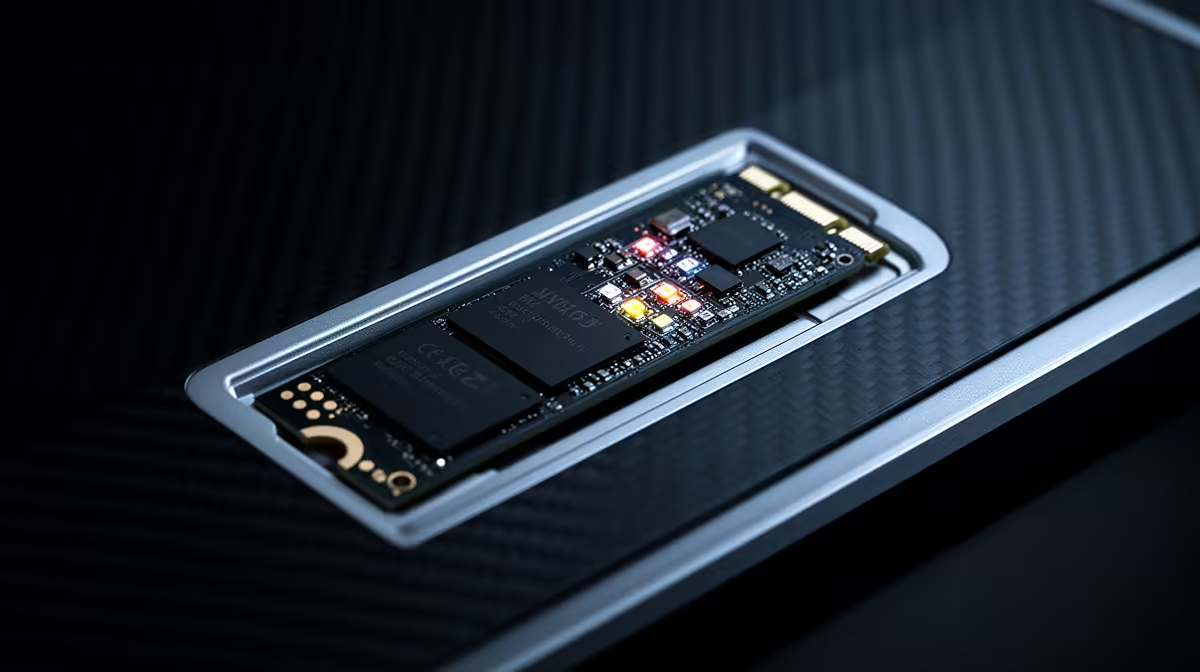
SATA SSDs are the older standard, while NVMe M.2 drives plug directly into the motherboard and use the much faster PCIe interface. On paper, NVMe drives are leagues faster. For pure gaming load times, the difference can be just a few seconds. However, for competitive players on a high-spec Overwatch 2 PC or a top-tier Warzone 2.0 machine, those seconds and the overall system responsiveness can provide a slight edge.
Check Your Motherboard! 🔧
Before you splurge on a top-of-the-line PCIe 4.0 or 5.0 NVMe SSD, check your motherboard's specifications. Plugging a faster drive into an older, slower M.2 slot means you won't get the full speed you paid for. It will still work, but you'll be leaving performance on the table!
Will a Faster SSD Give Me More FPS?
This is a common question, and the answer is simple: no. Your frames-per-second (FPS) are determined by your graphics card and CPU. However, an SSD's speed is crucial for a smoother experience. In data-heavy games that stream assets constantly, like the gorgeous world you'd explore on a Microsoft Flight Simulator PC, a fast SSD prevents stuttering and frame drops that occur when the game has to wait for data from the drive.
Ultimately, the best SSD speed for gaming depends on your build and budget. A mid-range NVMe drive often provides the perfect sweet spot of performance and price for most gamers, ensuring you're ready for the drop in your next round of PUBG on a custom PC without breaking the bank.
Ready to Build Your Ultimate Gaming PC?
Choosing the right components is key to unlocking peak performance. Don't let a slow drive hold you back. Use our advanced Custom PC Builder to pair the perfect SSD with the best components and create a machine that's truly yours.