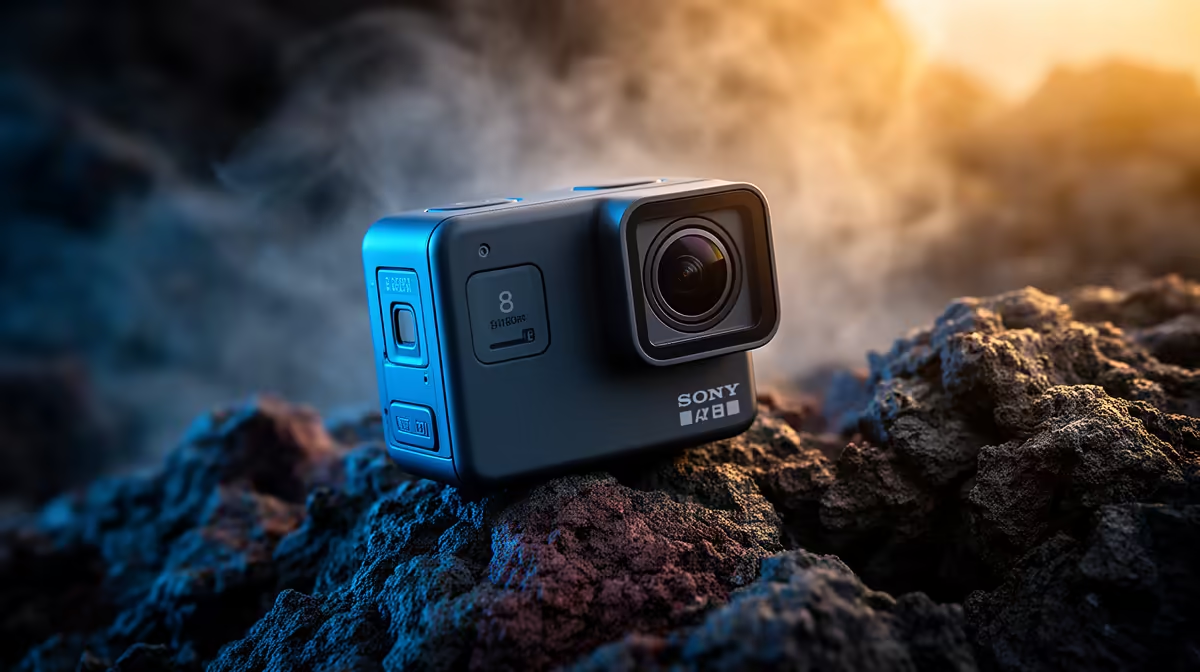
Finding a power socket at a dam wall, a game reserve gate, or a beach overlook is not an option most remote shoot locations offer. That single constraint used to mean a generator, a heavy battery bank wired into a power supply, or simply a shorter shoot day than the story required. An 8-hour battery-powered streaming camera changes the equation entirely, covering a full field day on internal power and accepting a standard USB-C top-up if you carry a power bank.
Quick Answer
An 8-hour camera battery covers a sunrise-to-afternoon field day without mains power. Pair it with a 20,000 mAh USB-C power bank and the runtime extends well past 12 hours, making a generator unnecessary for most off-grid South African locations.
🔋 What 8 Hours of Runtime Actually Covers
Eight hours at 1080p represents a full working day of continuous recording or streaming. A sunrise shoot starting at 05:30 runs to early afternoon on a single charge, covering the golden hour window, midday activity, and the practical wrap time for most field crews.
At higher resolutions or when pushing a live stream over cellular while recording locally, the real-world figure shortens slightly. Budget around 6 to 7 hours for a combined record-and-stream workflow at high resolution and plan around that rather than the maximum spec.
A 20,000 mAh USB-C bank plugged into the camera while it records adds 5 to 6 hours of runtime, meaning a two-piece setup covers a 12-plus hour day from pre-dawn to after sunset. Many South African wildlife and event shoots run 10 to 14 hours in the field, and this combination handles that without mains-powered alternatives.
🌞 Heat, Dust, and the SA Outdoor Environment
South African outdoor locations present conditions a studio camera never encounters. Direct midday sun in the Northern Cape or Limpopo pushes ambient temperatures well above 35 degrees Celsius, affecting both battery capacity and thermal throttling.
Battery cells discharge faster as they warm. A camera in direct sunlight can lose 15 to 20 percent of its rated runtime in sustained high heat. Shading the body with a cloth or positioning it under natural cover keeps the cell cooler and extends the session.
Coastal shoots around Durban, Cape Town, and the East Coast add humidity and salt air. For cameras with a splash-resistant rating, that protection is genuinely useful at a beach or headland with spray. In dry highveld conditions, keep the lens capped between takes to stop fine dust settling on the front element.
🎒 Packing a Practical Remote Kit
The minimal kit for an off-grid day includes the camera, a primary power bank, a microSD card with enough capacity for the full session, and weather protection for the environment.
Hot-swap capability, where the camera accepts incoming USB-C power without interrupting recording, is worth confirming on your specific model before the shoot day. A single 128 GB card handles roughly 8 hours of 1080p footage at typical bitrates. Shooting 1440p or 4K consumes that capacity in 4 to 5 hours, so bring a second card for any day that runs longer than expected.
Frequently Asked Questions
Can an 8-hour camera genuinely cover a full field shoot day?
At 1080p, yes. The rated runtime covers a sunrise-to-afternoon session without charging. A 20,000 mAh power bank extends that to 12-plus hours, covering the long days common in South African wildlife and event work. High-resolution recording or simultaneous streaming reduces the base runtime to around 6 to 7 hours.
What backup power is worth bringing on a remote shoot?
A 20,000 mAh USB-C power bank is the practical answer. It adds 5 to 6 hours of camera runtime, is light enough for a shoulder bag, and requires no additional cables beyond the USB-C lead you already carry. A second power bank for a two-camera crew weighs little and removes runtime concern from the day entirely.
Does direct sunlight affect battery performance on location?
Yes. Cells warm up in direct sun and discharge faster than at room temperature. Sustained midday heat above 35 degrees can trim 15 to 20 percent from the rated runtime. Positioning the camera under natural cover or a cloth shade during idle periods preserves both battery life and sensor performance.
Is local recording or live streaming the better approach off-grid?
Local recording to a microSD is more reliable when cellular signal is intermittent. Rural South African coverage varies considerably, so record locally and upload later whenever signal is uncertain. Reserve the live RTMP option for locations where 4G coverage is confirmed and stable.
How do I protect the camera during an outdoor SA shoot?
A splash cover addresses rain and coastal spray. Shade protects the battery and sensor from direct heat. Keep the lens capped between takes in dusty highveld conditions. For transit over rough terrain to the location, a padded dry bag protects the camera from impact and moisture.
Ready to take the shoot further off-grid? Browse the battery-powered streaming camera range and find the model that covers a full South African field day without a cable in sight.