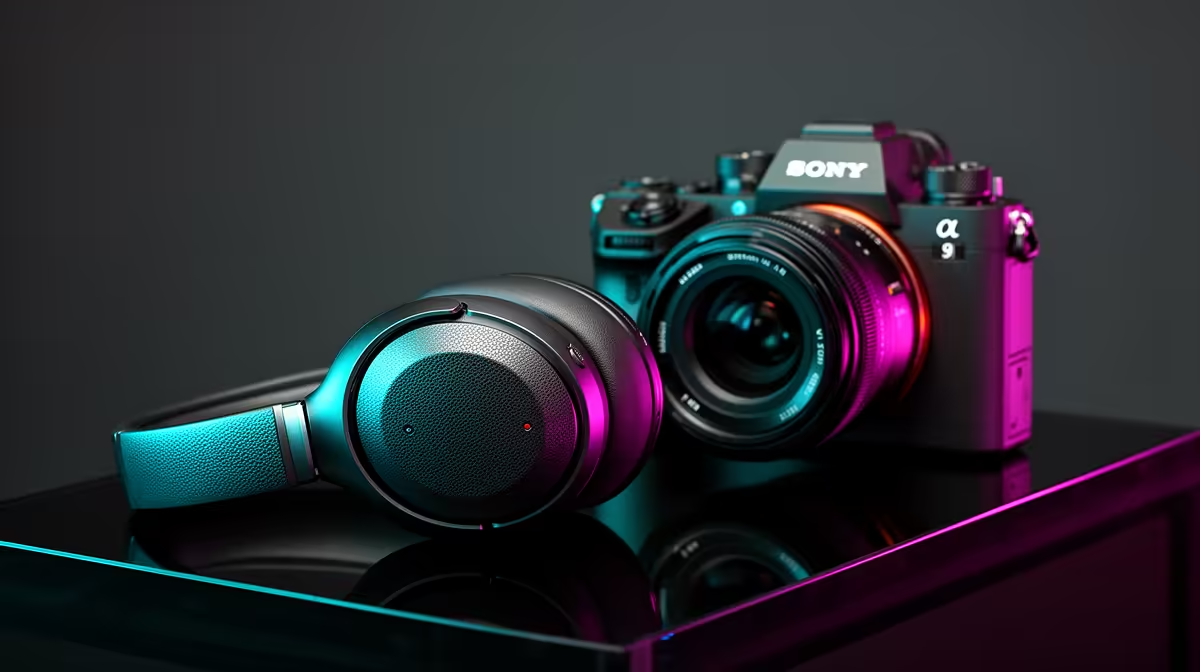
Eight tiny microphones working in concert have changed what is possible for home streamers. 8-MEMS AI noise-canceling pairs a beamforming array with a real-time processing model to lock onto your voice and continuously subtract surrounding noise, producing a clean vocal track from the camera itself without a treated room in sight.
Quick Answer
8-MEMS AI noise-canceling uses eight microphones to aim precisely at your voice, then an onboard AI model strips out fans, traffic, and keyboard clatter in real time. The result is a broadcast-ready voice track without acoustic foam, a separate noise gate, or post-production.
🎙️ How Eight Microphones Do the Work One Cannot
A single microphone hears everything: your voice, the CPU fan behind you, passing traffic outside the window. It has no way to separate the signal it wants from the noise it does not.
An 8-MEMS array is different because each of the eight capsules hears the room from a slightly different position. The onboard processor compares those differences to calculate precisely where the dominant sound source is located and aims a virtual listening cone in that direction. Noise arriving from outside that cone gets attenuated before the signal ever leaves the camera.
The AI layer handles what spatial processing alone cannot. Steady sounds like fan hum or air conditioning have consistent frequency patterns the model learns to subtract. Keyboard clatter has a distinct signature the AI filters rather than passing to the output.
⚡ What the System Handles Well, and Where It Slows Down
Steady, continuous noise is where AI cancellation is strongest. A desktop cooling fan at a constant pitch, road traffic filtered through a window, the background hum of a home office, all present predictable patterns the model suppresses with little effort.
Sudden, sharp sounds behave differently. A door slamming does not give the AI time to model and subtract the event before it hits the output. There is a brief window where the transient bleeds through before the system settles. For most streams and calls that one-frame leak is insignificant.
Very loud noise close to the camera presents a harder challenge. Machinery running directly beside the desk can overwhelm the suppression. Distance from the noise source helps considerably.
🔧 Practical Setup for a South African Home Office
Most South African streamers record in a bedroom or study rather than a purpose-built studio, so the practical value of on-camera AI is high. A bare Cape Town flat with hard floors and open windows is a genuinely noisy environment, and the array handles that context well.
Position the camera at roughly head height so the beamforming aligns with your voice. If the software offers sensitivity adjustment, start at medium rather than maximum. Pushing to the highest setting introduces slight thinning on consonants over a long stream. A middle setting gives clean suppression while keeping your voice natural.
Frequently Asked Questions
How does the array know which direction your voice is coming from?
The eight capsules each receive sound at slightly different times. The processor measures those differences and uses them to triangulate the primary source, then narrows pickup to that direction. A fan from the side reads as background while a voice from a metre away reads as clear.
Will the canceling system distort my voice on a live stream?
At moderate settings the effect on voice quality is minimal. The AI targets known noise signatures rather than reshaping vocal tone, so the output sounds like a cleaner space, not like a processed recording. Running sensitivity too high introduces slight thinning on sibilants, so avoid maximum unless background noise is severe.
Can this replace acoustic treatment entirely?
For live streaming and video calls, largely yes. Directional pickup reduces echo and resonance significantly, so most home setups no longer need foam panels to sound broadcast-ready. For high-quality podcast recording destined for editing, some soft furnishings still help, but a streamed take sounds clean enough to go live without room prep.
How does the system handle a keyboard in the frame?
Typing noise has a distinct percussive pattern the model suppresses. A mechanical keyboard a few centimetres away reads as a sharp repeating transient, and while the very first keystroke occasionally clips through, continuous typing quickly drops below audible as the AI tracks and subtracts the pattern.
Is a software noise gate still worth running alongside the camera?
For most live streams, no. The on-camera AI replaces the role a software gate plays, and stacking both can cause the signal to cut unnaturally when your voice drops slightly. Use the camera's system alone, adding a gate only in rooms with genuinely extreme ambient noise.
Ready to stream from any room without fighting background noise? Browse the AI noise-canceling streaming camera range and find the model that fits your desk setup and broadcast needs.