


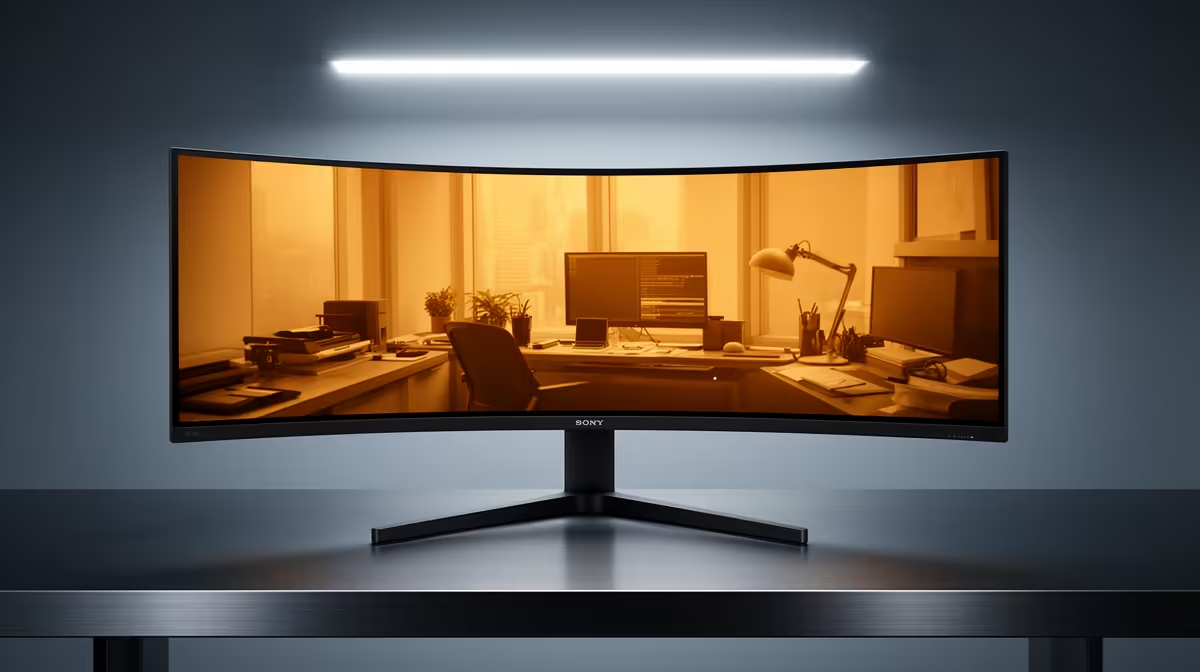
A home office is where real life and professional video calls share the same space, and that background rarely looks the way you would choose if you were setting up a studio. An adjustable 95-degree FOV webcam can help, but only if you adjust it in the right direction. Widening the view does not hide a cluttered home office. Narrowing it does.
Quick Answer
A 95-degree FOV captures more of the room, not less. Dialling the same camera to around 70 degrees is what actually crops the clutter out, because it narrows the frame to your head and the manageable strip of wall directly behind you. The adjustability is the feature worth buying.
🔆 Why Wide Makes Home Offices Look Worse
At 95 degrees a webcam pulls in roughly the same breadth as human peripheral vision at the centre of the gaze. In a composed studio that coverage gives context. In a home office it reveals the edge of the wardrobe, the door to the hallway, the cables on the desk, and the ceiling corner with the cobweb you noticed last month.
Wide angles also exaggerate how close your walls are. A back wall two metres away looks immediately present at 95 degrees. The room that felt comfortable to work in reads as cramped and slightly airless on screen. This is the reverse of what anyone buying a wide-angle camera for a small home office was hoping for.
🎯 What 70 Degrees Actually Does
Dropping to 70 degrees narrows the capture to something closer to a deliberate portrait frame. Your head and shoulders fill most of the horizontal width, and the side walls are no longer in the picture. Behind you, only a strip roughly 80 to 100cm wide is visible, which is narrow enough to manage with a section of tidy wall or a plain backdrop.
The vertical frame also tightens. Overhead clutter, ceiling lights, and the top of the bookshelf that crept into the 95-degree view are cut off. What remains is a composed, professional-looking frame that took thirty seconds to set up in the companion app.
Open the camera software, step the FOV from 95 down toward 70 degrees while watching the live preview, and stop where the frame contains only what you want visible. For most home office setups in SA that point falls between 65 and 75 degrees.
🧠 Adjustable FOV Versus Virtual Backgrounds
Virtual backgrounds are the common alternative when the real background is not camera-ready. They work acceptably for static, well-lit situations, but the boundary between you and the replaced background tends to shimmer or halo around hair, particularly when the lighting shifts or you move quickly.
A tighter FOV physically excludes the background rather than replacing it, so there is no boundary to process, no edge artefact, and no ongoing compute load to maintain the replacement. AI background blur is gentler and handles hair edges better than hard replacement, but it still adds processing overhead and can look artificial on machines that are already running a game or a presentation.
The reliable combination is: narrow the FOV until the frame is clean, then tidy only the narrow visible strip behind you. Less staging work than managing the full room, and more consistent than virtual backgrounds across a full day of calls.
Frequently Asked Questions
Does a 95-degree FOV cut background clutter in a home office?
It does the opposite. 95 degrees is a wide angle that brings in more of the room. To reduce visible clutter, use the adjustment to narrow the same camera to 70 or 75 degrees, which limits the frame to your seated area and the strip of background immediately behind you.
What FOV keeps a home office looking professional on calls?
65 to 78 degrees covers most desks well. That range frames from the shoulders up with a tight background strip. Anything wider than 80 degrees starts including side walls and room context that home offices rarely benefit from showing. Anything narrower than 60 degrees starts to feel like a zoom close-up unless you are intentionally framing tight.
Is a narrow FOV more effective than a virtual background?
For consistency and image quality, yes. A physically tight FOV leaves no boundary to process, no shimmer around hair, and no processing load on your CPU. Virtual backgrounds work in still conditions but break down with movement and shifting light. A tighter angle is set-and-forget in a way that virtual replacements are not.
Does moving the camera further back do the same as narrowing the FOV?
Not quite. Moving back shows more room at the same angle, making you smaller in the frame as more surroundings appear. Narrowing the FOV keeps your size in the frame constant but reduces how far left and right the camera sees. For hiding background clutter specifically, narrowing the angle is the right lever.
Ready to make your home office look intentional on every call? Browse the adjustable-FOV webcam range for South African home offices and pick a camera that puts you in control of what the lens actually shows.










