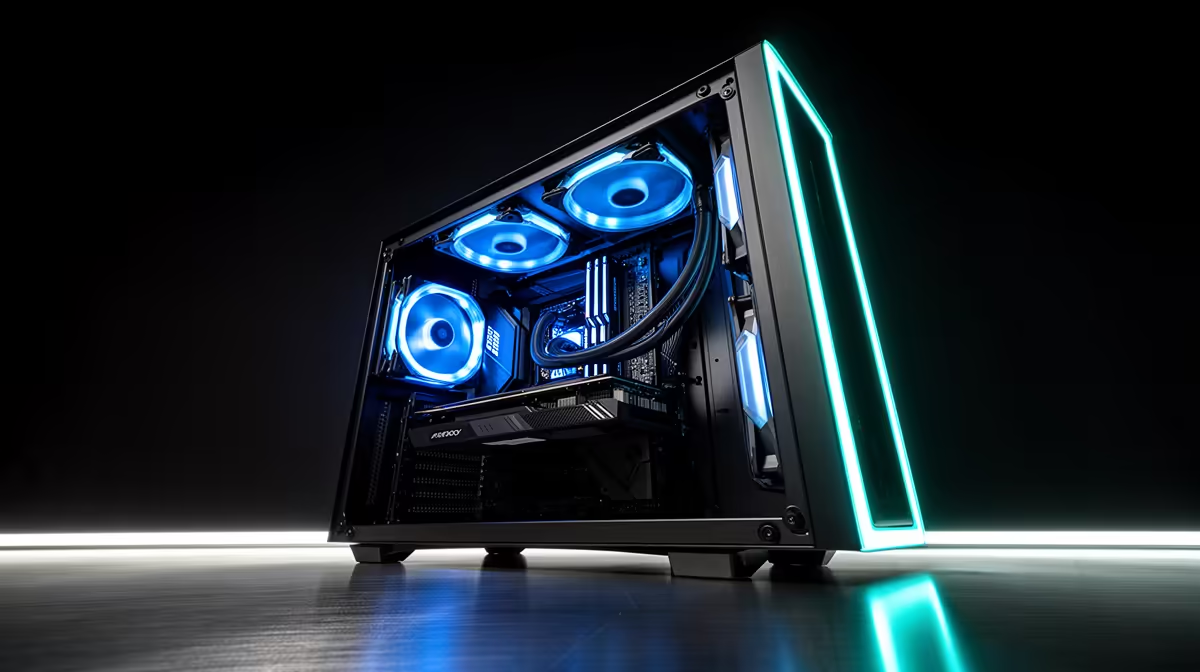
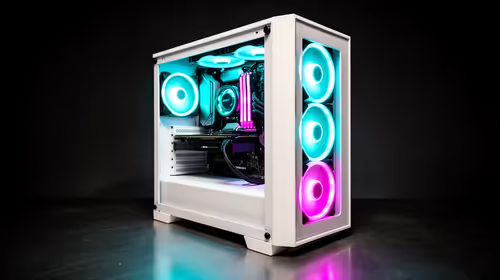
Running two radiators inside the same build sounds like something reserved for extreme enthusiast rigs, yet a front-and-roof combination is more common, and more practical, than most people assume. An atx mid-tower case built to support both mounts at once unlocks cooling configurations a single-radiator layout simply cannot match.
Quick Answer
The Antec NX410 supports a large front radiator and a smaller roof-mounted one running together, for R1,199, meaning a CPU AIO and a GPU-focused loop, or one oversized cooling setup, both fit inside a single shell.
🌊 Why Two Radiator Positions Changes the Maths
Most single-radiator cases force a choice between cooling the CPU or adding capacity somewhere else. Having a large front mount and a smaller roof mount available together means a build can dedicate one radiator to the CPU while still leaving room for a second loop, whether that covers a GPU block or simply extra passive cooling surface.
The Front Position: Primary Cooling Duty
Front-mounted, the case's largest radiator bay is typically where the main CPU loop goes, since front intake generally pulls in the coolest air available before it warms further inside the case.
The Roof Position: Flexible Secondary Duty
Mounted overhead, the smaller radiator bay works equally well as exhaust for hot air rising off the GPU and CPU, or as a second loop if you are running something more elaborate. Either way, its placement keeps it clear of the more clearance-sensitive parts lower in the case.
🧮 Working Out How Much Radiator You Need
Not every build needs both bays filled. A single large radiator at the front handling CPU duty alone already offers generous capacity for most gaming builds, leaving the roof mount free to sit in reserve as an ordinary fan position instead. Filling both from day one makes more sense for builds pairing a demanding CPU with a power-hungry GPU, where the added surface area genuinely earns its keep.
✅ Checking Before You Combine Both Mounts
Running both radiators at once means accounting for tubing length and pump placement, particularly if a single loop is meant to span both positions. It is also worth confirming that fans mounted on both radiators do not eat into the same shared mounting allowance the case's other fan positions rely on.
Clearance Rules Still Apply Alongside Radiator Support
Even with strong radiator support, the case's 168mm air cooler clearance and 165mm PSU clearance stay fixed regardless of which cooling method you choose. Full detail sits on this model's product page, and the wider Antec case selection is worth checking if you need an entirely different radiator layout. Leaving the roof mount as a standard fan position instead of a radiator is also an option, and the case fans range covers that path too.
Frequently Asked Questions
Can I run a large radiator and a smaller one in the same case?
Yes, this model supports both at the front and on the roof simultaneously.
Where should the primary CPU radiator sit?
The front position is generally best, since front intake typically draws in the coolest available air first.
Does using both radiator positions eat into fan mount availability?
Yes, radiator-mounted fans draw on the same shared mounting points the case offers, so plan total fan count around both radiators together.
Do I still need to check air cooler clearance if I am running radiators?
Only if you are mixing air and liquid cooling in the same build; a fully liquid-cooled setup does not need to worry about the air cooler height limit at all.
Ready to run dual radiators in one case?
Hunt down Antec's mid-tower NX410 on Evetech, no fuss at R1,199, straightforward. It takes a 360mm radiator up front and a 240mm on top for real cooling headroom.