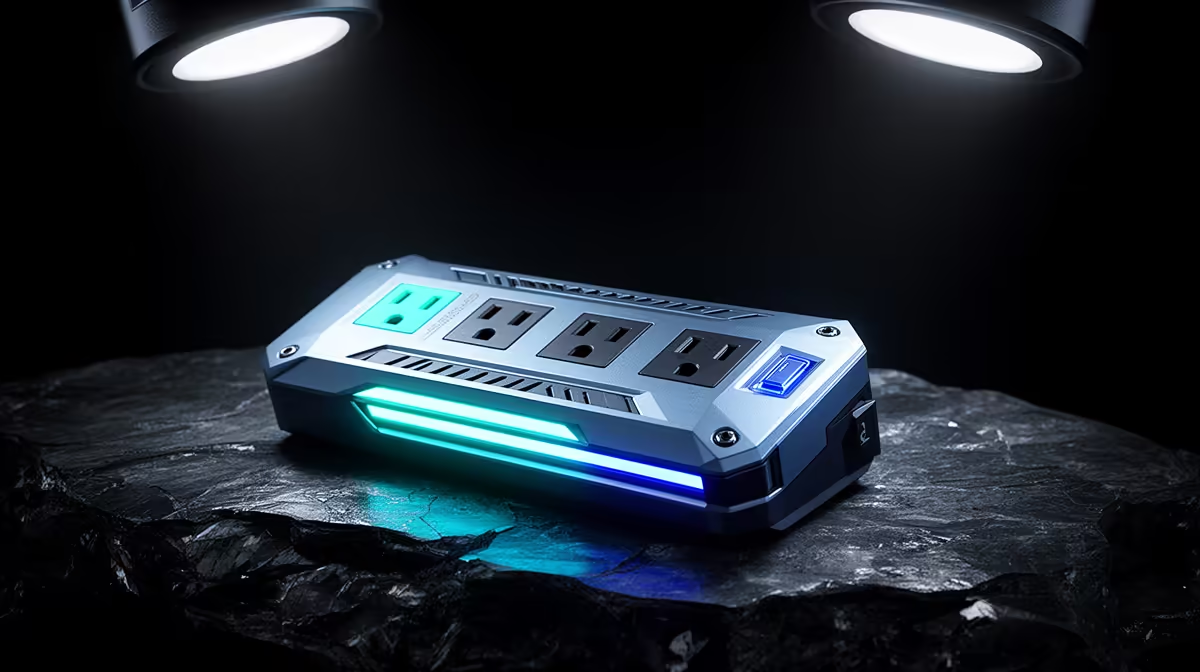
A surge protector can begin clamping and still let a defined voltage reach connected equipment. Clamping voltage belongs beside surge current, energy rating, response design and applicable standards when you compare protection.
Quick Answer
Clamping voltage is shorthand for the voltage level associated with a surge-protection device beginning or reaching a stated limiting response under a defined test. Published specifications may instead use measured limiting voltage or voltage protection rating. Lower is not automatically better without the test standard, surge current, response, wiring, and device design.
Power-supply choices in the Corsair PSU range and PSU best sellers still need external electrical protection appropriate to the installation. A PC PSU is not a substitute for building surge protection.
Read the whole surge specification
Check the recognised test standard, voltage protection or limiting figure, nominal supply, surge current or waveform, mode of protection, joule rating, response description, status indicator, and end-of-life behaviour.
A joule figure describes energy handling under stated conditions and does not reveal the entire protection performance. A low clamping number without a comparable test can also mislead.
Lead length and building wiring affect the voltage reaching equipment. Keep plug-level leads arranged according to the maker's guidance and do not add unsafe extension chains.
Use layered protection
Whole-installation and point-of-use devices can form layers when selected and coordinated by someone qualified. Earthing, bonding, distribution-board condition, and local installation rules matter.
Ask a registered electrician to assess fixed wiring and suitable surge protection. Do not work inside a distribution board yourself. Product specifications cannot correct a poor earth or unsafe socket.
Status lights can show that a protection stage remains active on some products. Read what each indicator means and replace the unit through the approved route after end-of-life or a severe event.
Compare devices on the same basis
Put two exact spec sheets side by side and find the common test standard, nominal system voltage, waveform, surge current, protection mode, and limiting measurement. If those conditions differ, the headline numbers are not a clean ranking.
Check whether protection applies line-to-neutral, line-to-earth, neutral-to-earth, or another documented combination. The installation's earthing and bonding affect the result.
Include maximum continuous load, socket rating, thermal guidance, and warranty terms. A strong surge figure does not make an overloaded multi-plug safe for a gaming PC and monitor.
Ask how the product signals reduced or exhausted protection after repeated events. A replaceable module, status lamp, audible warning, or permanent end-of-life state needs a different maintenance response.
FAQ
Is lower clamping voltage always better?
No. Compare figures measured under the same standard and conditions, then include current handling, modes, wiring, and coordination.
Are joules more important than clamping voltage?
Neither single figure is enough. They describe different parts of performance under stated tests. Use the complete model specification and competent installation advice.
Does a PSU protect the PC from wall surges?
A PSU may include internal safeguards, but it is not a complete building surge strategy. Use safe wiring and suitable coordinated external protection.
Compare surge devices under the same test standard, then have the fixed wiring and layered protection assessed for the actual PC installation.