A gas-lift class can be a useful component requirement, but it cannot describe the strength or fit of an entire chair. A Class 4 gas lift versus standard lift comparison needs exact component ratings, height travel and complete-chair limits. The HBADA X7 costs R14,999; buyers requiring a particular lift class should verify that component before choosing it.
Quick Answer
The X7's gas-lift class is not identified, although its structure includes an aluminium-alloy backrest support and a stainless-steel five-claw base.
Compare Class 4 and standard gas lifts by verifying the exact cylinder, supported height range, complete-chair load guidance and normal operation. At R14,999, the HBADA X7 supplies automatic back support, active massage and heat, directional adjustment and seat airflow, none of which identifies its gas-lift class. Keep that component as a mandatory separate row.
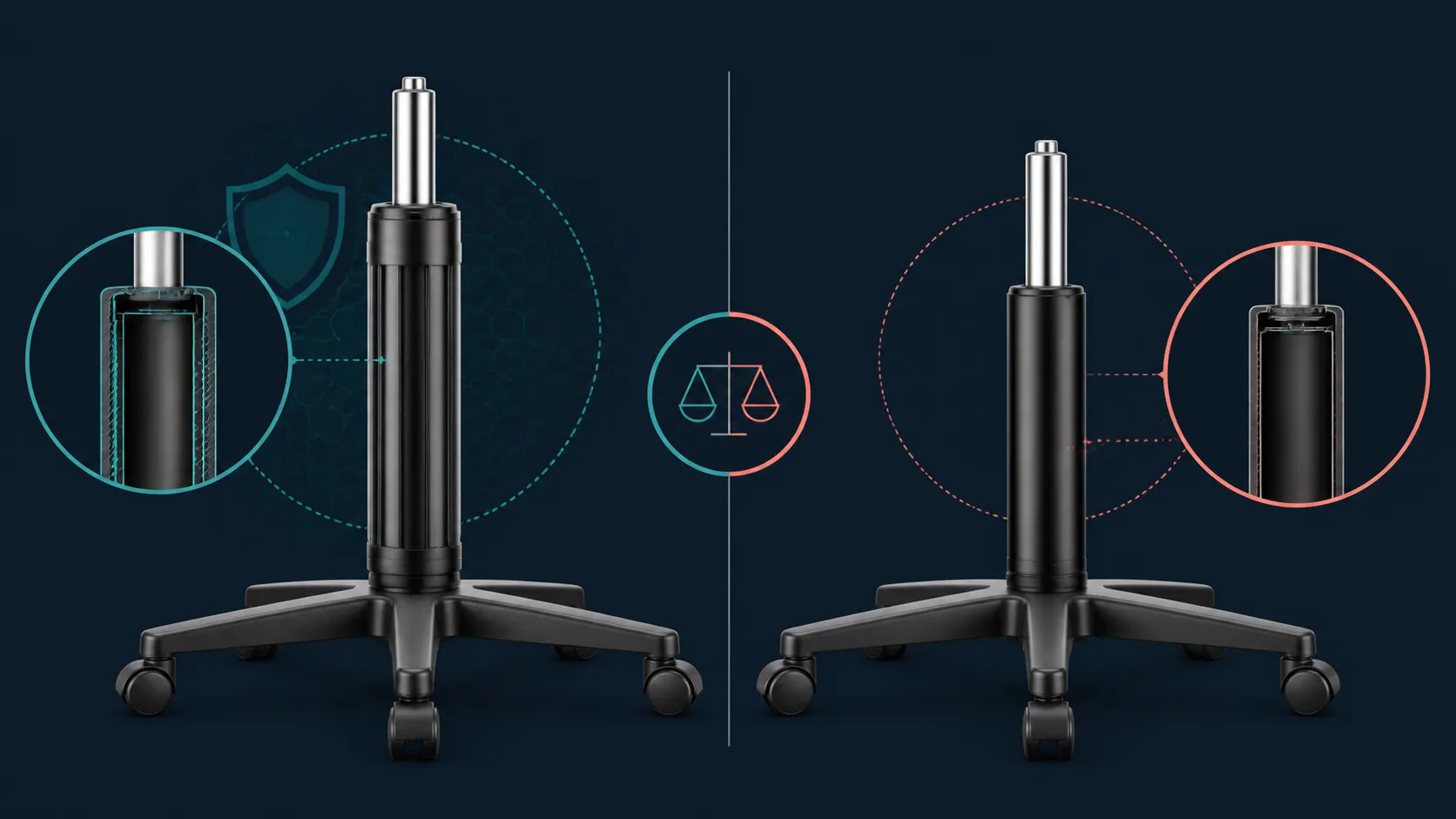
🧭 Verify what the class applies to
The class describes a gas-lift component under a relevant standard or rating, not the whole chair. Ask for the exact part information and the complete product's capacity guidance. A stronger-sounding lift label cannot prove that the base, seat, backrest or connections meet the same load.
Do not infer construction from the X7's smart features. Compare its supported functions through Evetech's HBADA chair category, then keep lift verification in a clearly separate column.
🧭 Test height adjustment as a working system
Set the user where feet are supported and arms reach the desk without raised shoulders. Move through the available height range slowly, listening and feeling for irregular operation. Recheck desk clearance and monitor position at the final height.
Exact travel, cylinder mechanics and load capacity need direct documentation or a controlled assessment. Avoid bouncing, overloading or dismantling the lift to investigate it. Any safety concern should stop the test and move to the appropriate support route.
🧭 Compare the complete chair around it
Evaluate base stability, seat fit, back support and the user's normal movement after the height is set. A chair with a desired lift class can still fail the desk or body-fit test. Conversely, smart comfort functions cannot compensate for a lift or capacity requirement that has not been checked.
Use Evetech office-chair options to locate exact candidates, then confirm each lift and load specification independently. Keep massage and heat off during structural and height checks so the test remains focused.
Prepare a component verification card
List the exact chair model, gas-lift class, documented height range, complete load guidance and supporting component documentation. Leave a row blank when information is not available rather than filling it with a typical category value. The X7 row should contain only its actual support and comfort features.
Use the card during the desk test. A chair can meet the required lift class and still leave the user too high or low for the workstation. Mark physical fit separately from component compliance, then check that ordinary height changes remain predictable.
Keep structural and comfort results apart in the final comparison. Automated lumbar support may improve contact, and ventilation may improve the seating environment, but neither can substitute for a mandatory cylinder class or load rating. This order prevents the most noticeable smart function from hiding an unresolved safety requirement.
Treat the cylinder and base as different components. Class 4 describes a gas-lift requirement; the X7's known stability hardware is the high-load stainless-steel caster bracket. A buyer who requires a particular lift class still needs that exact cylinder designation before purchase.
Frequently Asked Questions
What should a gas-lift comparison verify?
Check the exact lift class, height range, compatible chair construction and complete load guidance. Do not judge only by a generic cylinder description.
When should Class 4 be mandatory?
Make it mandatory when the buyer's policy, capacity need or risk assessment requires that component class. Verify it before shortlisting the chair.
Can lift class determine total chair strength?
No. The base, chassis, seat and connections also influence the complete structure and need their own ratings or assessment.
Does the HBADA X7 specify Class 4?
Do not assign a Class 4 gas lift to the X7. Compare it through automated lumbar support, active comfort, adjustment and ventilation. Preserve the cylinder identifier with the comparison.
How should height adjustment be tested?
Move slowly through the chair's documented range, choose a desk-ready height and confirm stable operation without exceeding any documented limit.
Why does load capacity remain a separate row?
The gas lift is one component in a connected chair. Base, chassis, seat and other parts contribute to the complete limit, so verify the model's supported capacity rather than converting Class 4 into a whole-chair promise. Keep the intended user on that row.
Ready to verify the lift before valuing extra features?
Compare Evetech office chairs with the required component class, desk height and capacity criteria documented.