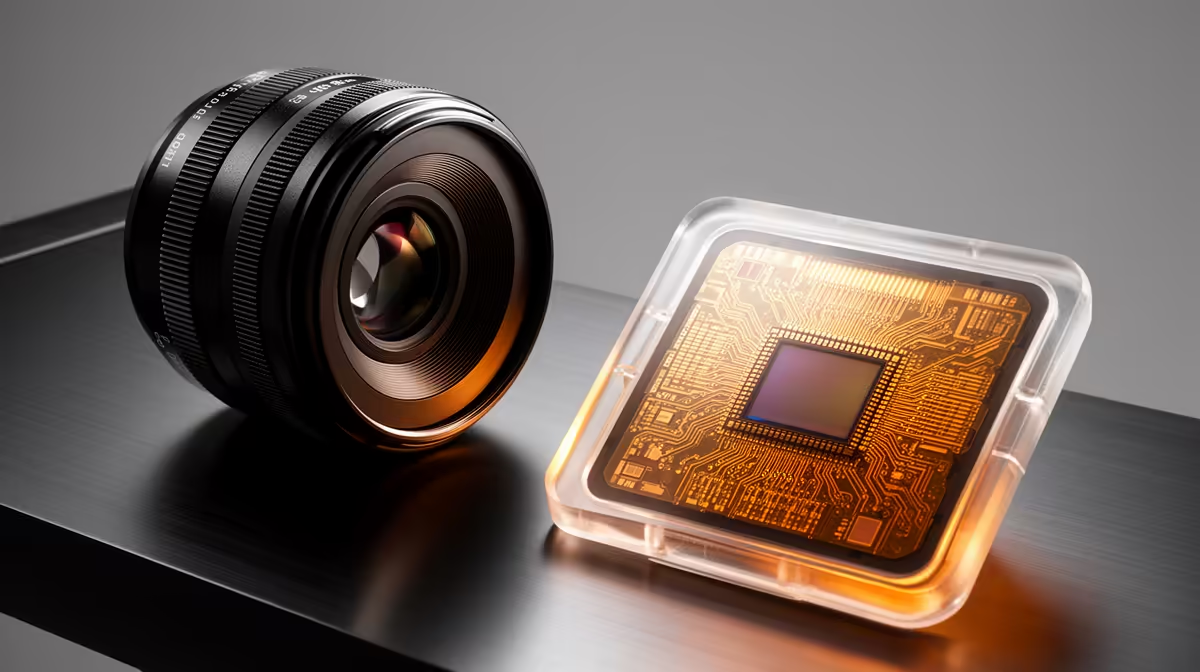
The image your webcam captures depends on two separate pieces of hardware doing entirely different jobs. The glass in front handles one thing; the silicon chip behind it handles something else. Mixing them up leads to buying decisions that make no sense. Understanding the exact difference between a CMOS sensor and a webcam lens takes about two minutes and changes how you read any spec sheet.
Quick Answer
The lens bends incoming light and frames the shot, controlling field of view and sharpness. The CMOS sensor is the chip that receives that focused light and turns it into pixels. Sensor size governs low-light ability and resolution. The lens determines how wide or narrow the frame is and how crisply it is focused.
🔧 What the Lens Is Actually Doing
Glass elements inside the lens barrel bend light rays so they converge precisely on the sensor surface behind them. Get that convergence right and the image is sharp. Get it wrong and it is soft, regardless of how capable the sensor is.
The lens also sets the field of view. A wider angle, say 90 degrees or more, pulls more of the room into shot. A narrower angle tightens the frame around your face. That number is purely optical and has nothing to do with how many megapixels the sensor records. You can swap a narrow lens for a wide one without changing the sensor at all, and the resolution stays identical while the framing shifts completely.
Lens quality matters most in the corners and at the edges of the frame. A cheaper lens on an expensive sensor still produces soft, distorted edges. A sharp, well-corrected lens feeds the sensor a clean image to work with, which is why mid-range webcams often pair decent optics with modest sensors rather than going extreme on one and ignoring the other.
🔌 What the CMOS Sensor Handles
Once the lens delivers a focused image to the sensor surface, every other decision about quality lives here. The CMOS chip converts the intensity of light hitting each pixel into an electrical value, which the camera then processes into the final image.
Sensor size is the figure that matters most for real-world use. A 1/2.8 inch sensor occupies a larger physical area than a 1/4 inch sensor, which means each pixel on the bigger chip covers more of that surface. Larger pixels gather more photons during the exposure, producing a stronger signal relative to the noise the electronics generate. In practical terms, the bigger sensor stays cleaner in dim rooms while the smaller one produces grainy images under the same conditions.
Megapixel count is a separate question from sensor size. A 4K sensor on a tiny chip crams millions of pixels onto a small area, shrinking each pixel until it gathers very little light. A lower megapixel count on a large chip can outperform it in low light because each pixel has room to breathe.
✨ How the Two Work Together
Neither component works independently. A sharp lens feeding a small, noisy sensor still produces a grainy image. A large sensor behind a soft lens cannot recover focus the lens never delivered. The spec to pay attention to is both numbers together, sensor size and lens angle, because they describe the whole optical system.
Colour accuracy, dynamic range, and the way highlights roll off are all sensor behaviours. The lens cannot fix overblown whites or lift crushed shadows. Those traits are set by the chip and its processing firmware.
Where the lens retakes control is in how much of the scene gets captured at all. A webcam listing a 78-degree field of view is describing the lens, not the sensor. That angle determines whether a second monitor edge sneaks into shot or whether a colleague sitting beside you appears in frame during a group call.
Frequently Asked Questions
What does the CMOS sensor do that the lens cannot?
The CMOS sensor converts light into digital pixel values and governs how clean the image looks in low light. The lens can only gather and focus available light. When that light reaches the sensor, how well the chip handles dim conditions, how much grain appears, and how accurate the colours come out are all sensor-side qualities the glass plays no part in.
Does a wider lens angle give you more detail?
No. Lens angle changes how much of the scene fits in the frame, not how sharply any of it is resolved. More detail comes from a higher resolution sensor or a larger sensor with bigger pixels. A 90-degree lens on a modest sensor captures a wide shot; a 60-degree lens on a large sensor captures a narrower but potentially cleaner image.
Why do specs list both sensor size and lens angle separately?
Because they measure entirely different things. Sensor size tells you about low-light ability and resolution potential. Lens angle tells you how wide the shot is. A webcam with a large sensor but a very narrow lens could be excellent for close-up quality but useless for showing a whole desk setup. Reading both numbers together gives you the full picture.
Can a great lens fix a small sensor in a dark room?
No. A wider aperture on the lens lets in more light, which helps, but the underlying noise the small sensor generates is set by the chip physics, not the glass. A larger aperture delays when grain appears, but once light levels drop far enough the small sensor still clips out. Upgrading the sensor is the only fix for genuine low-light performance.
Which matters more for video calls, the lens or the sensor?
For typical brightly lit home-office conditions, the lens quality often shows more immediately. Soft corners and barrel distortion are obvious in a video frame. For evening calls or dim rooms, sensor size starts to dominate. The honest answer is that both matter and neither substitutes for the other.
Ready to choose a webcam that performs rather than just looks good on a spec sheet? Browse the full streaming webcam range at Evetech and filter by the sensor and optics spec that actually match your recording or conferencing setup.