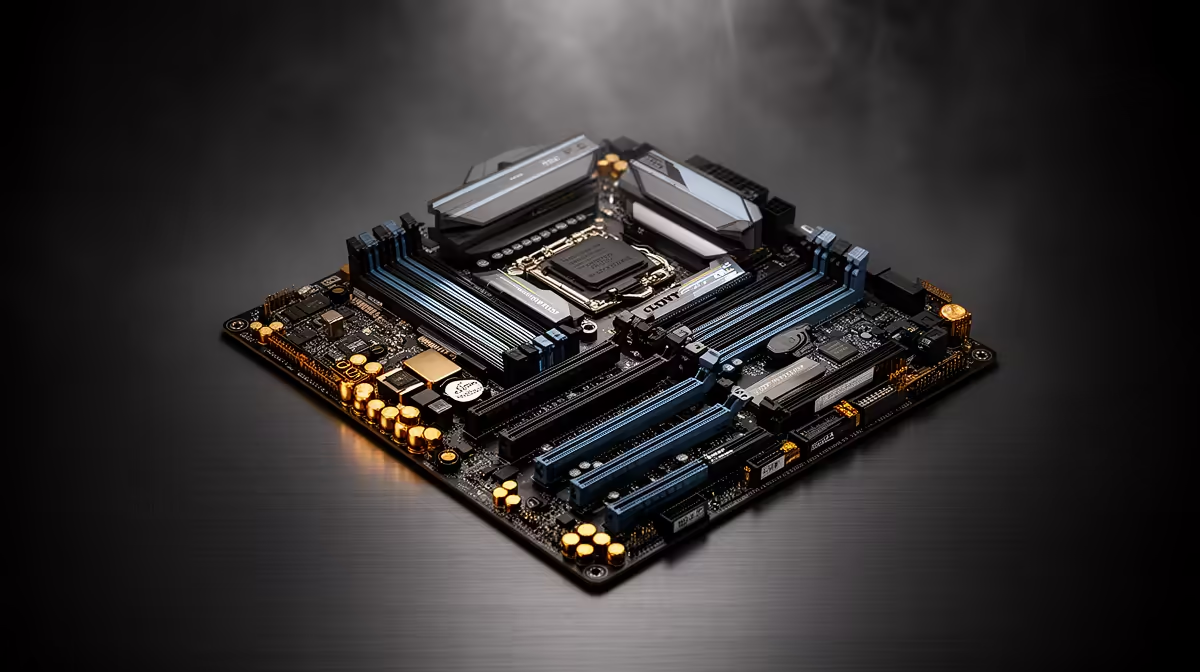
A motherboard can have two full-length slots without being a useful dual-GPU motherboard for gaming. Physical slot length, electrical lane count and game support are three separate questions. In 2026, the second slot usually earns its space through capture, networking or storage rather than another gaming graphics card.
Quick Answer
No, most gamers do not need a motherboard chosen for two graphics cards. Modern GeForce and Radeon gaming paths no longer revolve around SLI or CrossFire profiles, and games generally expect one GPU. Evetech listed an AMD Ryzen 5 5500/Intel Arc A380 gaming PC at R11,969 as of July 2026; at that and higher budgets, one appropriate GPU, a sound power supply and a board with useful expansion are a better priority than paying for obsolete multi-GPU branding.
🎮 Why two cards stopped making sense
Traditional multi-GPU gaming asked a driver profile or game engine to divide rendering work between cards. Scaling was inconsistent, frame pacing could suffer and the second card rarely doubled performance. Developers then had to support a small and shrinking group of complex configurations.
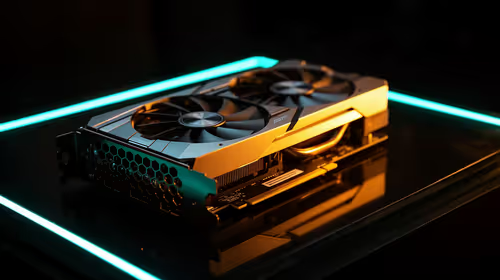
Current consumer GPUs focus on a single powerful device. Some professional applications can still use multiple GPUs for compute or rendering, but that is application-specific and is not a revival of universal two-card gaming.
The practical result is simple: do not buy a second card expecting ordinary games to combine its performance automatically.
🧩 What the second slot is useful for
A second full-length PCIe slot can still be valuable for:
- a capture card for streaming or production;
- a high-speed network adapter;
- an NVMe expansion card;
- a storage or host-bus controller; or
- a second GPU for a specifically verified compute application.
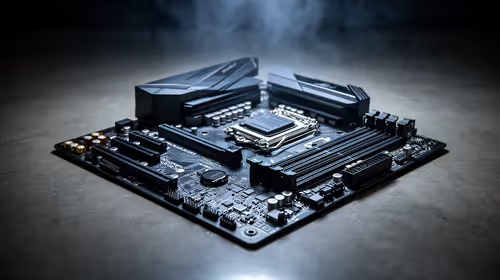
Read the motherboard manual before planning any of these. A full-length slot may run at x4 rather than x16, and populating it can disable M.2 sockets or share chipset bandwidth. Card thickness matters too: a large graphics-card cooler can physically cover the lower slot.
When comparing gaming-PC deals and PC best-sellers, buy the expansion layout for a named future device, not a vague promise of "future-proofing".
Frequently Asked Questions
Is SLI still supported on new graphics cards?
It is not a mainstream gaming feature on current GeForce cards. Old supported combinations and applications do not create a useful new-build path.
What is a second PCIe slot used for now?
Capture, networking, storage expansion, specialist accelerators and some compute workloads are the common reasons.
Does AMD still support CrossFire for gaming?
CrossFire is not a current general gaming strategy. Any explicit multi-GPU application support should be verified before buying hardware.
Should you buy a dual-GPU motherboard for future-proofing?
Only if you can name the second expansion card you expect to install. Slot count without lane, clearance and sharing details is not useful future-proofing.
Do any games still support multi-GPU rendering?
Some older titles and explicit rendering paths may, but support is too limited and inconsistent to justify a modern gaming purchase.
Is a dual-GPU motherboard more expensive for no gaming benefit?
It can be, especially when the extra slot comes with a higher board tier. Judge the full feature set rather than paying specifically for two-card graphics.
Planning a PC with expansion room?
Compare Evetech gaming PCs around one strong GPU, then check the motherboard manual for the exact capture, network or storage card you may add later.