


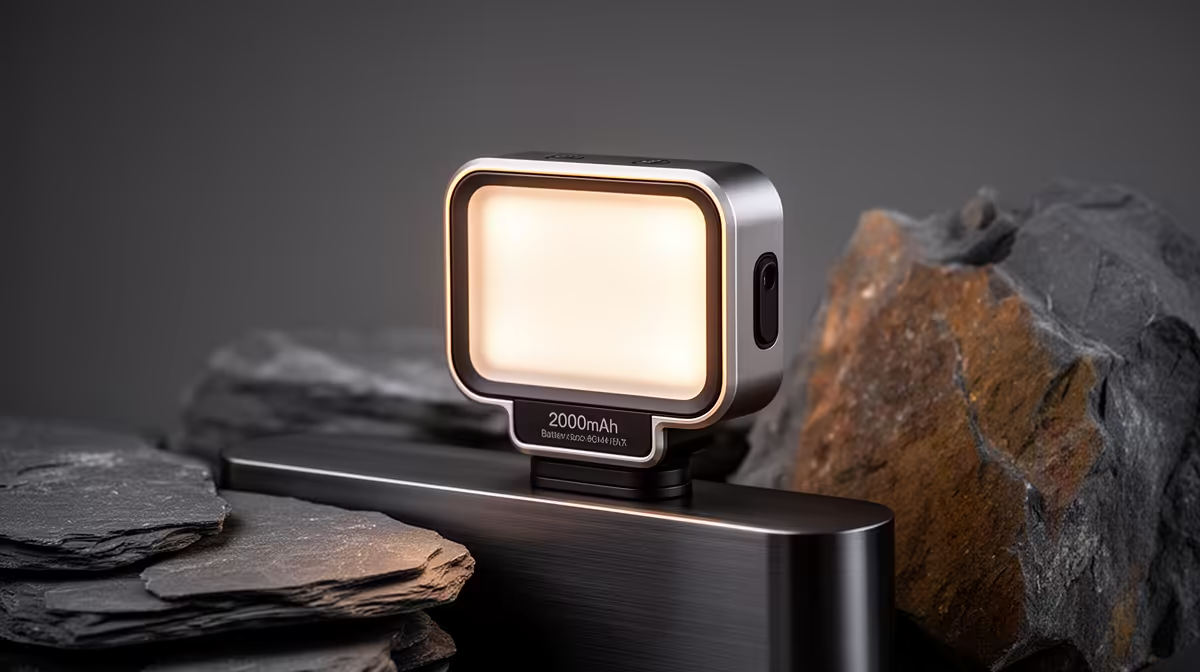
The built-in battery on a portable vlogging light is not a component you can replace when it degrades. It lives inside the housing, and once capacity drops far enough that runtime no longer suits a shoot day, the panel is compromised. Extending the lifespan of a 2000mAh built-in battery comes down to consistent habits: the difference between a cell that fades after two hundred cycles and one that holds capacity past five hundred is almost entirely how you treat it between shoots.
Quick Answer
Keep the battery between 20 and 80 percent charge, avoid heat storage, and run the panel at half brightness where possible. Half power roughly doubles runtime per cycle and reduces heat inside the cell, which is the primary driver of lithium-ion capacity loss over time.
🔋 The Charge Window That Slows Wear
Lithium-ion cells have an optimal operating range that sits well below full charge and well above empty. Regular charges to 100 percent stress the cell at the top of its voltage range. Regular drains to zero stress it at the bottom. Either habit accelerates the gradual fade that shortens runtime over time.
The practical target: plug in around 20 percent remaining and stop charging near 80 percent. Most vlogging lights do not display a precise percentage, but runtime estimation works fine. If the panel runs about two hours fully charged, plug in after ninety minutes and unplug after forty minutes of charging. If the light shows a bar indicator, three bars out of four is the stopping point.
🌡️ Heat Causes More Damage Than Use
Temperature does more damage to a small lithium-ion cell than usage frequency. A 2000mAh pack in a hot car during a South African summer afternoon is losing capacity without producing a minute of useful footage. A car boot or seat in summer sun easily reaches 50 to 60 degrees Celsius, well past the threshold for meaningful cell damage.
Running the panel at full brightness generates more internal heat than running it at 50 to 60 percent. At half brightness it also runs roughly twice as long per charge, so the practical argument for moderate brightness is both about longevity and avoiding unnecessary charge cycles.
⚡ Safe Charging and Long-Term Storage
Use a charger rated at 5V and 1A to 2A. A standard phone charger fits this range. Higher-current adapters push more energy into a small cell faster, raising temperature across every charge cycle. Over hundreds of cycles that extra heat degrades capacity measurably.
For storage beyond a few days, leave the cell near 50 percent charge rather than full. A fully charged lithium-ion cell held at 100 percent for weeks degrades faster than the same cell stored at half. If a shoot break runs two weeks or longer, run the panel down to around half before storing it in a cool, dry drawer.
Frequently Asked Questions
What charge level causes the most wear on a built-in vlogging light battery?
The two extremes: regular full charges to 100 percent and regular full drains to 0 percent. Both place the cell at voltage points where lithium-ion chemistry is under the most stress. Staying between 20 and 80 percent keeps cycles efficient and capacity stable for longer.
Does SA summer heat actually affect a vlogging light battery?
Yes, measurably. Temperatures above 30 degrees Celsius accelerate electrochemical aging permanently. A light left in a car or on a shelf in direct summer sun loses capacity whether it is being used or not. Store equipment in shade or indoors between shoots.
Is running at half brightness genuinely better for the battery?
Both runtime and longevity improve. Half brightness draws less power per minute, roughly doubling runtime per charge. It also generates less heat inside the cell during discharge, reducing the thermal stress that causes capacity fade. The improvement compounds across hundreds of sessions.
Should I store the light at full charge long term?
No. A fully charged lithium-ion cell held for weeks at 100 percent degrades faster than one stored near 50 percent. Run it down to around half before any extended break from shooting, and keep it in a cool, dry location.
Ready to keep your portable vlogging light performing at full capacity for longer? Browse the portable LED vlogging light range and find the compact panel that fits your kit bag and shoot schedule.










