Washed-out footage is not a hardware problem. It is a calibration problem, and the fix is almost always a combination of lower light intensity, matched colour temperature, and manual camera exposure. Adding a brighter light or switching cameras will not solve it. Fixing washed-out camera visuals with accurate bi-colour video lighting comes down to a sequence of specific adjustments, not a single switch.
Quick Answer
Drop the key light intensity to around 60 percent, tune the Kelvin to match your room so the camera stops overcorrecting, then lock manual exposure and keep highlights just below clipping. That sequence restores contrast, brings back skin tone depth, and stops faces from glowing white.
🔧 What Is Actually Causing the Flat, Washed Look
Two causes usually work together. First: too much light intensity for the camera's exposure settings. When the key light is too bright, highlights clip and faces lose their shape because bright areas become indistinguishable.
Second: a mismatch between the panel's colour temperature and the camera's white balance. Auto white balance compensates by shifting the whole image, pushing midtones toward grey and stripping colour from skin. The result is footage that looks pallid and flat even if exposure is technically correct.
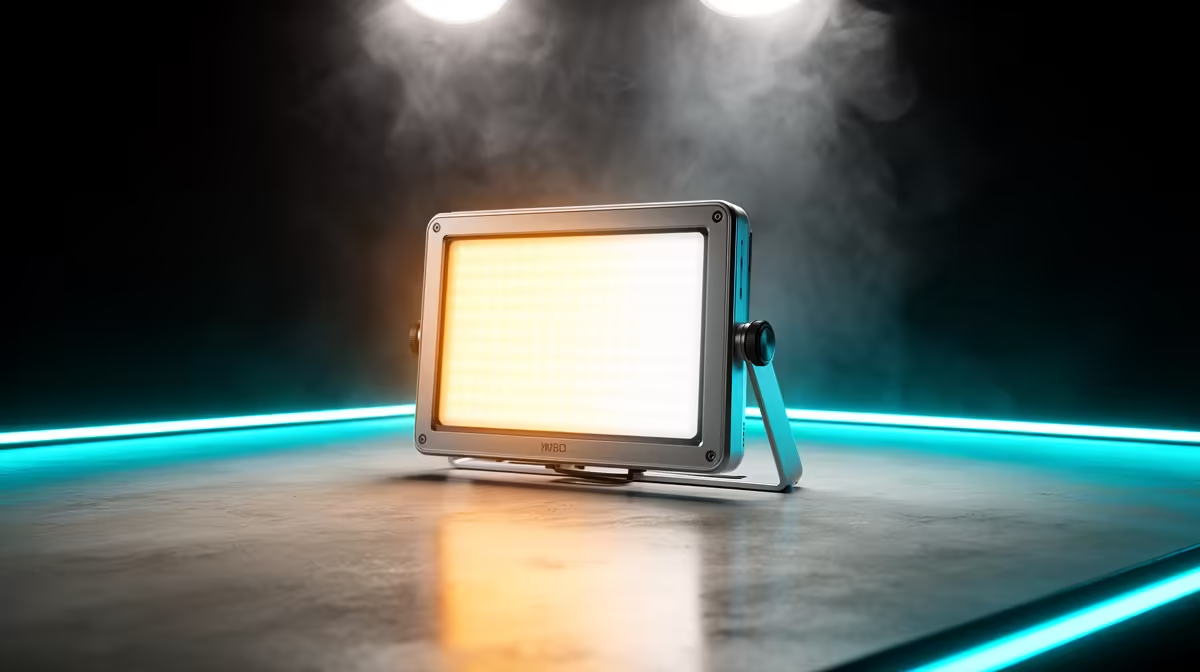
A bi-colour panel addresses both causes. A fixed-temperature light can be dimmed but cannot be tuned to match the room, so the white balance mismatch persists regardless of intensity adjustments.
⚡ Reducing Intensity Without Losing Usable Light
Moving the light further away and dimming it both reduce the light reaching the subject, but differently. Moving the light back increases the proportion of ambient in the shot relative to the key, which can introduce colour mixing if the ambient and the panel are on different temperatures.
Dimming the panel directly keeps it in the same position and character. Set the panel to around 50 to 60 percent and reassess. At that level, a reasonably positioned key should illuminate the face clearly without blowing the forehead or cheeks. If the image is still clipping, dim further before touching exposure.
🎯 Matching Kelvin to the Room
Tune the bi-colour panel to match the colour temperature of your ambient environment. In a room lit by warm overhead LEDs in the evening, that ambient might be 2800K to 3500K. In a room flooded with daylight, it sits closer to 5500K to 6000K.
Set the panel's Kelvin within about 500K of the room's ambient. At that proximity, the camera's white balance resolves a single clean white point. Skin tones regain depth, white surfaces stop looking grey or orange, and the image gains the contrast it seemed to lack.
If the room has strong mixed lighting -- a window on one side and warm indoor lights on the other -- close one source before trying to match Kelvin. Mixed-temperature ambients cannot be resolved with a single panel.
🔆 Locking Manual Exposure
Auto exposure will undo the work. A camera in auto mode sees a bright scene and pulls exposure down, then overcompensates when you shift position or the ambient changes. Lock exposure manually after dimming the panel and matching Kelvin.
Set exposure so the brightest areas of skin sit at around 85 to 90 percent of the histogram's range. This leaves headroom for small light changes without clipping, while keeping skin bright enough to look naturally lit. With intensity reduced, Kelvin matched, and exposure locked, the washed-out look resolves.
Frequently Asked Questions
Why does my video footage look flat and washed out even with good lighting?
The key light is likely too intense for the exposure settings in use, causing highlights to clip and detail to disappear. At the same time, a mismatch between the light's colour temperature and the camera's white balance pulls colour out of the image. Reducing intensity and matching Kelvin resolves both issues at once.
Does adjusting the bi-colour Kelvin actually fix colour washing?
Yes. When the panel's Kelvin is far from the camera's white balance setting, the camera over-corrects by shifting the whole image toward grey or amber. Tuning the light to match the room closes that gap. Skin tones come back, whites look clean, and the image regains contrast.
What exposure setting prevents highlights from blowing out on my face?
Set manual exposure so the brightest facial areas sit around 85 to 90 percent on the histogram. This leaves headroom to absorb small changes without clipping. A hard spike at the right edge of the histogram means highlights are already gone.
Can too much fill light cause a flat image even if the key is right?
Yes. Equal light from every direction removes the shadow that gives a face its three-dimensional shape. Fill should be roughly half the key's intensity so the lit and shadow sides of the face remain distinct.
Does diffusing the key light help with the washed-out problem?
Diffusion softens shadow edges and reduces harsh specular highlights on skin. However, diffusion does not reduce overall exposure, so a clipped image needs intensity reduction first. Diffuse after the exposure and Kelvin are correct.
Ready to put contrast and colour back into your stream footage? Browse the bi-colour LED panel range for South African creators and find a light with smooth dimming and full Kelvin adjustment to fix flat, washed-out visuals for good.